


We are super pleased to say that the July edition is packed full of very good news: funders generously giving funds, three new exciting projects commencing, new committee members joining the Executive Council, INTO colleagues visiting on an exchange progamme from St Helena and interns that we have supported over the years.
Thank You
Firstly, we would like to extend an enormous thank you to Kate Van Deventer for her kind and generous assistance with the La Rochelle Orchid Collection. For her knowledge and passion on all matters orchid. Kate is currently the Zimbabwe Orchid Society Secretary and has been a great go-to lady when we need help.
Secondly, our huge thanks go to Nerys Gray for giving her invaluable expertise and time in designing the logo for the Helen Hyslop Trust, it captures the very essence of the late Helen perfectly.
NEW COMMITTE MEMBERS
The Executive Council were delighted to invite two highly motivated and competent new members onto the Council:
Caitlyn Snyman holds a BSc (Hons) Biology, Diploma in Mental Health Psychology, Diploma in Mental Health Psychology, Diploma in Human anatomy. Her skill set includes: education, mental health, computer science, cardiac physiology and genome engineering. She speaks 3 languages, is an author and a string musician and has a special interest in La Rochelle County Estate.
Jenna Hutchings becomes the new Treasurer following the late Mr J Hylsop. She holds a MSc in Cities, MSc Physiotherapy (Paediatric Neurology) and an BSc (Hons) Physiotherapy. She is a civic leader and has experience in financial oversight and governance, political science and economics, environmental stewardship, community development, green transportation and early child development.
Between them the two ladies bring a wealth of experience and compliment the Council with a broad range of interests and new great ideas. We are very much looking forward to working with you.
PASSIONATE ABOUT TROPICAL GARDENS
The Tropical Gardens network is INTO’s vibrant, cross-continental initiative which brings together INTO members from Sri Lanka, Thailand, India, Malaysia, the Maldives, St Helena and Zimbabwe in order to share their stories of their landscapes, challenges and aspirations. From desert parks to rainforest sanctuaries, each site is unique – but all are united by a shared commitment to sustainability, cultural heritage, community engagement and the preservation of tropical biodiversity.
The idea was sparked by Soham Kacker, plant ecologist and horticulturist who is the Curator of Living Collections at the Lunuganga Trust, at the gardens of Geoffrey Bawa Trust in Sri Lanka https://geoffreybawa.com. Members expressed a strong desire to learn from one another, share best practices and explore how gardens can be tools for education, healing and cultural revival.
The NTZ was very excited to receive the good news from Mr Alexander Bishop that a INTO TAP Award had been granted on behalf of the newly formed network. The award was an opportunity for a bilateral exchange between members prioritising those that live relatively close together in the first instance to facilitate knowledge exchange. The award allowed travel funds for Mrs Helena Bennett, Director and Mrs Matrina Peters, Environmental Scientist of the St Helena National Trust.
St Helena is a small, remote volcanic island consisting of 47-square-miles, situated in the South Atlantic Ocean, roughly 1,950 km west of Angola. It is famous as the place of Napoleon Bonaparte’s exile and death. The capital is called Jamestown and it has a population of approx. 520,000 people. The climate of Saint Helena is tropical, marine and mild, tempered by the Benguela Current and trade winds that blow almost continuously.
On the 11th June 2026 members of the NTZ Executive Council were very excited to welcome Helena and Martina to Zimbabwe and were fascinated to hear about the island and all the work that they undertake there. St Helena’s isolation and its rugged terrain have been the saviour of a few fragments of the original natural habitats and a wealth of their constituent species. The Trust carries out a range of conservation projects looking after the islands unique terrestrial, marine, built and cultural heritage. The Trust plays a large role in raising the education and awareness of the island’s heritage in local and international communities.
Saint Helena’s biodiversity includes marine vertebrates, invertebrates (freshwater, terrestrial and marine), fungi, non-vascular plants, seaweeds and other biological groups. The island has long been known for its high proportion of endemic birds and vascular plants. The highland areas contain most of the 400 endemic species recognised to date. Much of the island has been identified by Bird Life International as being important for bird conservation, especially the endemic Saint Helena plover, and for seabirds breeding on the offshore islets and stacks, in the north-east and the south-west Important Bird Areas.
During their 5-day stay in Zimbabwe our lovely colleagues visited the following 3 NTZ properties in the Eastern Highlands area:
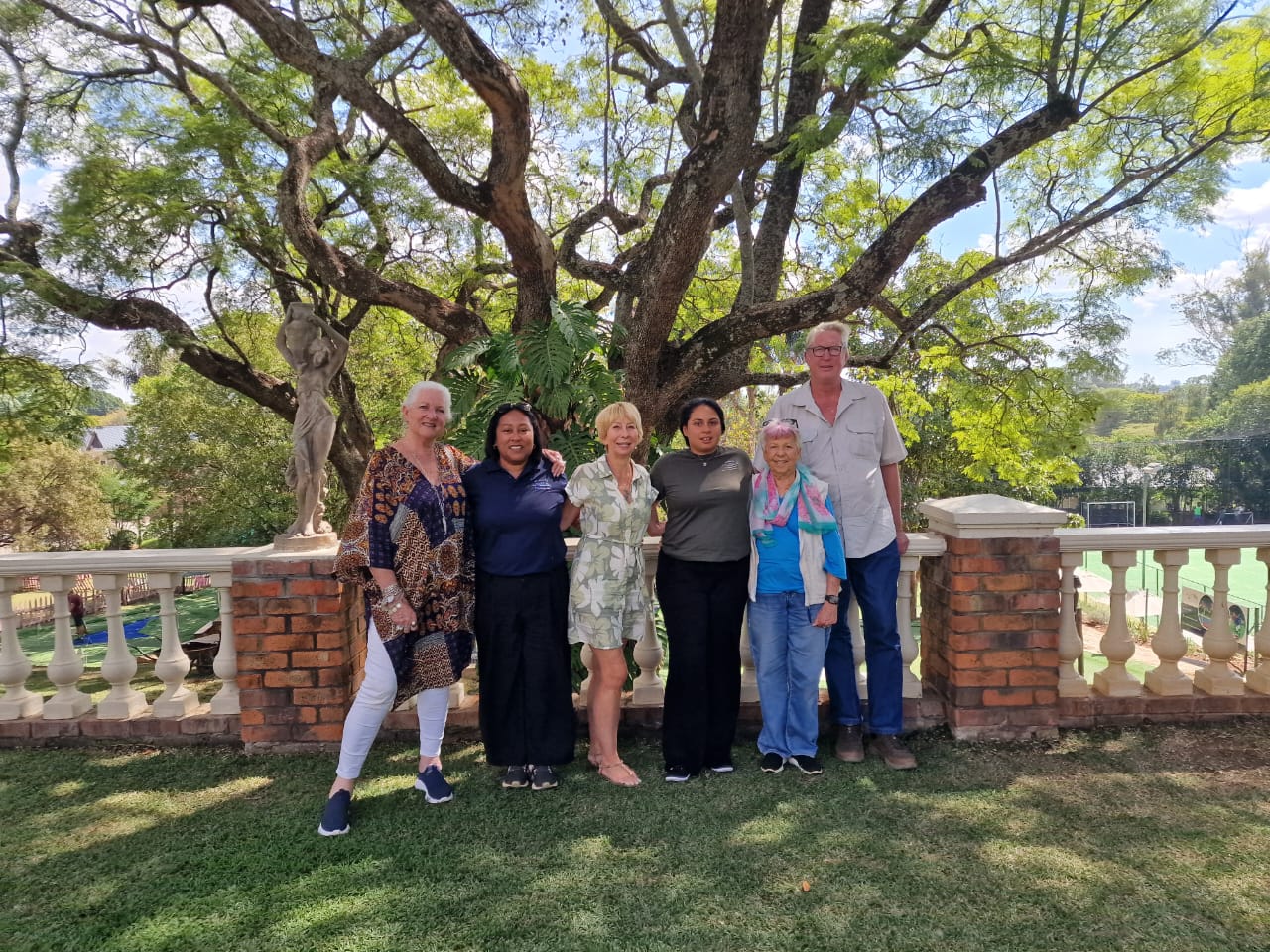 L to R: Lin Goncalves (NTZ), Helena Bennett (St Helena), Sharon Waterworth (NTZ), Martina Peters (St Helena), Fira Bache (NTZ) and Dot Cozens (NTZ)
La Rochelle Country House
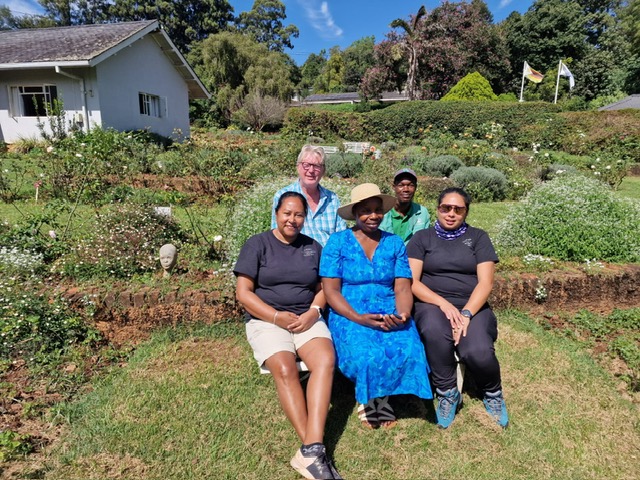 Back row L to R: Dot Cozens and Nhau Tinga. Front row: Martina, Diana Chasauku and Helena
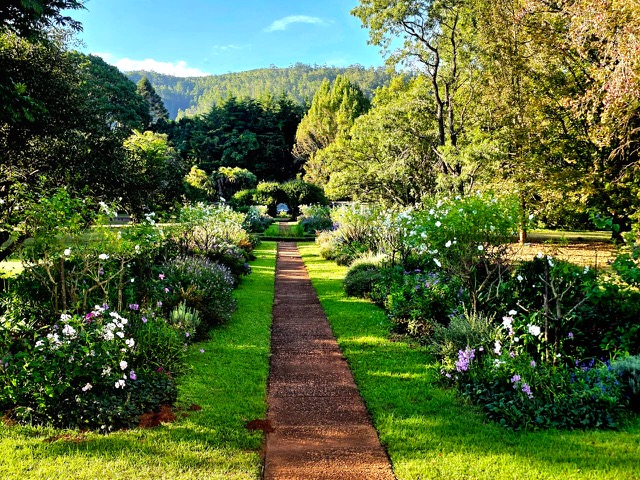
Helena and Martina spent time walking and working around the estate with Diana and Nhau, the husband and wife team who have been caring for the La Rochelle heritage orchid collection and the gardens for 32 years. La Rochelle Country House estate comprises of 226 acres and has a large unique botanical garden covering 20 acres of land, established with the professional help of the UK Horticulturist John Henry Mitchell, with exotic plants and trees gathered from all over the world. There are exotic trees in the arboretum as well as palms, cycads, azaleas and other flowering shrubs. Their particular interest was the orchid house filled with exotic, rare and indigenous heritage orchids.
Murawha’s Hill
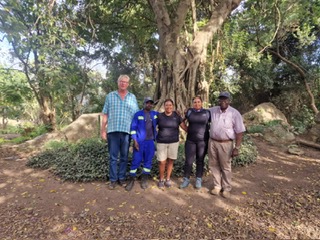
L to R: David, Lloyd Chidondo, Helena and Martina and Eng. Jackson Njunga
Helen and Martina were warmly welcomed by Eng. Jackson Njunga, the property Manager and Executive Council member of Murawah’s Hill a large granite hill, 153 acres in extent. Together they toured around the site accompanied by Lloyd the caretaker who lives on the site. Murawha’s Hill forms the backdrop to the western side of the City of Mutare. Named after a local Headman Madekurahwa under Chief Mutasa who lived at the foot of the hill from around the second half of the 19th century. The Hill was used as a shelter and look-out point against Chief Gungunyana and his raiding parties. It is a place of cultural importance, a naturalist’s paradise and is of great archaeological value. Traditionally it was protected in the past as a place of spirits.
The Hill has a unique combination of cultural heritage and indigenous flora and fauna given its location visa-vis the prevailing moisture-bearing winds. Over the years an extraordinary number list of trees and birds have been recorded. These comprise Eastern Highlands and Middleveld species, as well as broad range of vines, fungi, mosses and ferns. The ancient indigenous rainforest and rocky outcrops bought special delight.
Worlds View
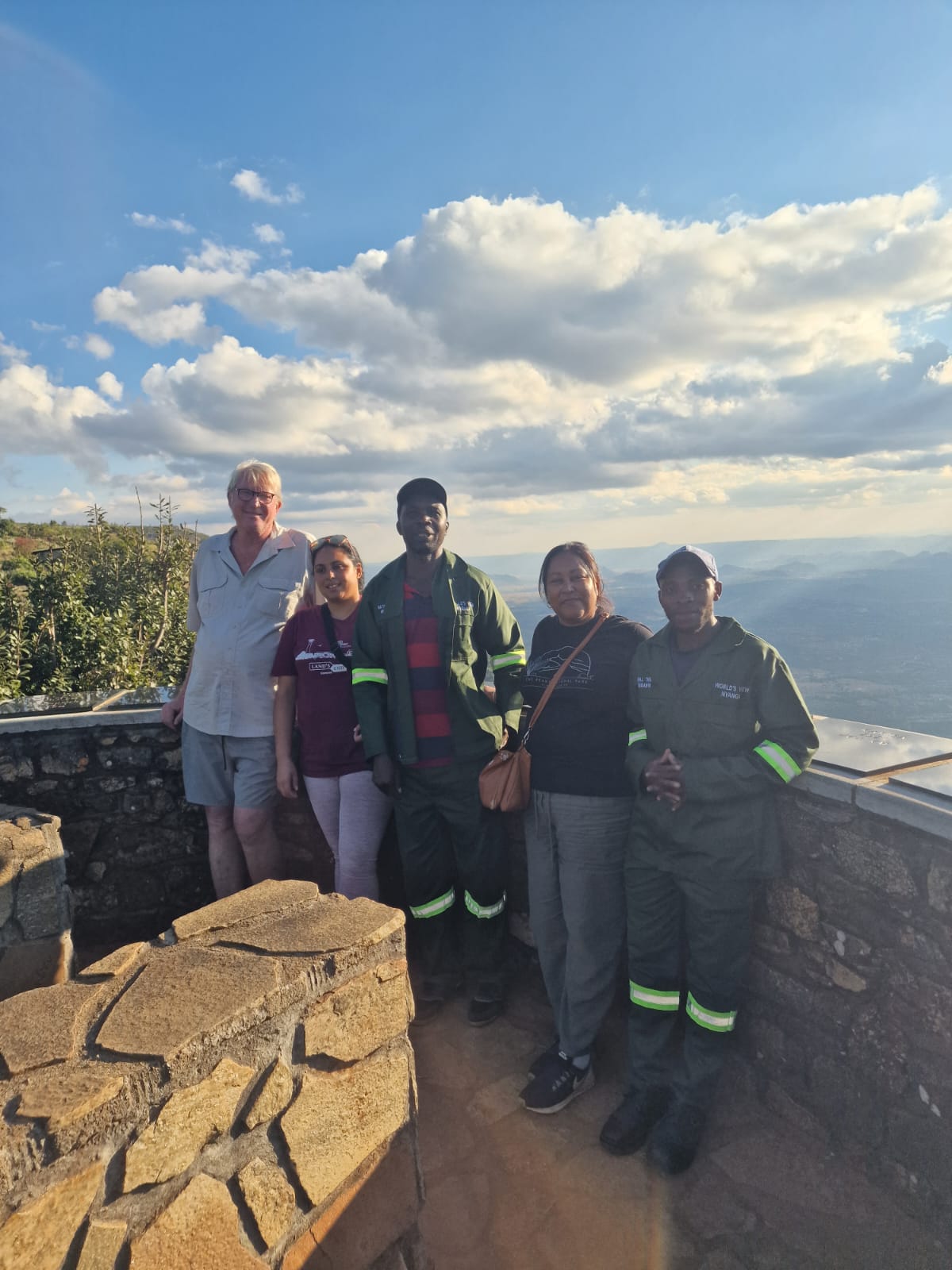
L to R: David, Martina, Matirina Andras, Helena and Noel Kanera
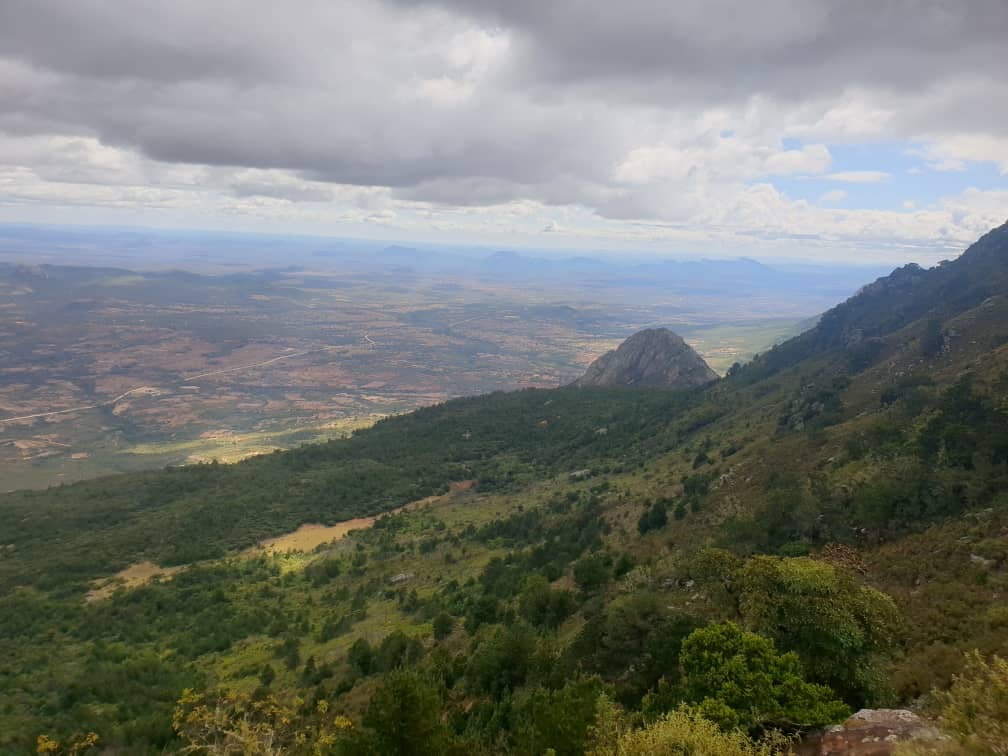
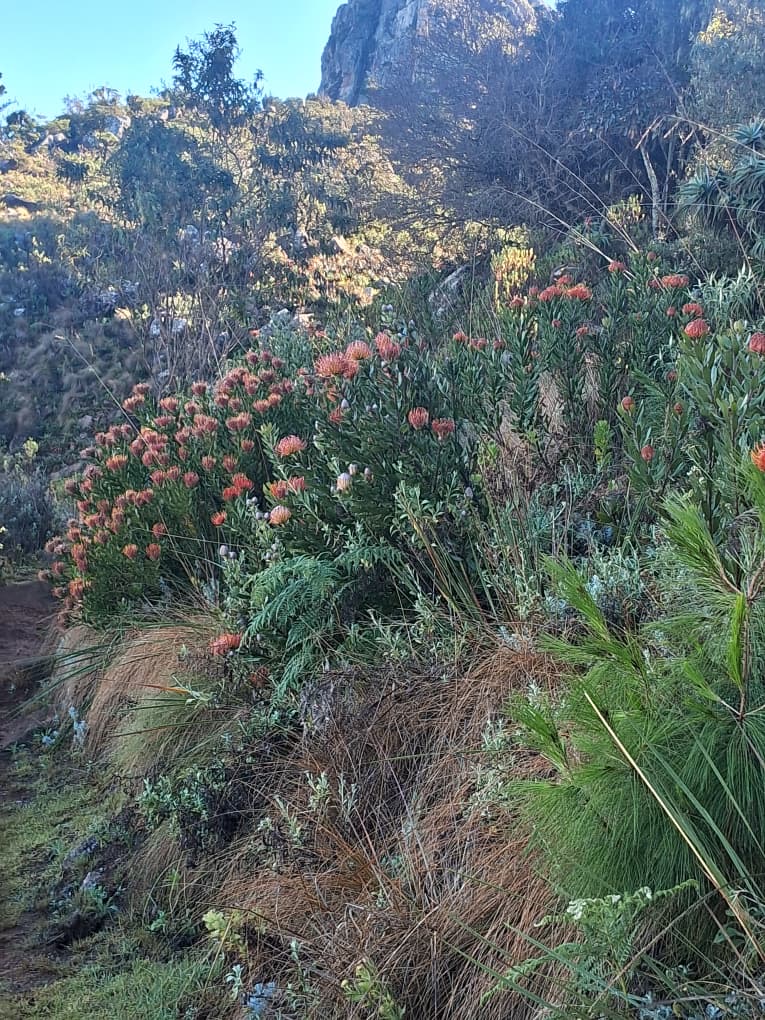
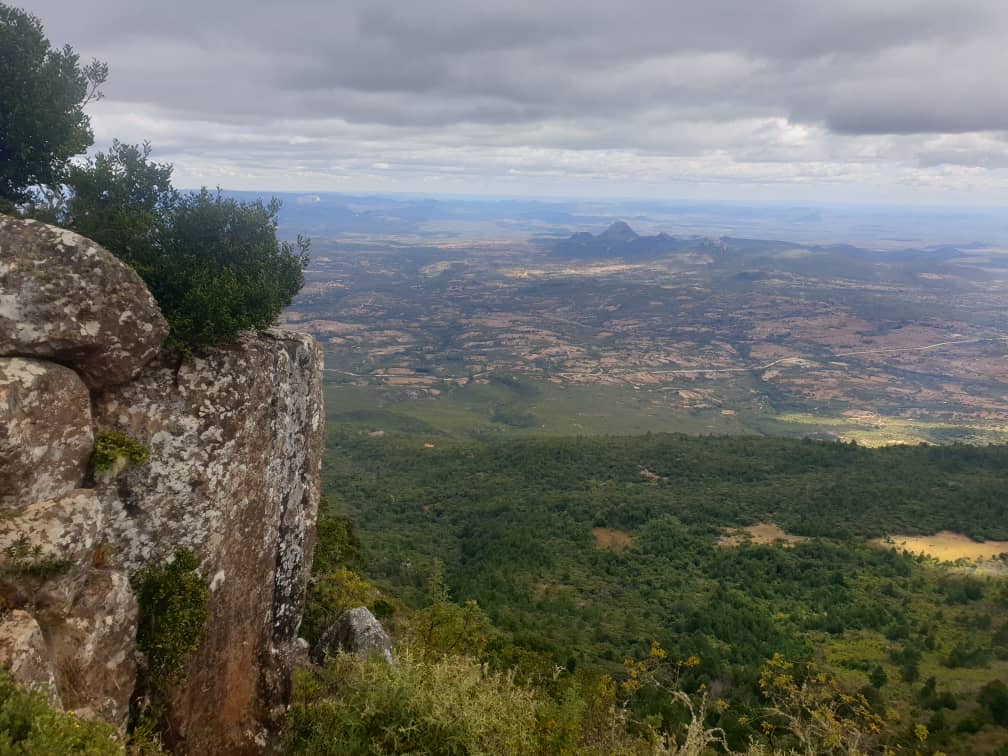
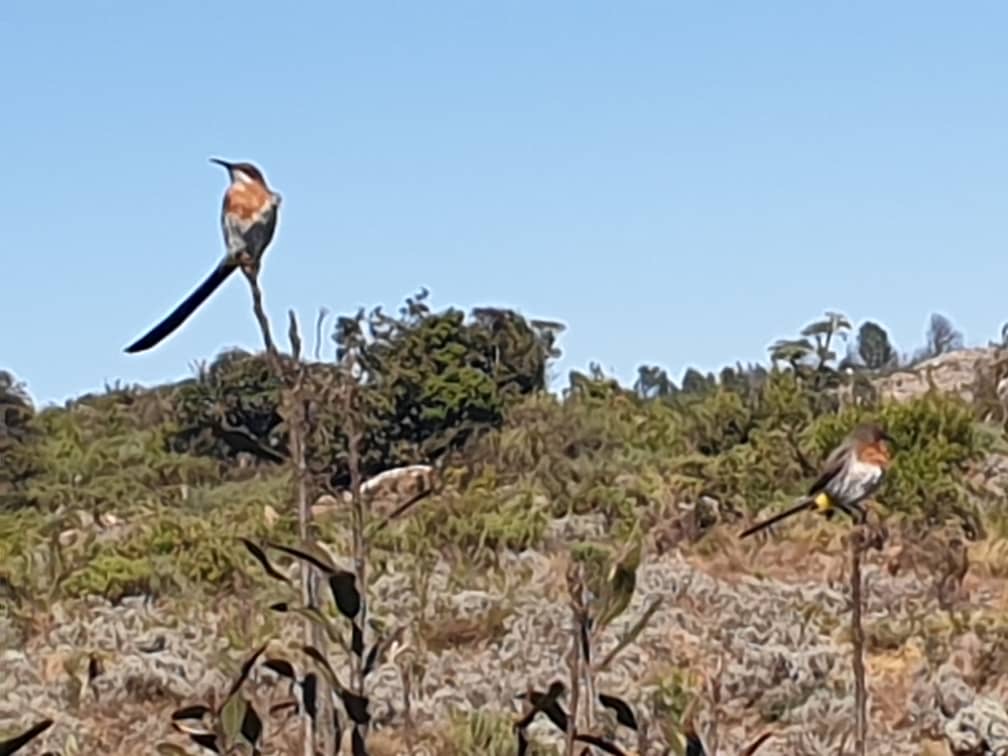
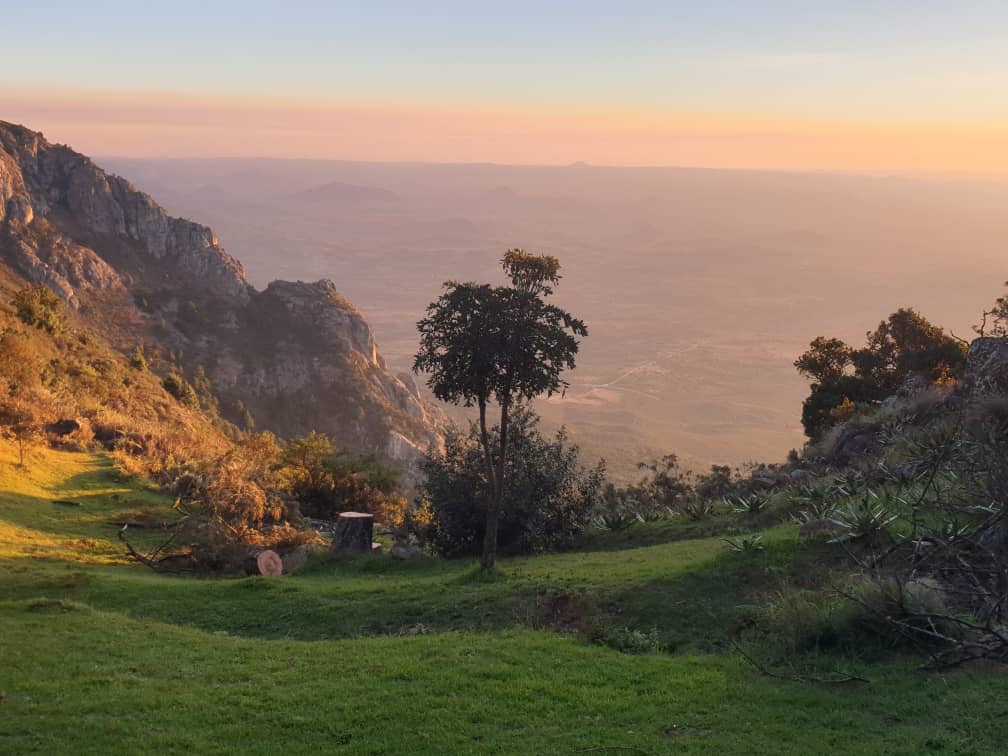
Helen and Matrina spent time enjoying and exploring the property accompanied by long serving ground staff Matirina and Noel. They commented on the stunning views of the surrounding landscape. From where they stood at an altitude of 2000m the escarpment drops 600m to the plain below. The area is particularly interesting for botanists and ornithologists, comprising of vegetation types associated with either the basal granite or the dolerite cap. Of special interest was the Protea and Wild Flower Conservancy established through a relationship with Kirstenbosch, the world famous botanical gardens in South Africa who generously donated the original seeds.
Helen and Matrina spent time enjoying and exploring the property accompanied by long serving ground staff Matirina and Noel. They commented on the stunning views of the surrounding landscape. From where they stood at an altitude of 2000m the escarpment drops 600m to the plain below. The area is particularly interesting for botanists and ornithologists, comprising of vegetation types associated with either the basal granite or the dolerite cap. Of special interest was the Protea and Wild Flower Conservancy established through a relationship with Kirstenbosch, the world famous botanical gardens in South Africa who generously donated the original seeds.
Once back in Harare the Executive met again with Helena and Matrina on 15th May for a post tour de-briefing over a hearty lunch during which Helena and Matrina were happy to share their eexperience and knowledge. They gave the NTZ many inspiring ideas and highlighted that it isn’t just capability that gets things done, it is with passion, love, energy and sense of sharing that get projects completed and over the line. They are an example to us all, fabulous professional passionate people who are making the world a better place.
This was a fantastic opportunity for both National Trusts and our enormous thanks go to INTO for providing the funding to make the highly interesting and informative exchange trip possible. The Tropical Gardens group is so useful, and provides greater insight to how Trust gardens are set up and sustainably managed.
The NTZ would like to acknowledge all the hard work and time feely given by Mr David Cozens, the site manager of Worlds View and an Executive Council member who very kindly accompanied the ladies on their trip around the 3 properties, provided a vehicle, a driver, fuel and accommodation. Passionate about tropical gardens.
Intern Programme
As part of its educational aims and objectives the NTZ has, so far, trained young 7 interns from different universities, with most of them coming from Bindura University. The NTZ provides mentors and an opportunity for young people to gain practical experience, improve employability chances, explore career paths, expand their minds, earn academic credit, develop professional skills and build a professional network
The NTZ is pleased to be able to offer internships and will continue to do so. I naddition to heritage we plan to expand the range of subjects to include: ecology, history and social studies.
Here is a list of the interns and their years of attachment to the Nyanga museum in the Eastern Highands:
Meshullam Mudzedze -2018-2019 – Great Zimbabwe university
Cathrine Chinoitezvi – 2019-2020 – Bindura University
Bridget Chidhakwa – 2020-2021 – Bindura University
Panashe Zaba – 2022 -2023 Bindura University
Patricia – University of Zimbabwe – 2023-2024
Nathan Machara- Bindura University-2024-2025
Nokutenda Tokora – Bindura University – 2025-2026
Thank you everyone, your input was invaluable.
Nyanga Historical Museum
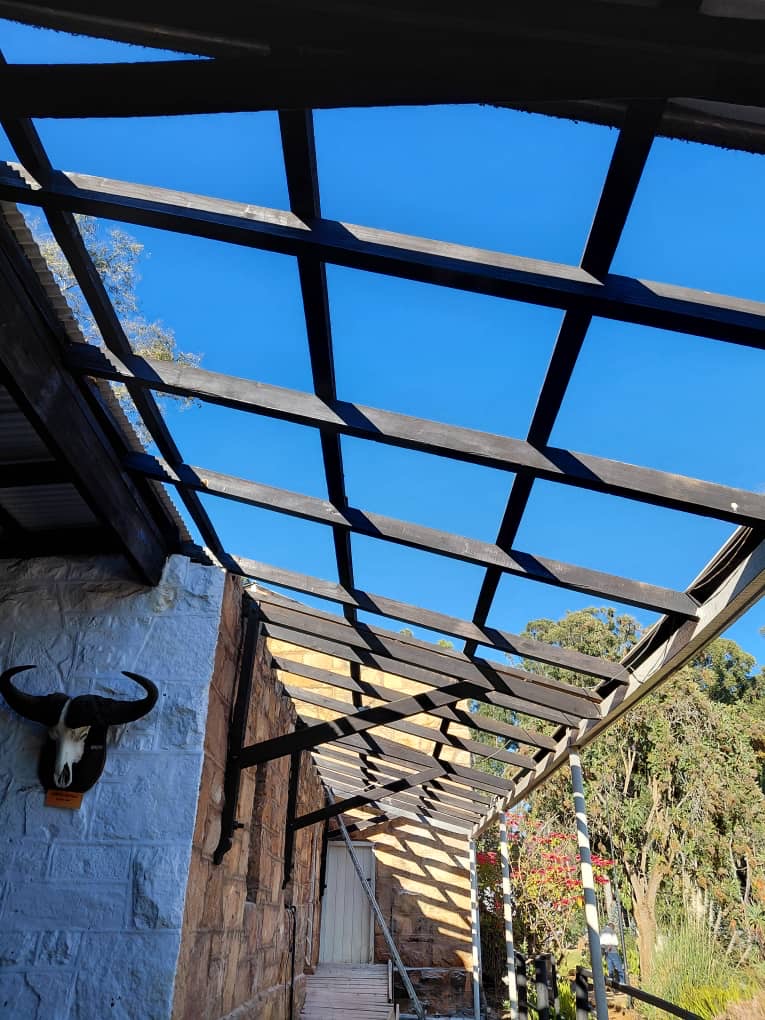
Museum ceiling
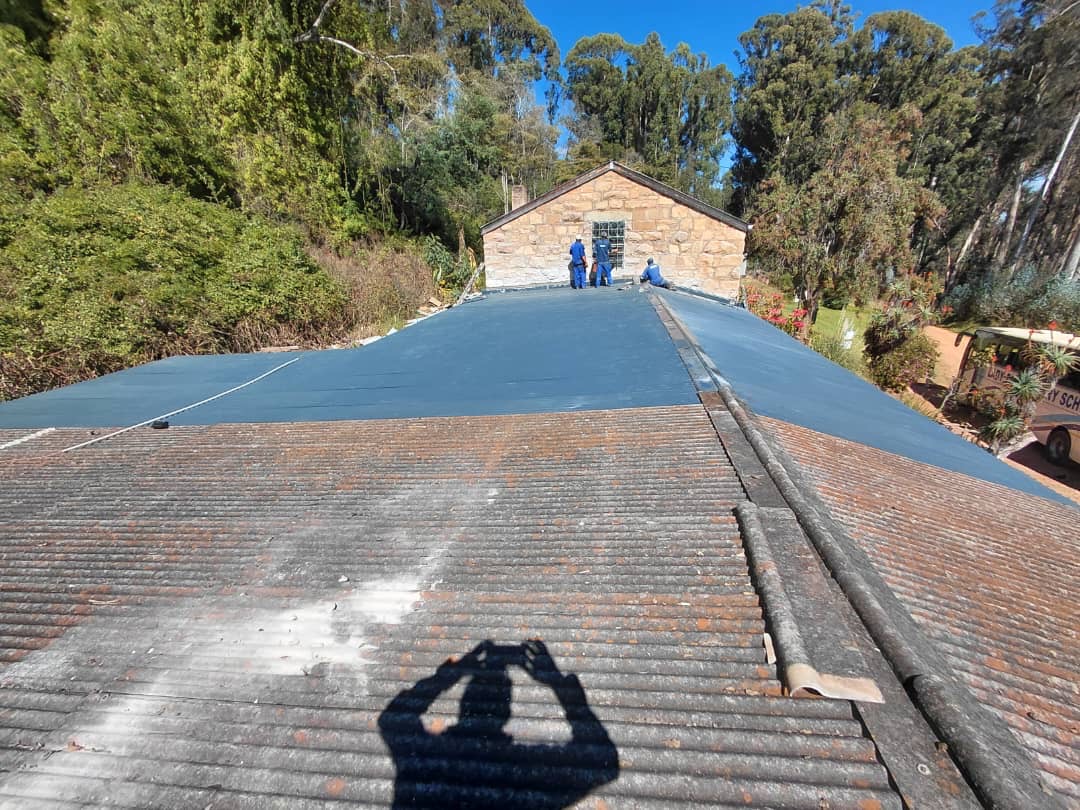
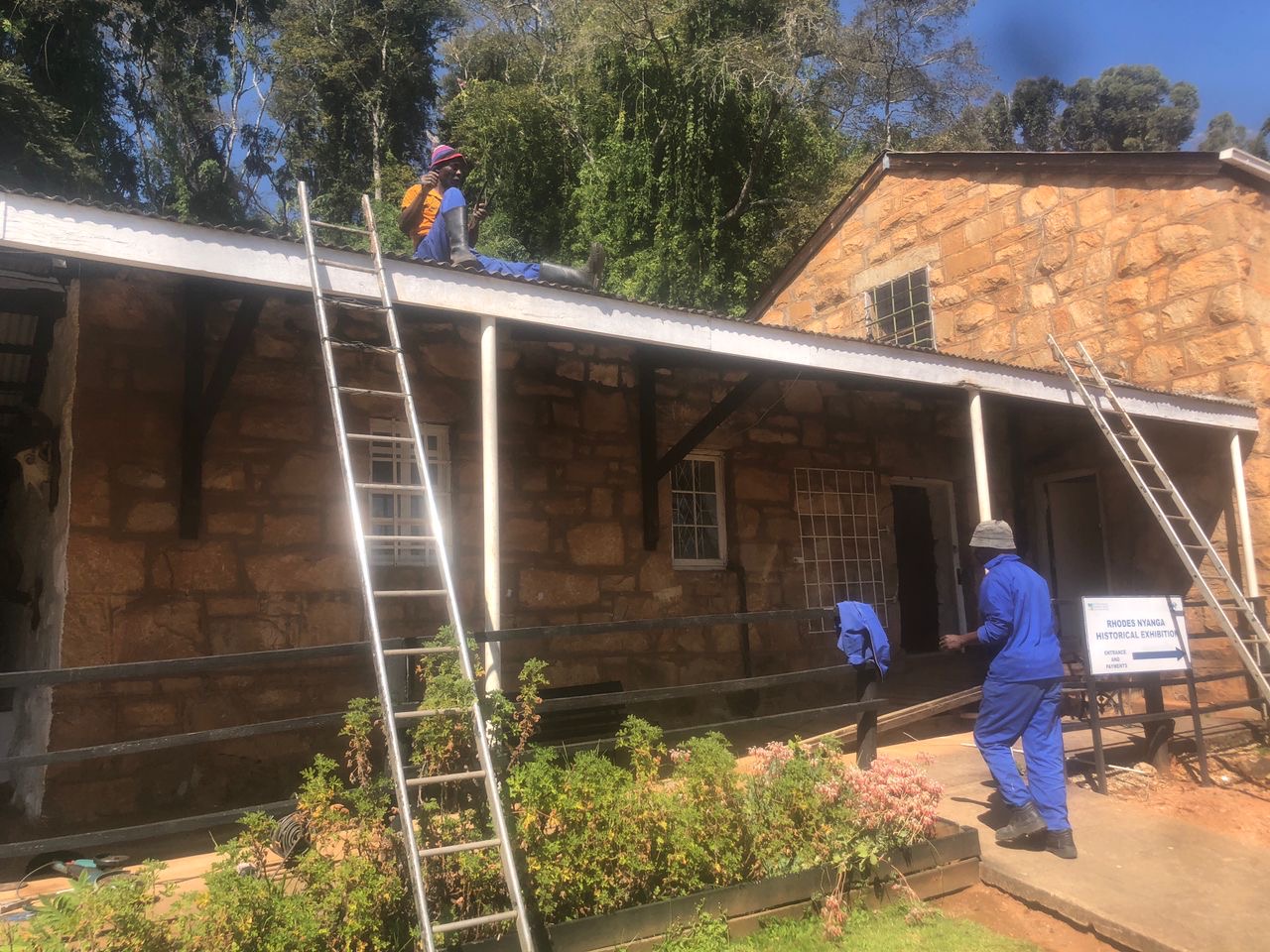
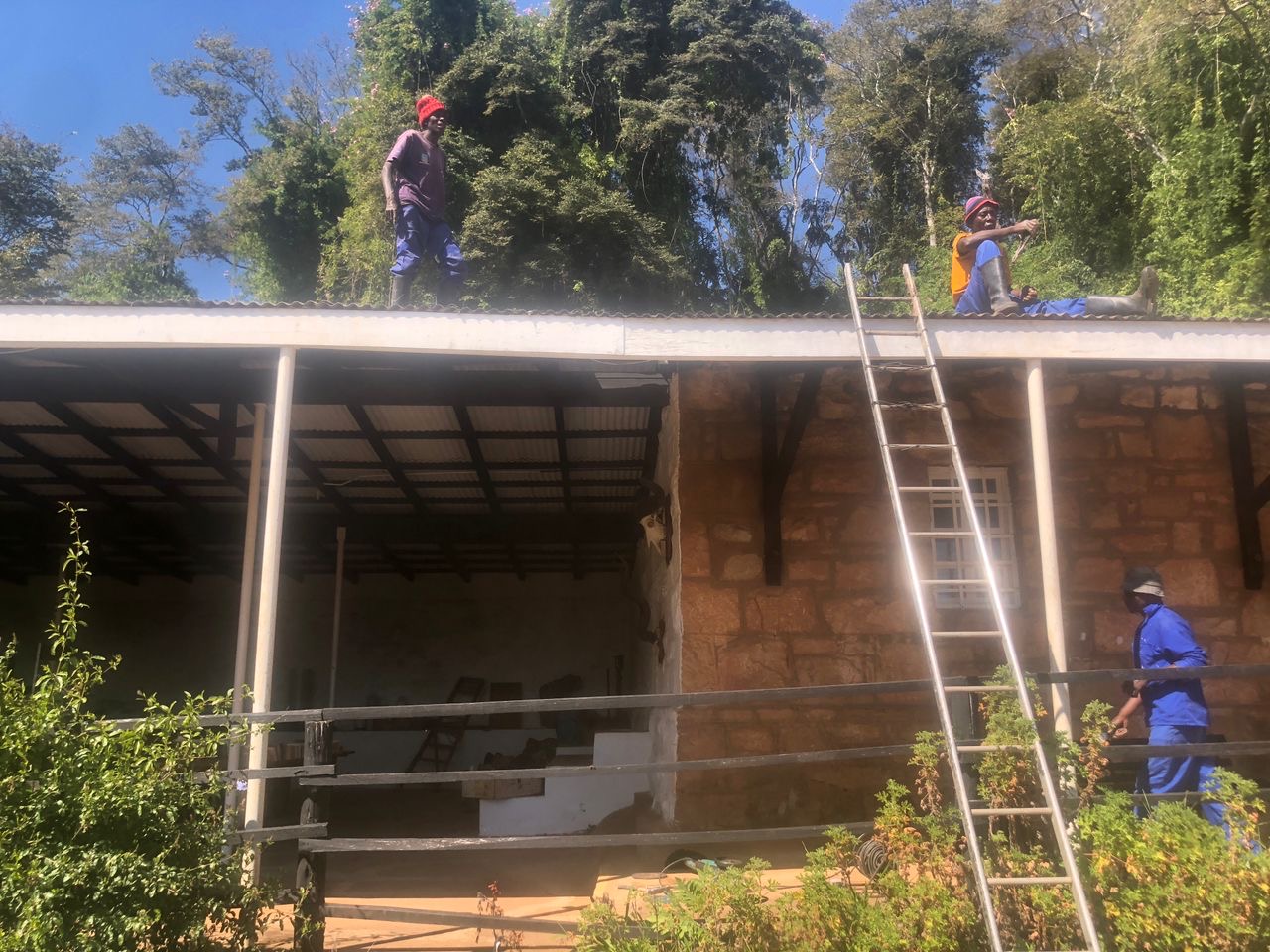
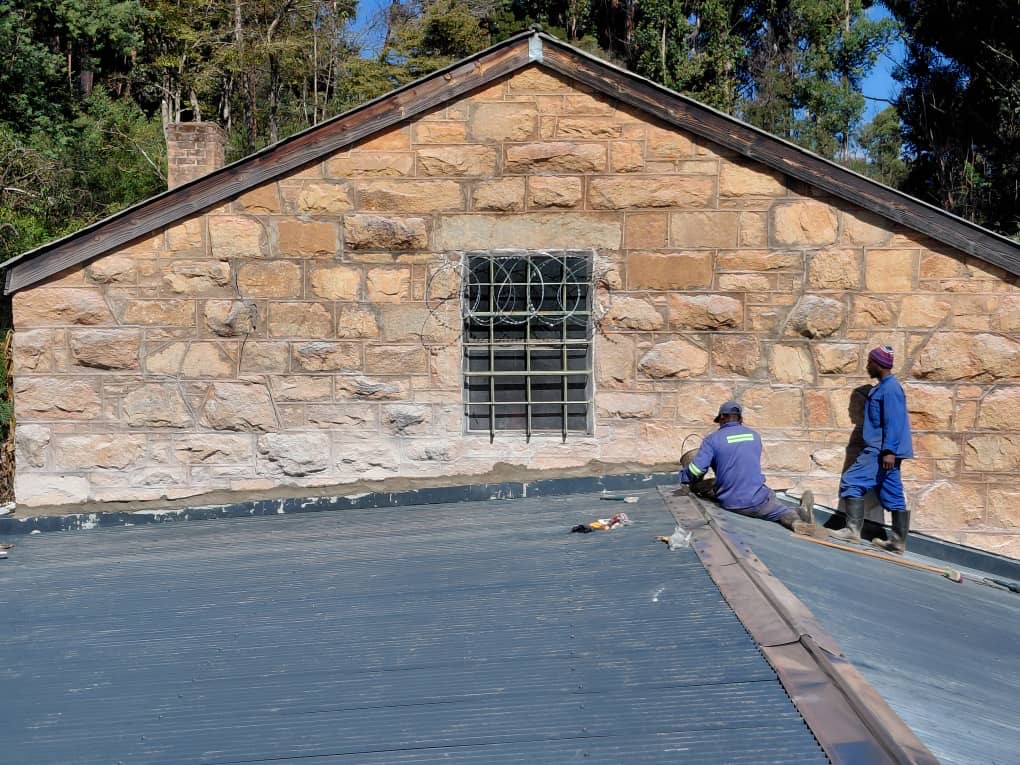
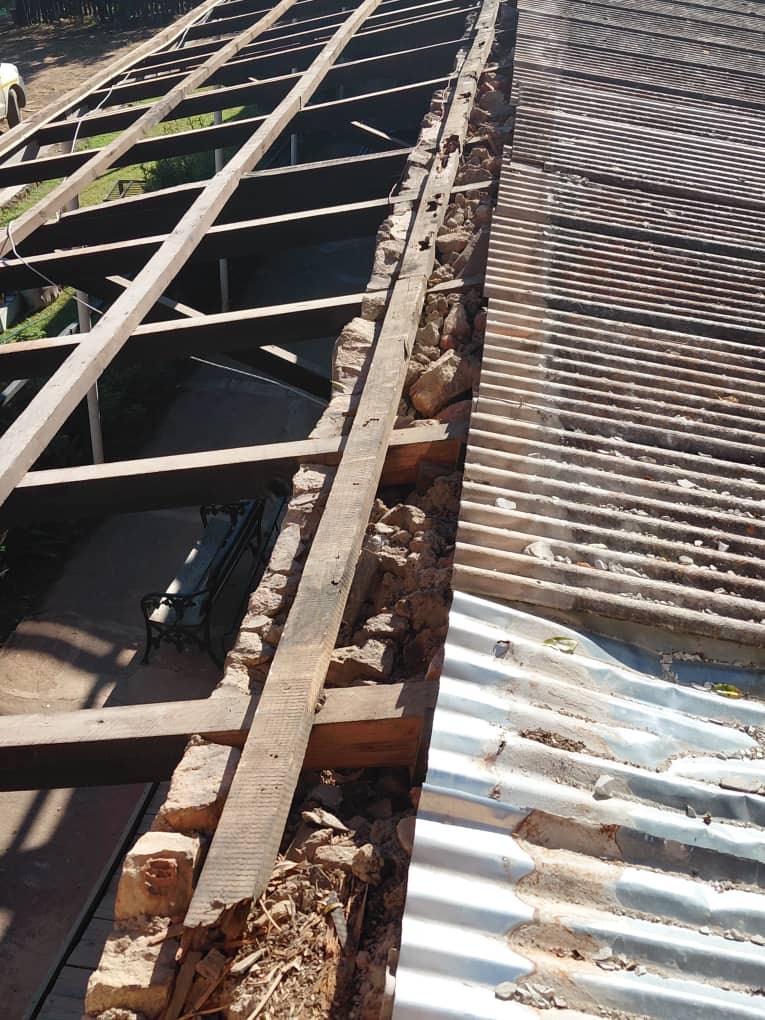
We are super happy to report that on the 21st May 2026 an anonymous donor was delighted to inform the NTZ that they had received unanimous support in response to our assistance request and full approval for awarding a grant for roof refurbishment and guttering for the Rhodes Nyanga Museum! Work has already commenced.
The application for funding was submitted following a ‘Building Infrastructure Condition Assessment Report’ compiled 31st March 2026. The assessment was undertaken in order to evaluate the integrity of its infrastructure and heritage features. As a site of historical significance, the museum requires periodic evaluations to ensure both structural stability and functional usability.
The assessment focused on key components, including the roof, walls, doors and windows, drainage systems, and ancillary elements such as fascia boards and eaves, with particular attention to degradation from water ingress, corrosion, timber decay, and masonry or plaster deterioration.
The report stated: that the museum has a gabled roof supported by mature gum timber beams and purlins. While much of the timber remains in good condition, several purlins require replacement. The roof covering consists of corrugated asbestos sheets, which show significant aging, wear, and weathering. Visual inspection revealed leaks in multiple areas, particularly along joints and edges, placing the museum’s historical artifacts and monuments at risk and raising serious conservation concerns. Some previously replaced iron ridges are broken, further compromising structural integrity.
The north-eastern roof elevation features eaves below 200 mm, allowing rainwater to seep into the walls and adversely affecting exterior and interior finishes, contributing to dampness, paint deterioration, and potential long-term structural damage. The ceiling boards throughout the museum have suffered rot and deformation due to persistent roof leaks, with some sections giving way, further highlighting the impact of water ingress on the building’s interior.
Additionally, the wall plate in the museum office has deteriorated and requires replacement to ensure proper roof support. Overall, the roof and ceiling are in a deteriorated condition.
The combined effects of aging materials, inadequate eaves, broken ridges, leaks, damaged wall plates, and rotting ceiling boards indicate an urgent need for maintenance and rehabilitation to preserve structural integrity and protect the building’s historical contents.
The NTZ is extremely pleased that this project can go ahead and truly grateful for the funding. A new ceiling will be extremely beneficial in a variety of ways including the protection of priceless exhibits in the museum, protection from rain and wind, reduce the risk of leaks, keep mould and moisture at bay and reduce maintenance costs. Significantly, the repairs will enhance visitor experience. The museum receives many visitors locally (especially school children) and also visitors regionally and internationally.
Pilot project
The Helen Hyslop Trust is passionate about education and learning and has funded a pilot project to digitalize some of the Museum’s pieces and displays. Marshall Nyanhanda, The Curator and Nathan Machara our 2024/25 intern, who has now graduated are working together on this initial work and if it is successful more funds may be available.
Construction of the Murawha’s Hill Education Centre
The NTZ is extremely happy to announce the construction of the Murawha’s Hill Education Centre, boundary wall and toilet block commenced on 15th June with Eng Jackson Njunga breaking ground with his team. The construction should be completed in a few months well before the rains arrive in Zimbabwe.
The project seeks to build an educational centre to preserve, explain and document both the cultural and natural history of the property and of the local area being the Eastern Highlands in Manicaland inorder to raise awrenss through community outreach and invovlement. The project was envisioned by the late Mrs Helen Hyslop some 15 years ago. Helen was a loyal, hard-working dedicated long term serving member of the Executive Council as was John (Treasurer) and Charles (Secretary) her two late sons. Helen, in particular, was very passionate about Murawha;s Hill and education.
The main roofing elements of a rondavel are wooden poles cut from local trees, harvested and cut to length. The roof covering is of thatch that is sewn to the poles with grass rope and made by a skilled artisan, as it must be sewn in one section at a time, starting from the bottom working towards the top. As each section is sewn, it may be weathered and aged to form a complete weatherproof seal.
A shaded amphitheatre is also planned, at a later stage, important for teaching and for entertainment. This would be built up against the side of the hill using local trees and relief.
Process of collecting further educational material so that once the building is completed the information will be ready to display which will include the following topics:
- Geology of Mutare
- Flora of the region
- Specific plants
- Birds
- Animals
- Early history – Stone Age
- The Stone ruins and
- The recent pre-colonial pas A separate area will focus on:
- Deforestation
- Erosion
- Water pollution
- Air pollution and
- Urban challenges
Council Members are starting the process of collecting further educational material so that once the building is completed the information will be ready to display which will include the following topics:
- Geology of Mutare
- Flora of the region
- Specific plants
- Birds
- Animals
- Early history – Stone Age
- The Stone ruins and
- The recent pre-colonial pas A separate area will focus on:
- Deforestation
- Erosion
- Water pollution
- Air pollution and
- Urban challenges
The NTZ is truly grateful to Dr. Mpira for sharing his thesis entitled: Storage Pits of Early Farming Communities: examples from Zimbabwe and sub-Saharan Africa’ compiled after excavations at Murahwa’s Hill unearthed two small pits associated with the Ziwa Early Farming Community period of occupation and believed to have been used for storage.
This is a very exciting project and we are looking forward to hosting school children and visitors from around Zimbabwe and the region. It is hoped that the centre will also promote cultural tourism for the Eastern highlands. The centre will be available for hire for like-minded organisations for training and educational conferences in a historical and beautiful treed setting.
Avifauna Photo Exhibition
Once opened the brand new education centre at Murahwa Hills will commence holding various interesting educational activities. Mr Bernard Chiketo, a local wildlife photographer based in Mutare has already expressed interest in holding an exhibition of avifauna. Mr Chiketo has been documenting avifauna in Mutare over the past several years and has photographed over 150 different species within the city’s municipal boundaries.
He is a feature writer for The Explorer, a Zimbabwean digital publication. His reporting focuses on Southern African business, environmental conservation, and human-interest stories, primarily covering the Eastern Highlands and greater Zimbabwe.
Mr Chiketo plans to quietly document the wider diversity as he photographs birds at Murahwas Hill, building a visual story of the whole web of life there to do wonderful justice to this special place. He will also spotlight Murahwa Hills in The Explorer.
The project was envisioned by the late Mrs Helen Hyslop some 15 years ago. Helen was a loyal, hard-working dedicated long term serving member of the Executive Council as was John (Treasurer) and Charles (Secretary) her two late sons. Helen, in particular, was very passionate about Murawha;s Hill and education. The Helen Hyslop Trust was created in 2025 and the NTZ is very proud to honour Helen’s dream and wishes into becoming a reality.
The NTZ is extremely grateful to Mr Rob Burrett Archaeologist, a long-time supporter of the NTZ for sharing his professional advice and input, way back in 2011, for creating the centre. Mr Burrett designed the centre employing a traditional African method of building that would blend in perfectly with its surroundings: a large round rondavel made with materials that can be locally found in raw form, walls are often constructed from stones. The mortar may consist of sand, soil, or combinations of these materials.
La Rochelle Country House
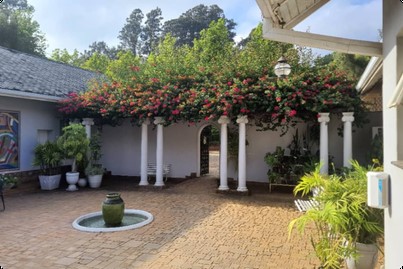
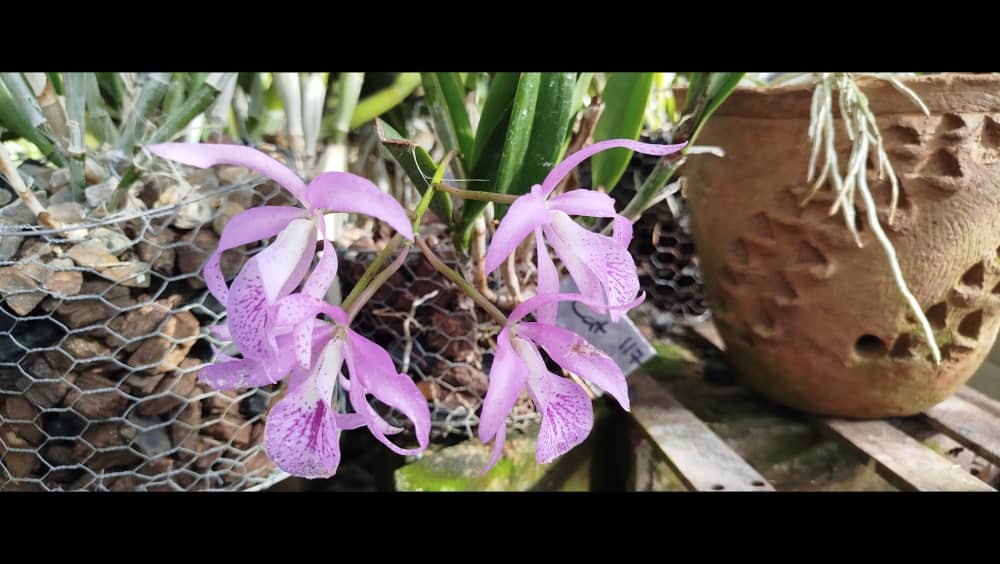
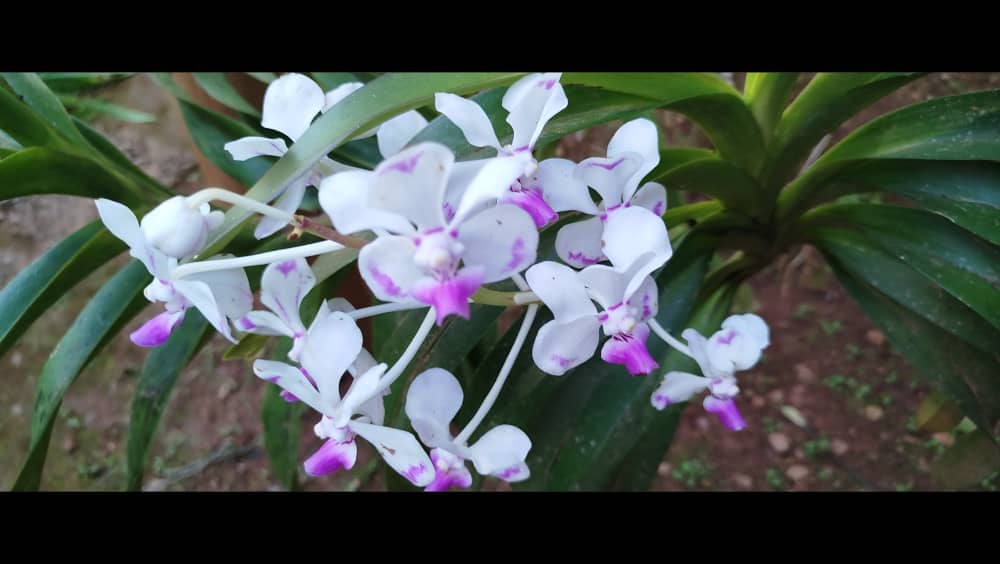
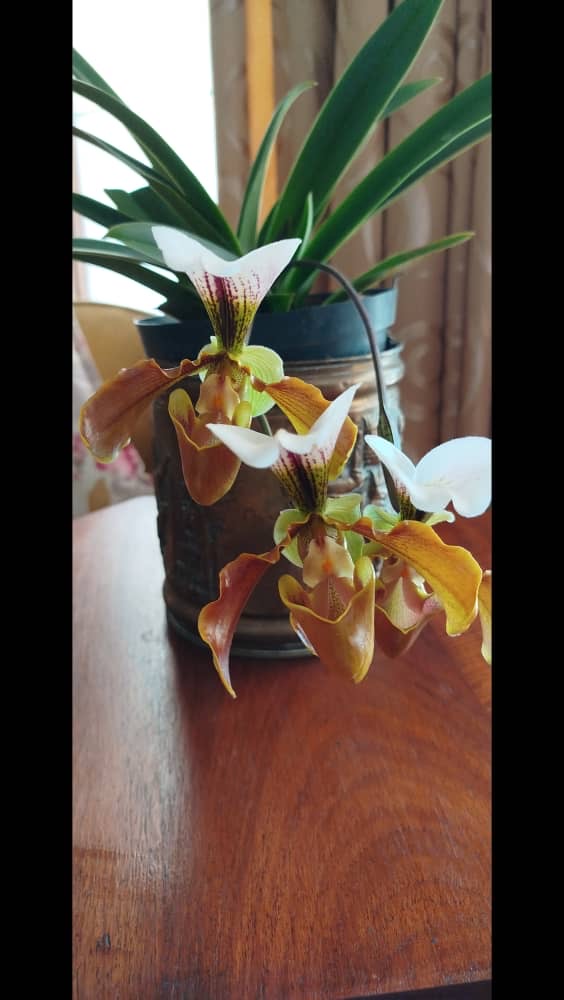
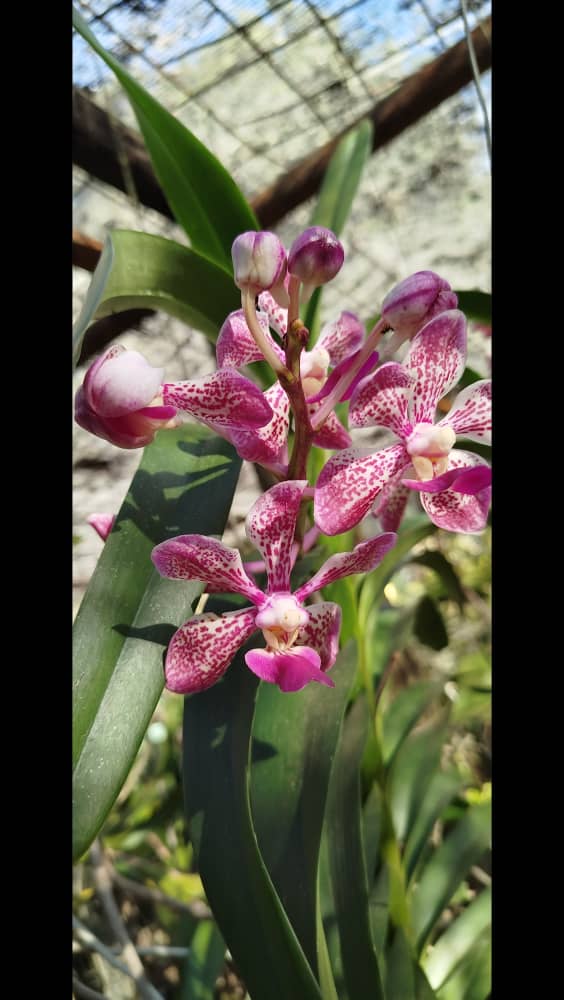
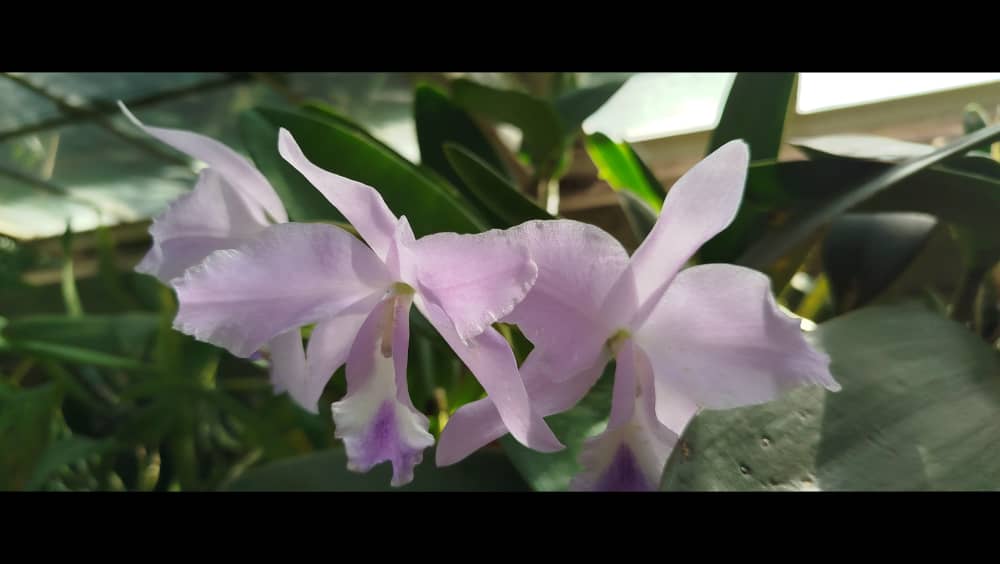
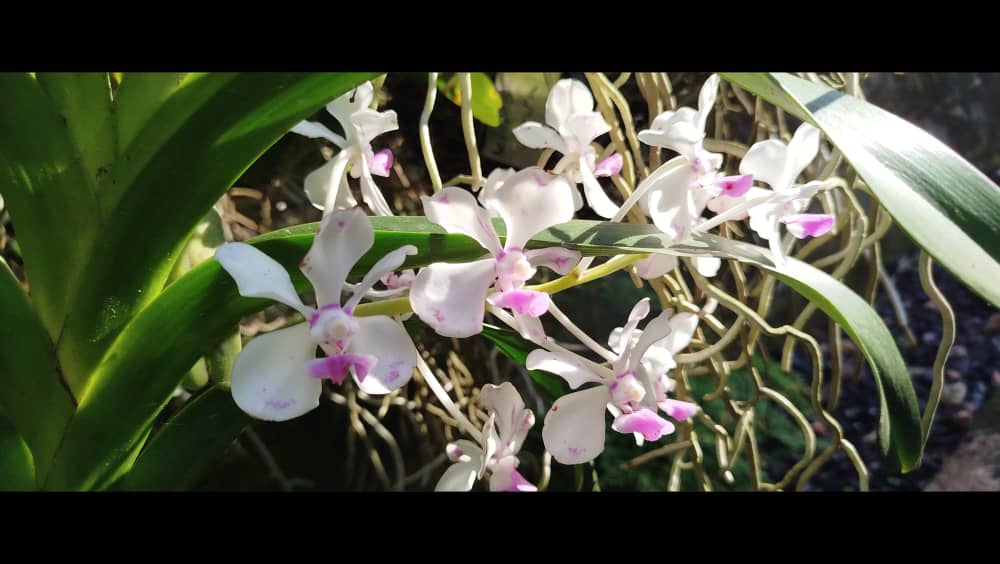
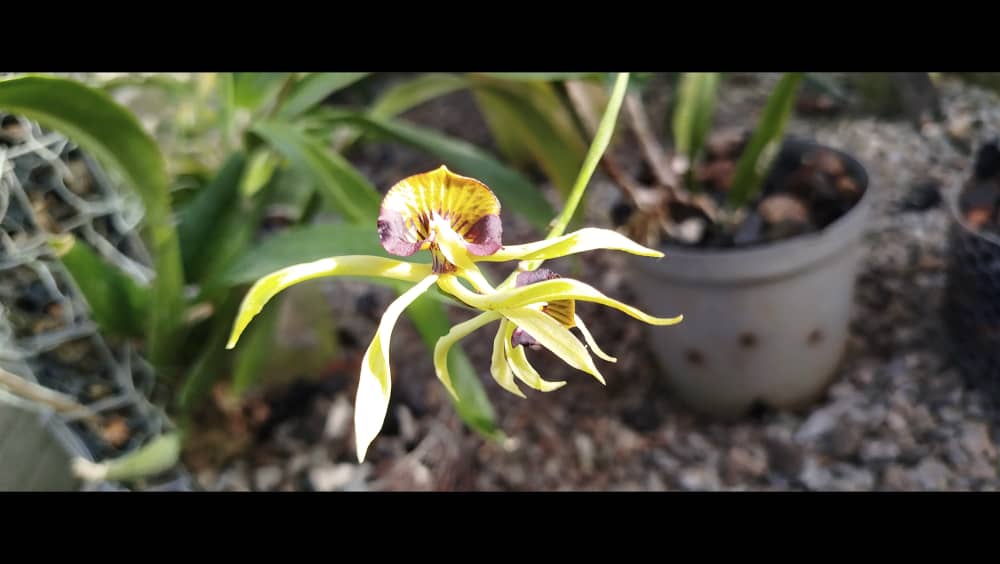
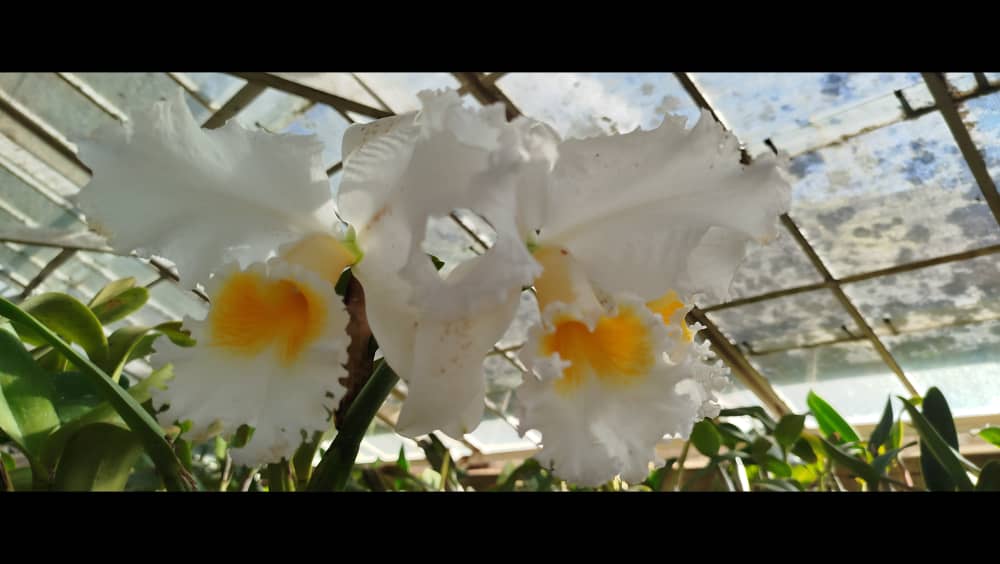
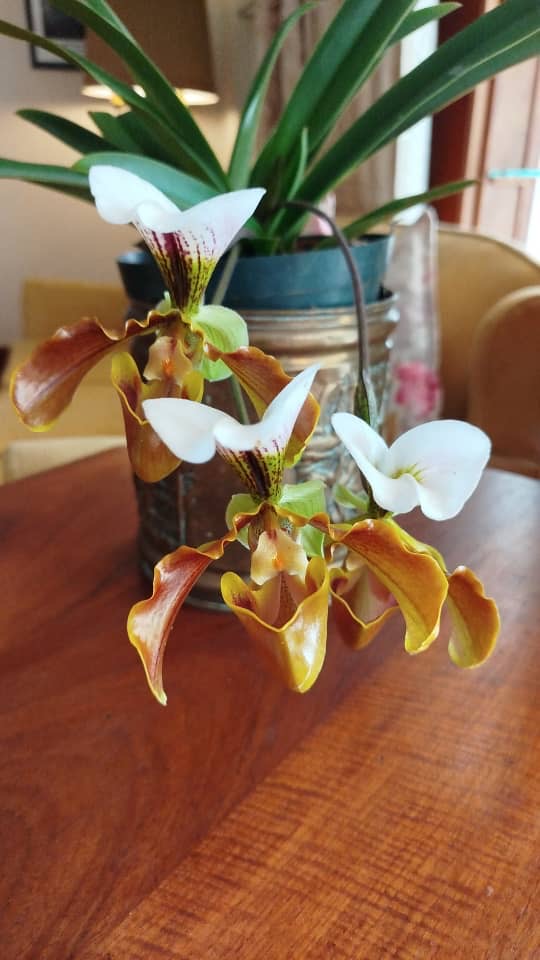
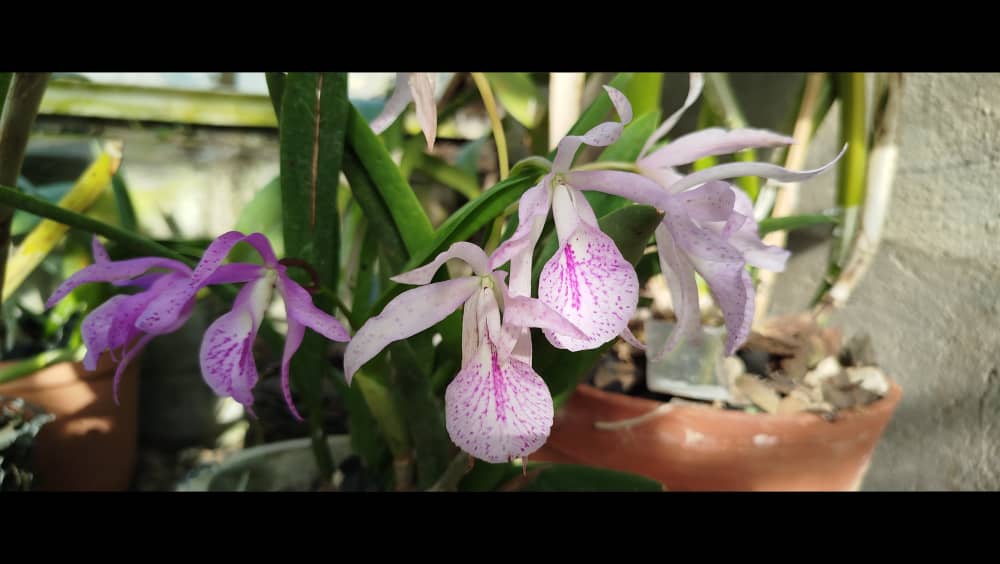
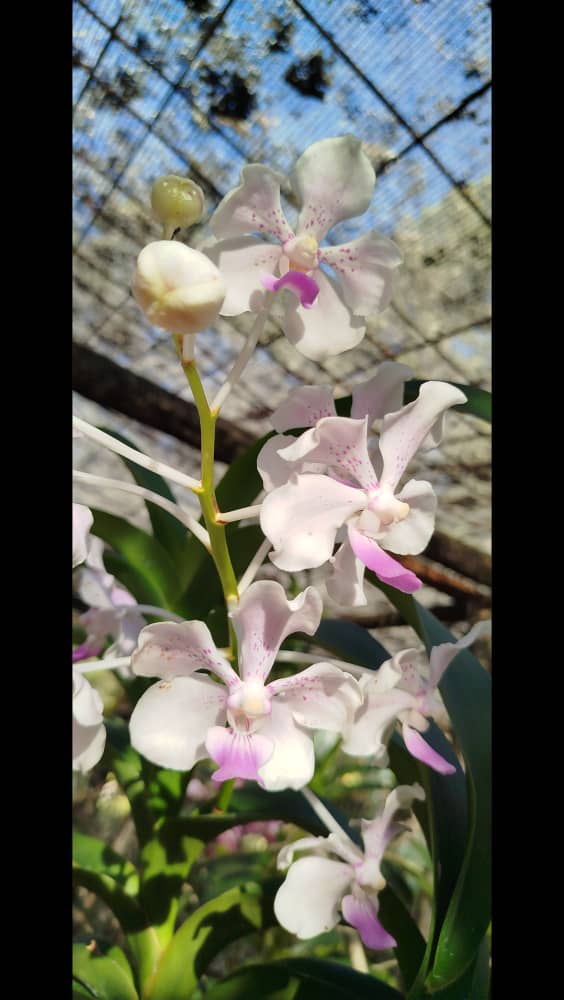
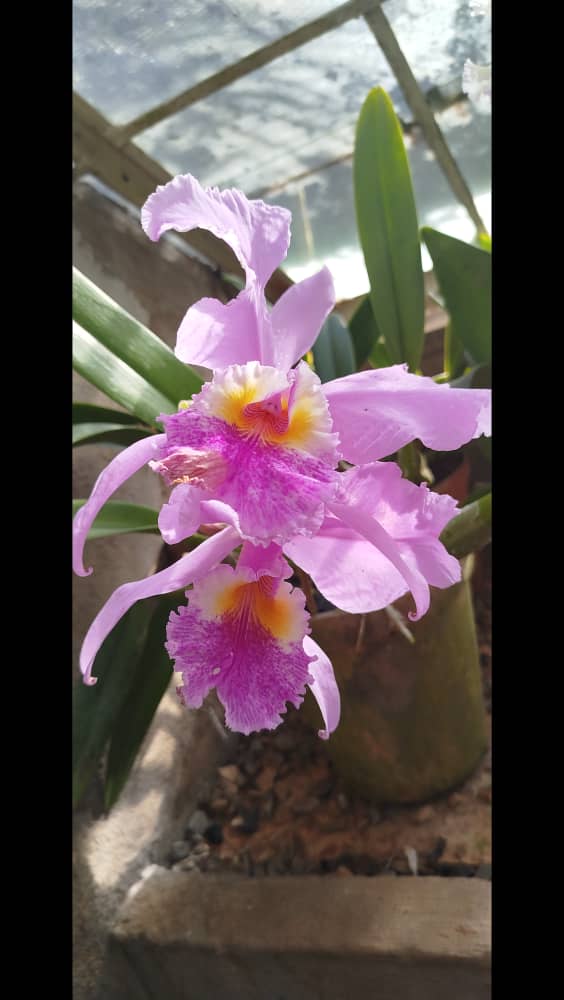
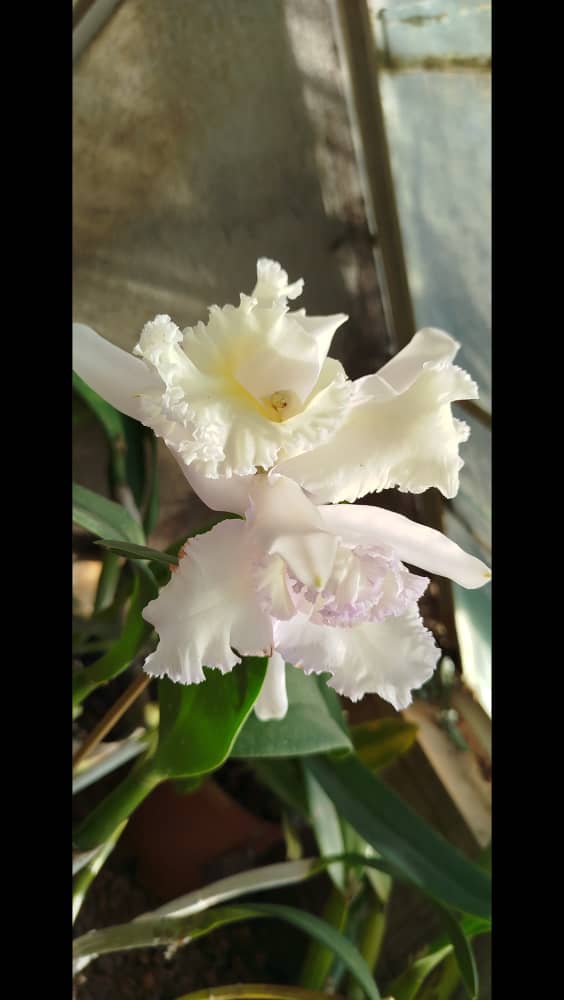
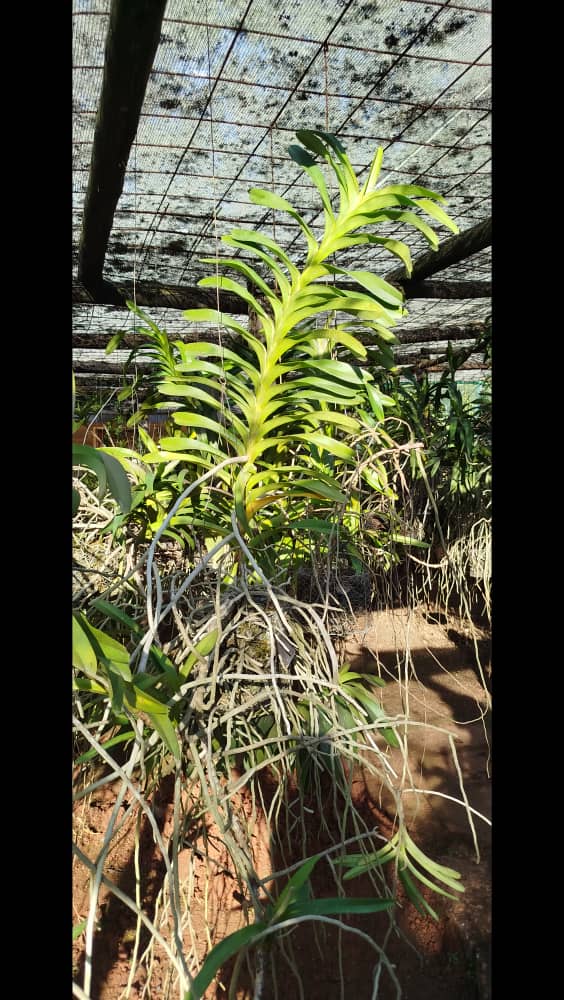
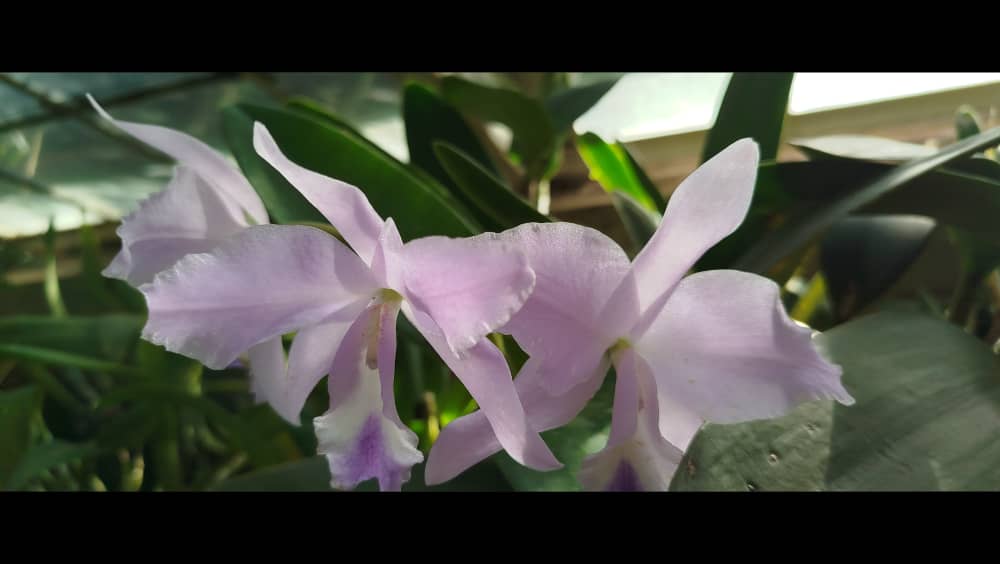
La Rochelle is looking fabuolous. The gardens are in great condition the estate is being maintained to a good standard. The hotel continues to receive some great reviews about the accommodation, the facilities and especially about the hospitality and food. Lin Goncalves, a Council member, visited the hotel over the last weekend of June to take much needed supplies up for the orchid shade houses. Kate Van Deventer had been up the week before. Both ladies met with Peter and Nhau and Joseph, the 3 gardners, who were very happy to see them and show them proudly around the shade houses.
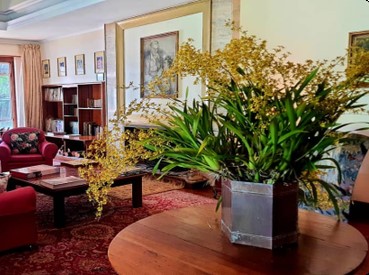
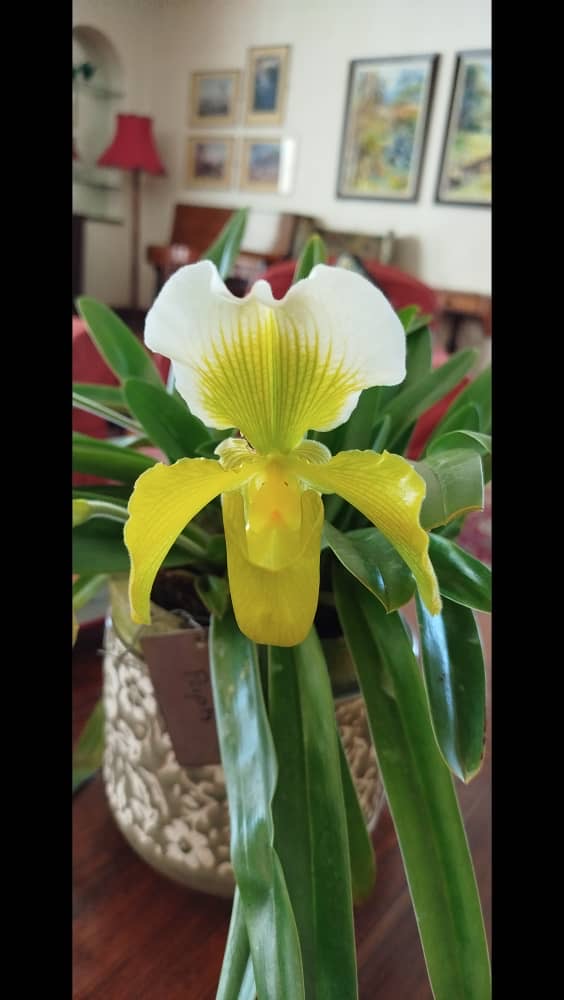
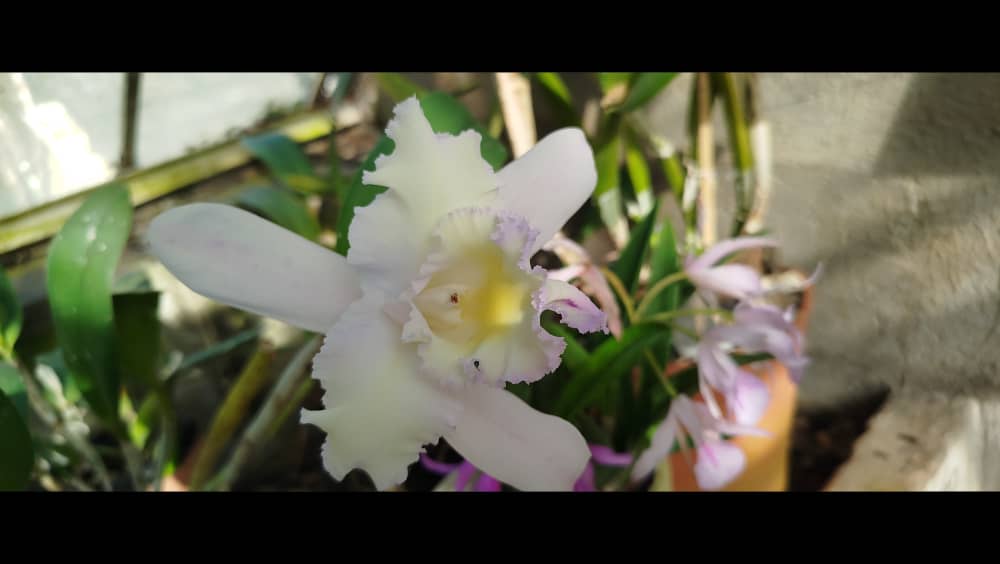
We are proud to share these stunning photographs taken from the orchid heritage collection that Lin took during her visit, some of the orchids are on display in the main hotel lounge whilst others are located in the shade house as you can see they are in superb condition:
Worlds View
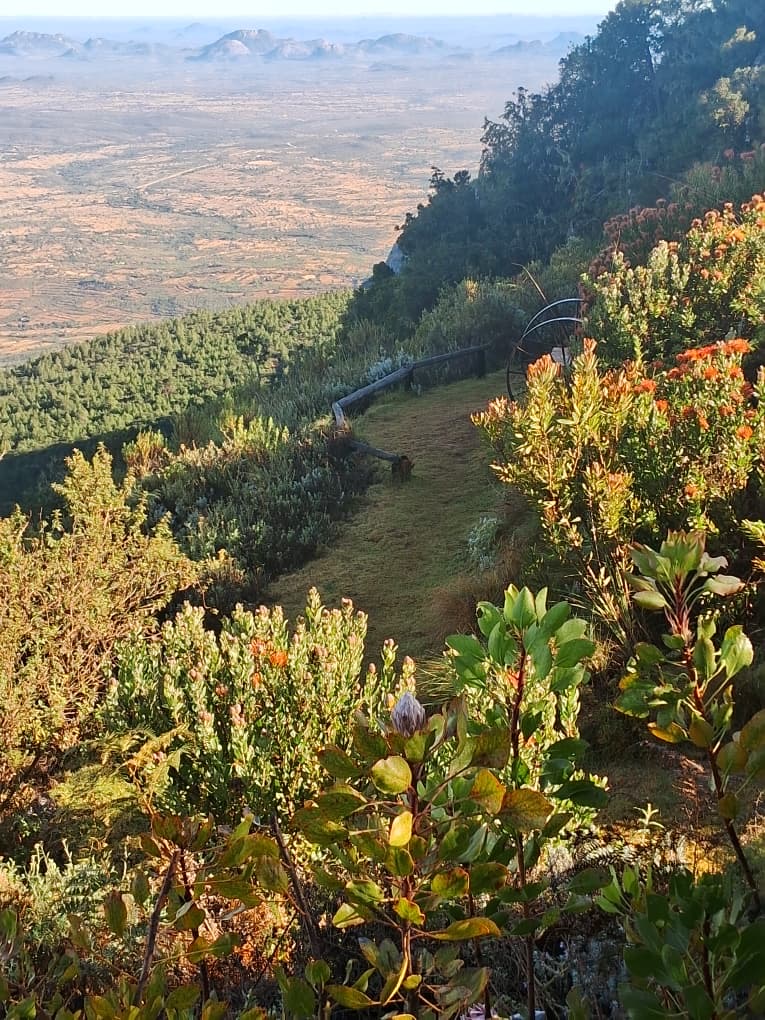
You are invited to come, take a seat, relax and marvel at the views over-looking the peaceful and timeless plains of the eastern highlands from the bird hide, the views are to die for. A new bench has been built that actually has the best seat and view on the hill.
Work continues, as always, in the grounds. Martin and Luke the groundsmen have removed 3 invasive black wattle trees.
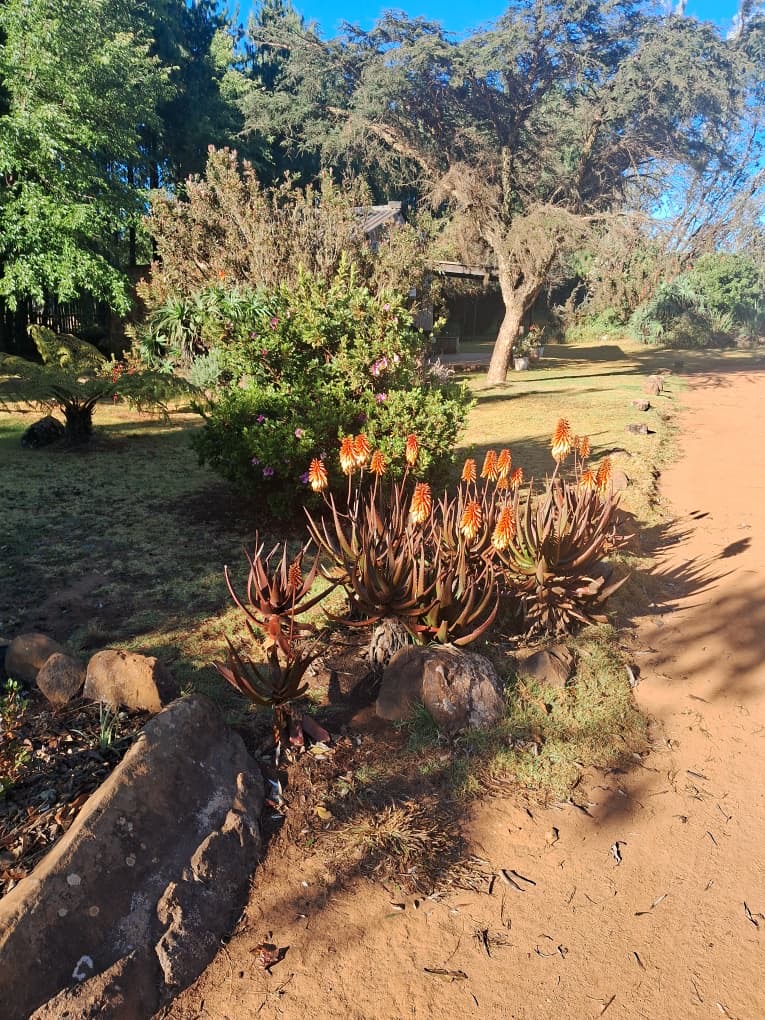
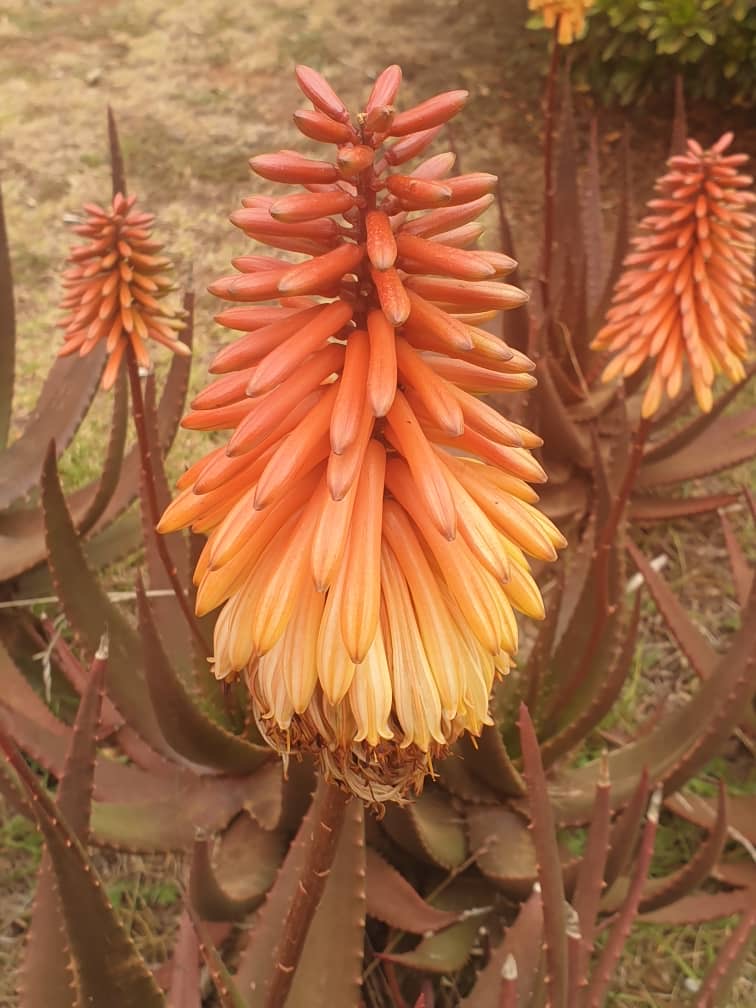
The aloes are looking magnificent and are native to the rocky, arid regions of southern Africa, including Zimbabwe and South Africa. They are highly prized for their architectural form and fiery, tubular flower spikes Blooms typically occur in late autumn and winter and the full sun brings out the most intense colors in the foliage and produces the best blooms.
We thank you for taking the time to read our newsletter, we hoped that you enjoyed it.
We welcome your contribution.
Please visit our website: ntoz.org Follow and like us on social media: Instagram: nationaltrustzimbabwe
Facebook: National-Trust-of-Zimbabwe