To our wonderful Donors

Everyone at the National Trust of Zimbabwe would like to acknowledge and extend an enormous

thank you to our donors past and present, the NTZ would not be able to carry out the great work that we are doing

without your kind and generous support and your belief in our national heritage protection work.

We appreciate you so very much!


The Australian Embassy


The Beit Trust 

The Curtain Foundation


The Don Grainger Memorial Trust


The Helen Hyslop Trust

The International National Trust Organisation


The Industrial Exchange Group  


The Thomas Meikles Trust


The Solon Foundation


  The Orchid Society of Zimbabwe


Sign of the Times


Webtex (PVT) Ltd

A Tale of Two Historic Homes: Eltham Palace and La Rochelle Country Estate


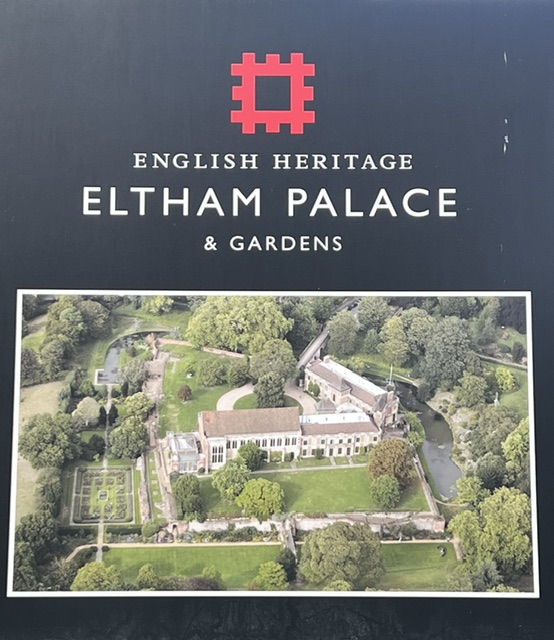
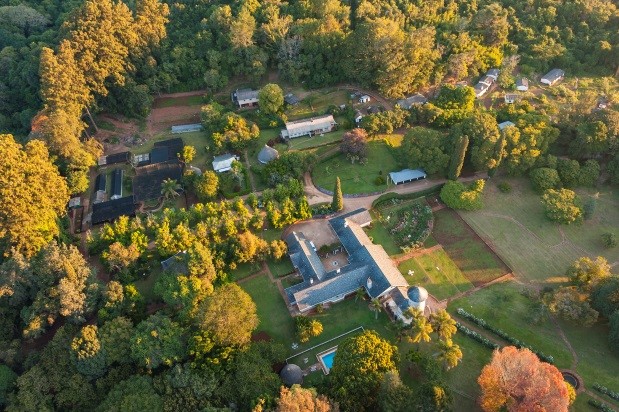
Eltham Palace, UK                                                            La Rochelle Estate, Zimbabwe

The late Sir Stephen and Lady Virginia Courtauld moved to Zimbabwe (then Southern Rhodesia) in their retirement years in 1951 after living in Scotland from 1944. They built an architecturally stunning French chateau styled home called La Rochelle Country Estate comprising of 226 acres in Penhalonga in the Imbeza Valley, nestled in the mountainous eastern border area, some 280 km from Harare and 20 km from Mutare. The Courtaulds’ very generously donated the property to the The National Trust of Zimbabwe (NTZ) in 1972.

One of the former homes of the Courtaulds’ was Eltham Palace, located in Eltham in the Royal Borough of Greenwich in south east London after acquiring a 99-year lease on the historic property in 1933. The original part of the palace was given to Edward II in 1305 by the Bishop of Durham: Anthony Bek and used as a royal residence from the 14th to the 16th century. Prince Henry Tudor, who would become Henry VIII, was born close by in Greenwich, spent much of his boyhood at the royal residence alongside his siblings and early years as king Henry VIII. The Palace is owned by English Heritage.

The Courtaulds’ lived at Eltham Palace from 1936 to 1944 over the period that encompassed the second world war spending over two years restoring the medieval Great Hall and building an incredible Art Deco home. Eltham Palace has been used in many historical films and series including the very popular ‘The Crown’’ and ‘Death on the Nile’.

These two amazing Courtauld homes: Eltham Palace and La Rochelle forged a special relationship between English Heritage and the NTZ and we have been enjoying a wonderful relationship with Eltham Palace for several years now: sharing historical information, findings of research projects and talking about collaborative projects in the future.

During a recent trip to the UK Mrs S. Waterworth, NTZ Deputy Chair, took the opportunity to meet our colleagues there in person. Here is her account of a fascinating and delightful day there.

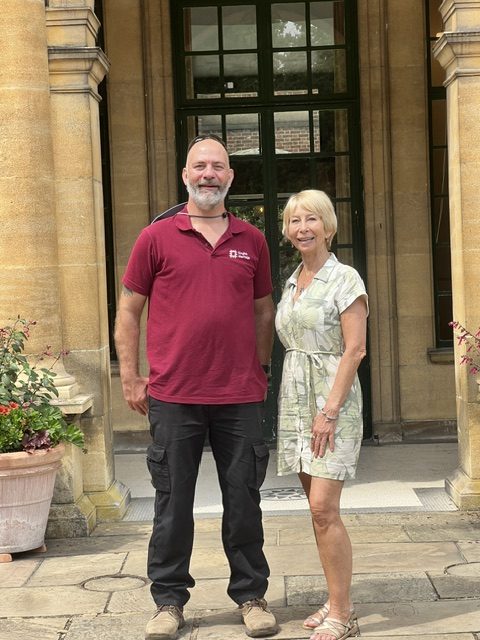
On a very hot and dry summers day in July I was very kindly met by Mr Aron Clay, the Eltham Palace Head Gardener who gave me a personal grand tour of the 19 acres of beautiful historic gardens on the estate. With the estate in front of us he explained the history of the grounds and showed me very detailed management plans that he had been working on. The plans are critical to managing an estate especially one that had several owners with different ideas and the various garden trends of their time: some of which are still evident today in the landscape. He shared his precious collection of historical formal drawings and sketches complete with every ancient tree, garden layouts, design features and plant species all plotted from the Courtaulds’ time right up to the present day.

  Mr Aron Clay, Head Gardner and Mrs Sharon Waterworth, Deputy chair NTZ

As we walked and talked in the unusual heat Aron explained the Courtaulds’ were looking for a country house not far from London and Eltham Palace ticked all their boxes. They were keen gardeners and eagerly participated in the creation of new gardens drawing inspiration from their travels around the world and from the latest trends in garden design at the time. As we continued I could see the medieval features such as a triangular herb garden woven into the current landscape and found it a fascinating and unique aspect of the estate.

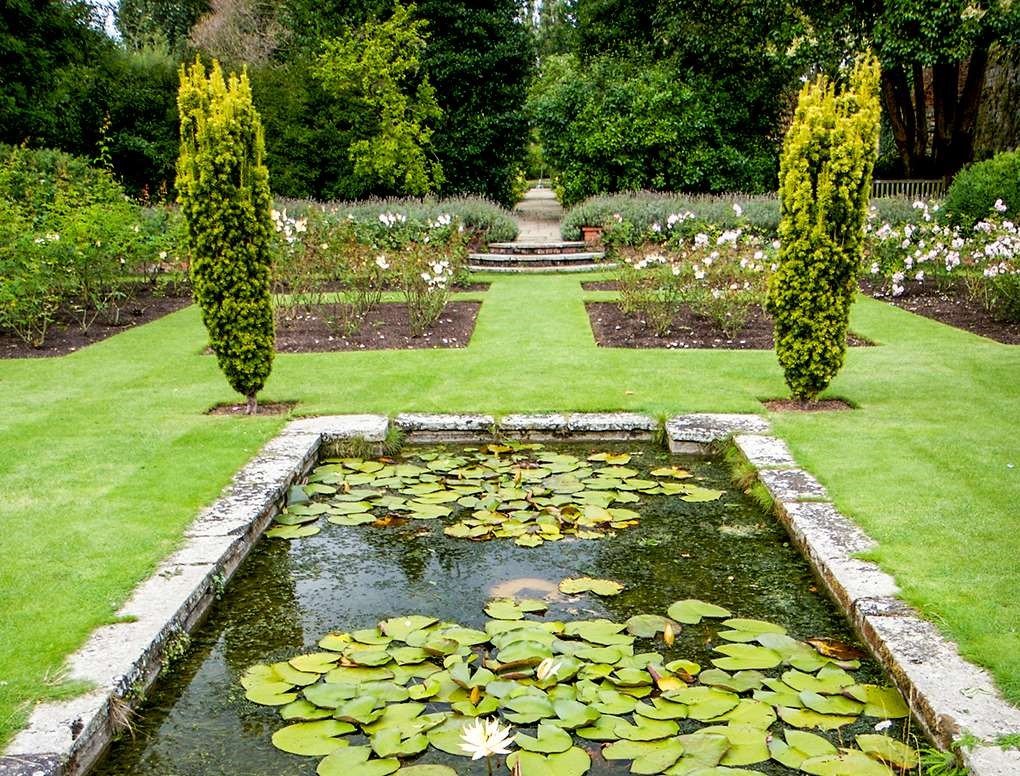
We strolled past formal well-kept lawns, flower beds and topiaries of shrubs clipped into defined geometric shapes and ended up at a sunken lily pond in the Rose Quadrant filled with beautiful displays of historic rose varieties such as Rosa ‘Grucc an Aachen’, bred in Germany in 1909 and hybrid musk roses including R. ‘Felicia’.


Sunken lily pond in the Rose Quadrant

We meandered through huge ancient oaks (my favourite tree), vital keystone species and symbols of strength with their distinctive heavy, thick twisted limbs and massive round, dome-like crowns. Some of the oaks were standing more or less in a straight line which I commented upon. Aron explained they were not planted by humans but wild sown by nature either by red squirrels or jays storing their annual stash of acorns and forgetting where they all were buried leaving some to grow into new trees. Isn’t nature amazing.

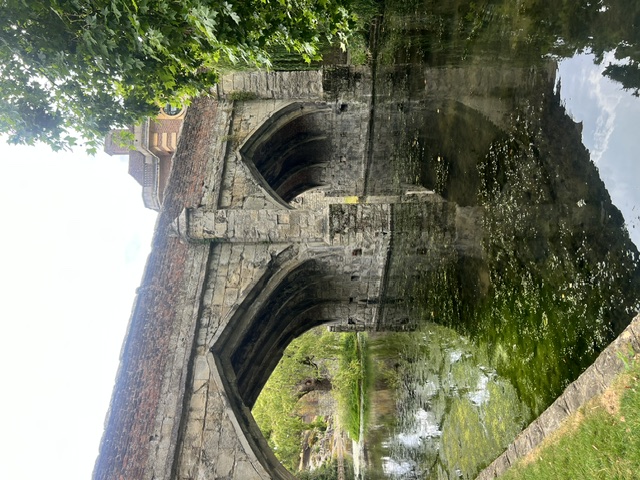
The ornate stone bridge over the moat with the Palace in the background 


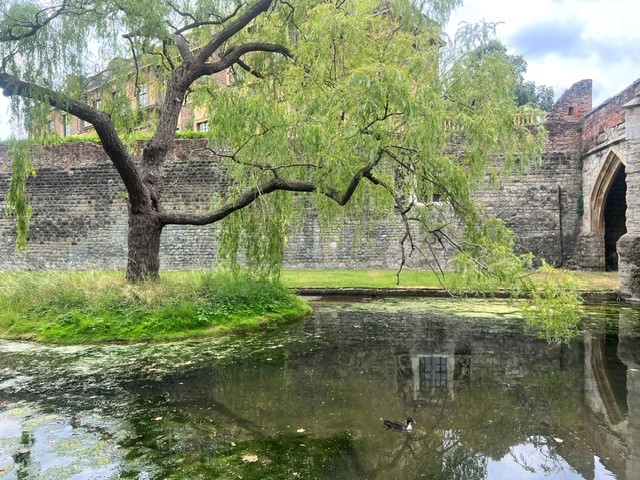
                Weeping Willow tree adjacent to the stone bridge with the Palace in                        the background

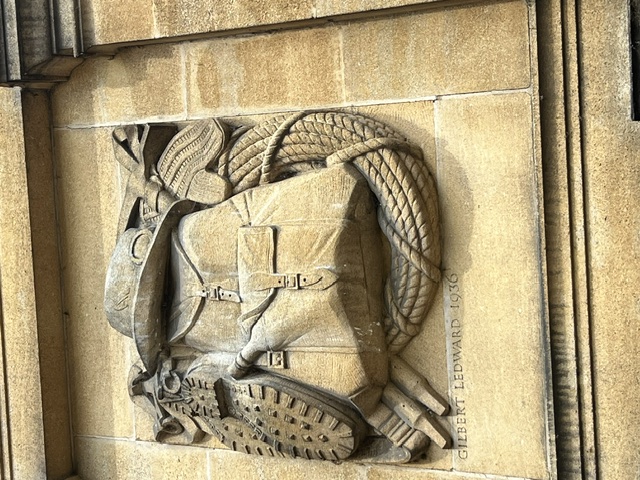
We stood overlooking the rock garden close to the house that Sir Stephen commissioned, with its series of pools and cascades running down to the filled moat.  He was a keen mountaineer and I noticed the bas relief overlooking the front entrance.

Bas relief with mountain equipment  

Aron and I talked over a nice lunch in the glass orchid house that is now a delightful café and he shared his two key visions for the garden that he is working on: firstly, incorporating elements of the medieval palace and secondly an exciting new idea of establishing community allotment gardens, the Palace is located in a busy part of urban London.  We were joined by the lovely Hannah Pearson, the Senior Gardener and we chatted about Sir Stephen’s orchid collection. Sir Stephen inherited a life-long fascination with orchids from his father Sydney, a horticulturalist of considerable repute in the UK.  When they left Eltham Palace the Courtaulds’ transported their collection of rare, exotic and indigenous orchids with great care to their new home in Zimbabwe.  Hannah shared her grand vision of bringing part of the important unique heritage collection back to Eltham thus creating a living link to the Courtaulds’ story, including the and only Lady Virginia orchid (Vanda lombakensis Virginia Courtauld) a rare natural hybrid Vanda orchid named after her by Sir Stephen Courtauld. The NTZ whole heartedly supports Hannah’s amazing vision and we are working towards it becoming a reality.

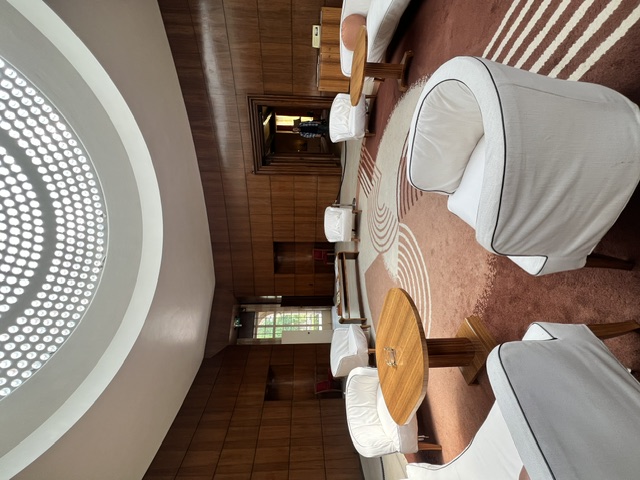
In the afternoon I had the real pleasure of meeting Dr Andrew Hann, Senior Curator of History (Research Oversight), Conservation, Curatorial and Learning Department   He led me into the lavish and elegant entrance Hall of Eltham Palace decorated by Swedish interior designer Rolf Engströmer, with its beautiful curved walls lined in Australian blackbean veneer. Either side of the doorway there are panels of intarsia (inlaid wooden mosaic) showing scenes from Italy on the left and Scandinavia on the right with incredible detail. Shining above our heads was an Ottoman circular reinforced concrete and glass dome that allows the light to flood into the hall through its concentric circles.

Circular reinforced glass dome in the entrance hall

Peter Malacrida, the Italian aristocrat designed most of the key interiors in the house and also of the art Deco furnishings for the Courtaulds’ sumptuous motor yacht Virginia, launched in 1930.

                                                  Furniture by Barnett Cohen and Sons of Shoreditch, London


The architects Seely and Paget were commissioned to build the house and restore the Great Hall and create a modern home attached to it. This was controversial at the time because they wanted to build it on the ruins of the medieval Eltham Palace and incorporate the surviving great hall, needless to say the project was a success and recognised as a masterpiece of 1930s design. This no doubt due to the fact that Seeley and Paget were keenly aware of the historical significance and sensitivity of the site which had been an important royal residence for over 300 years and took inspiration from Sir Christopher Wren’s restoration of Hampton Court Palace, designing a house ‘in Renaissance-Classical style, employing brick and stone’, which would be of two storeys only so as ‘not to dwarf the old hall’.

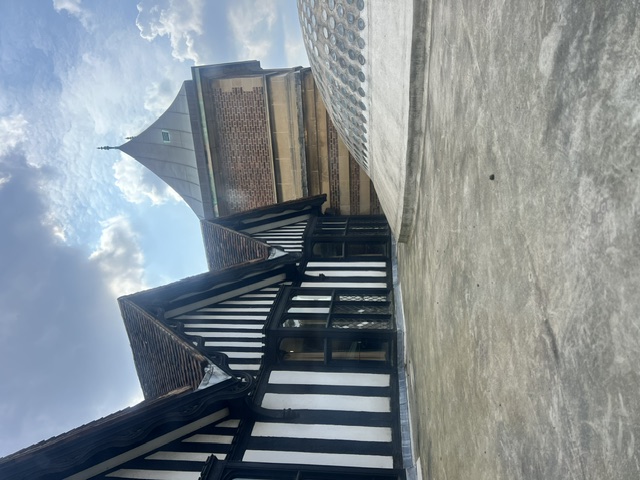
As we strolled along the upstairs hallway, with many bedrooms leading off it, Dr Hann pointed out the window and showed me some pretty complicated reinforcements that were carried out necessary in order to give the required span with little rise, so as to leave the dormer windows of the Tudor wing open to view and so the new glass dome did not block their view.

Dormer windows of the Tudor wing and the contrasting modern glass dome on the right hand side

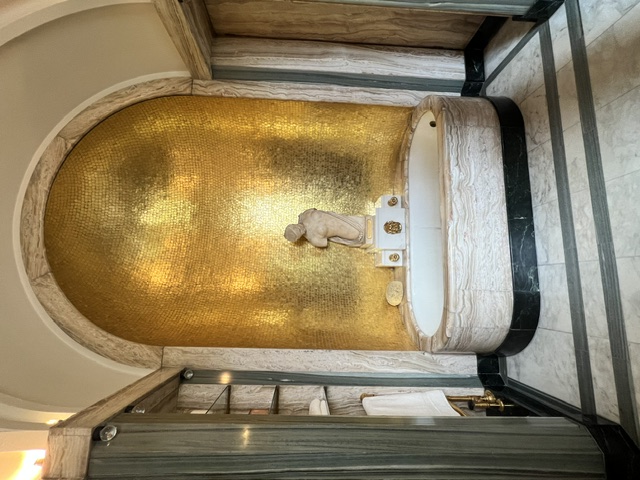
Without a doubt my favourite bedroom was that of Lady Virginia, opulent and beautifully designed with every little detail perfect down to the gold phone and the extravagant bathroom. Above the bath is a statue of ‘Psyche’ which is displayed within a gold mosaic niche by Peter Malacrida. I felt very privileged to be in her private space.

 Lady Virginia’s bathroom

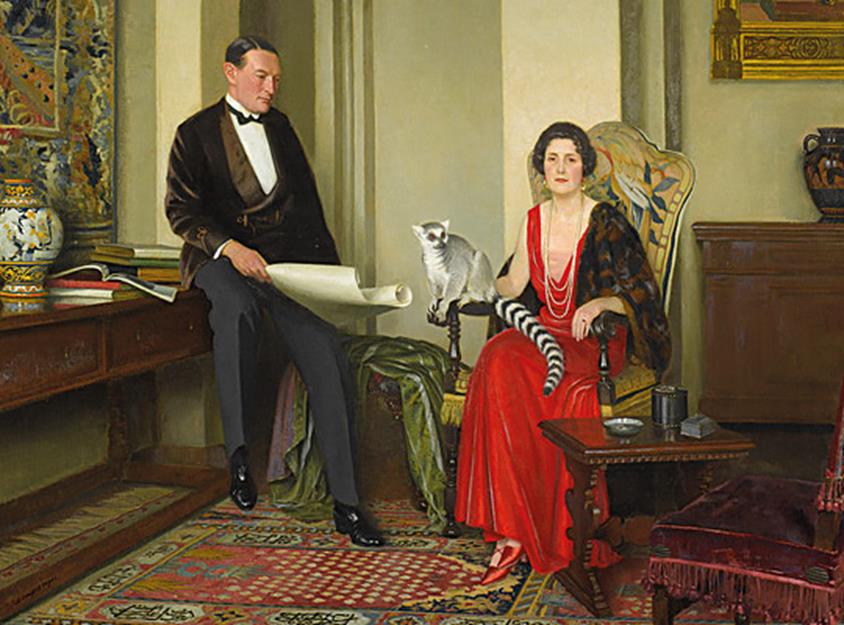
The Courtaulds famously shared their home with a ring tailed lemur called ‘Mah-jongg’ whom Sir Stephen had bought from Harrod’s in central London as a gift for Virginia and he became her constant companion. Mah-jongg who had a specially built network of tunnels in-between floors and had his own especially decorated and centrally heated upstairs suite with a hatch and a bamboo ladder leading down to the ground flower room that he could run around and play in. The Courtaulds with Mah-jonng

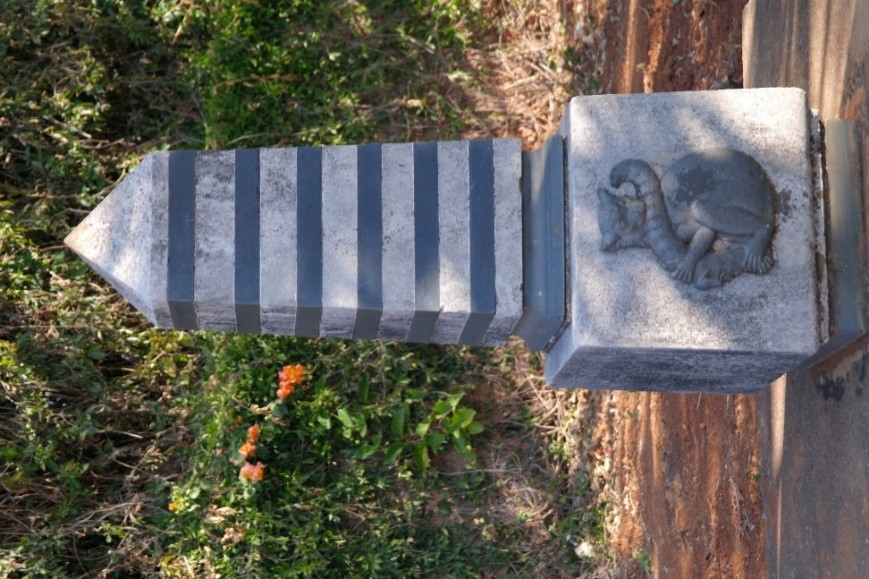
Mah-jongg accompanied them on their travels aboard their luxury yacht and when Mah-jongg died in 1938 he was buried in the garden of Eltham Palace and a specially designed memorial obelisk made from Delabole slate and Portland stone was placed over his resting place, designed by Gilbert Ledward who also cast the metal relief on the base. Years later, Mah-jongg’s remains and the obelisk were taken from the garden at Eltham and re-located to La Rochelle close to the sunny veranda overlooking the rose garden

. In memory of Mah-jonng: stone and slate obelisk in the gardens of La Rochelle

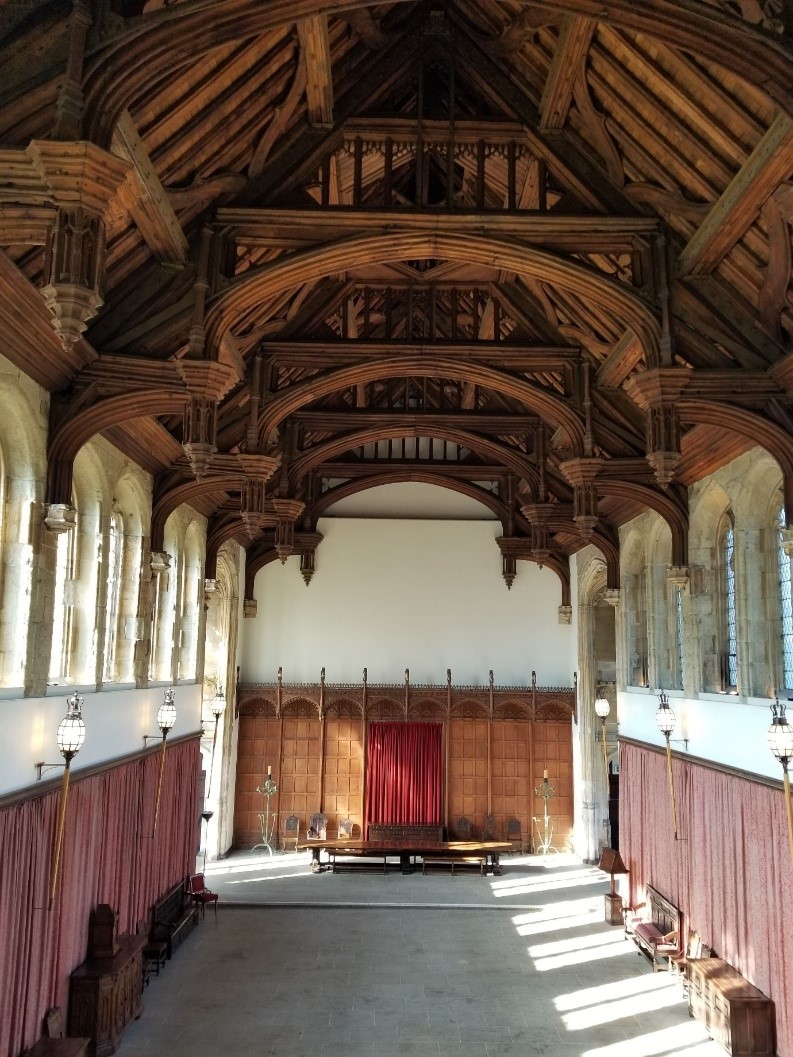
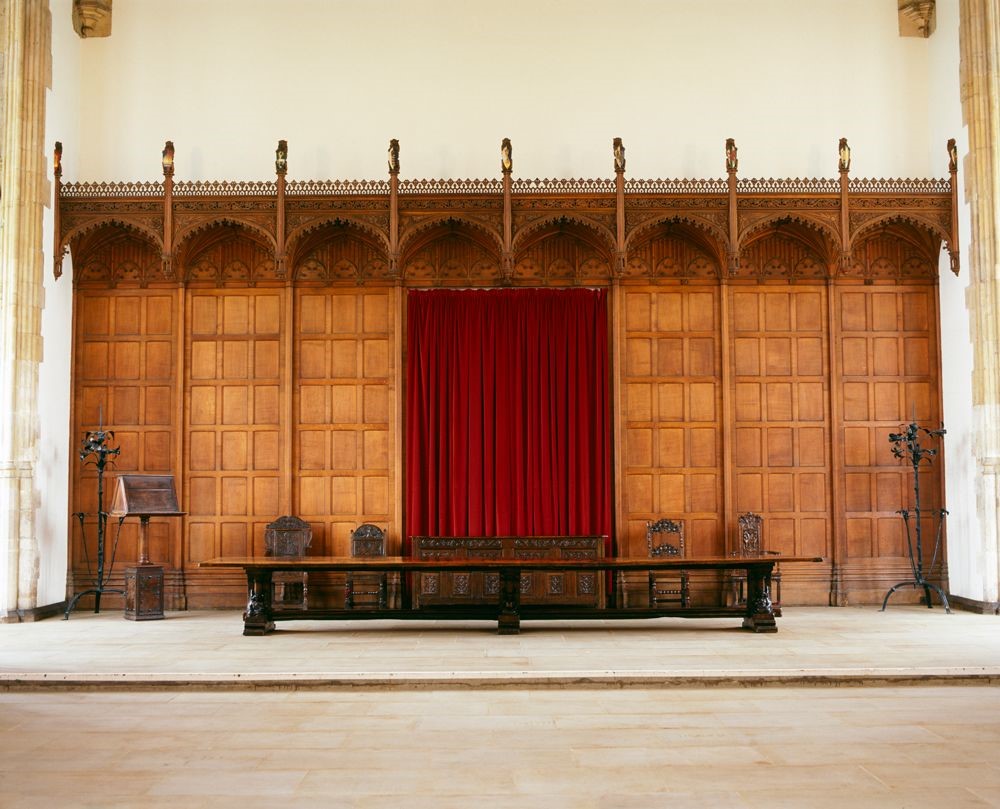
Dr Hann guided me onto  the enormous Great Hall, built by Edward IV in the 1470s, which is the only surviving part of the medieval palace and we stood on the minstrels’ gallery across Eltham Palace’s magnificent Great Hall. As I looked up and admired the glorious hammer-beam roof built for Edward IV more than 500 years ago, the intricate details and historical significance I had feelings of admiration, respect at the workmanship, design and pride too.

Restoration works undertaken by the Courtaulds’ included reopening six blocked clerestory windows, repairing oriel windows, reinstating stone coping, overhauling the roof, installing stained glass work, installing electrical lighting, a new floor laid with underfloor heating, replacing the east end screen and minstrels’ gallery above, and installing a screen and canopy at the west end.

Inside the Great Hall


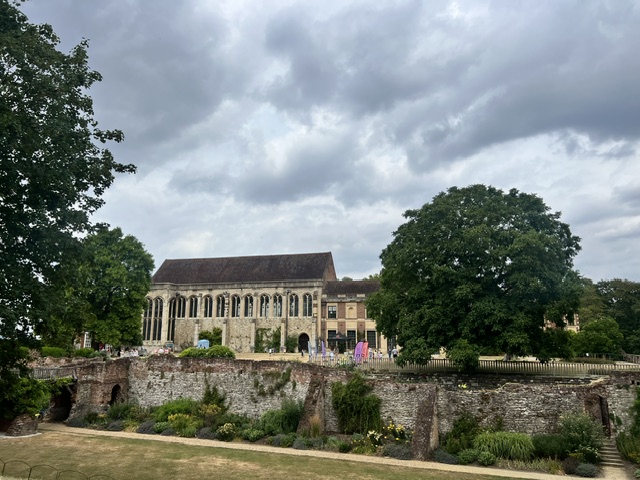
                                                                                              Outside The Great Hall

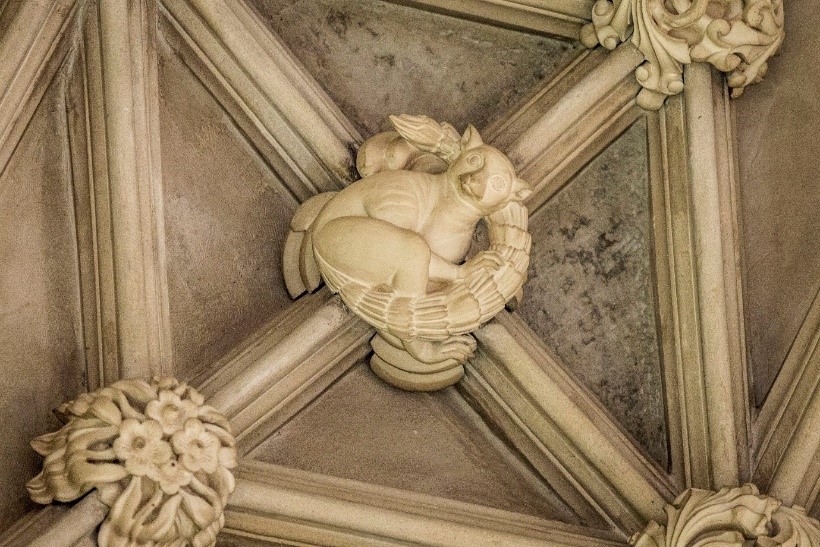
The screen and canopy at the end of the hall were supplied by Islington cabinet makers JL Green and Vardy. The carving on the canopy, modelled on the screen at Attleborough church in Norfolk, was by Graham and Groves, who also carved the new wooden bosses for the vaulting in the two bays, replacing damaged stone bosses. 


 Bas relief in the Great Hall featuing Mah-Jongg

I then had the real pleasure of meeting with Ms Sabrina Villani who is the Curator of Collections and Interiors and we had an interesting talk and shared our individual knowledge of the Courtaulds’ lives and their famous collections including sculptures, fine art paintings by master painters, rare orchids, gem stones, carpets and coins.  I shared my observations on the similarities between the two grand homes.

Both are architecturally spectacular: Etham Palace is an incredible modern Art Deco design whilst La Rochelle is described by a leading Professor of Architecture as:

“La Rochelle is a rare example in Africa of a major early Modern Movement (in architectural terms) private house, and almost unique in Zimbabwe, given the quality of its architectural detailing and of its interior decoration, especially in the Fantasia room and the Peacock cottage.”

The Courtaulds’ frequently entertained important and wealthy guests on a grand scale and it is very clear that both homes were especially designed to ensure their ultimate comfort with all the mod cons of the day. Both homes have a sprung dance floor, outdoor swimming pool, summer house and art collections. Both gardens were crafted and planted with the assistance of Kew Gardens and Royal Wisley Horticultural Gardens. Mr John Mitchell, formerly the head gardener at Eltham Palace, travelled out to La Rochelle to design the broad layout of the gardens and remained with the Courtaulds ‘for four years until 1955. Both historical gardens have winding rivers, streams and dams, arboretums, herbaceous borders, pergolas, rose gardens, orchid houses, ornamental ponds and herb and vegetable gardens to serve the kitchen’s needs.

Distinguished visitors at La Rochelle were asked to engrave their signatures with a diamond-tipped stylus on the two large end windows in the house. Over a 7 year period 3 volunteers painstakingly identified and documented 898 of the signatures of guests between the period 1954-1970 and published a book that provides a captivating historical glimpse of signatories ranging from African nationalist activities, political figures from various parties, prominent musicians, dancers’ actors and artists, historians, British aristocracy, local residents and more (available ntoz.org). Imagine my surprise when Dr Hann informed me that a signed window pane from Eltham, on loan from the Courtuald family, includes several inscribed signatures including those of Queen Mary and Elizabeth, Duchess of York.

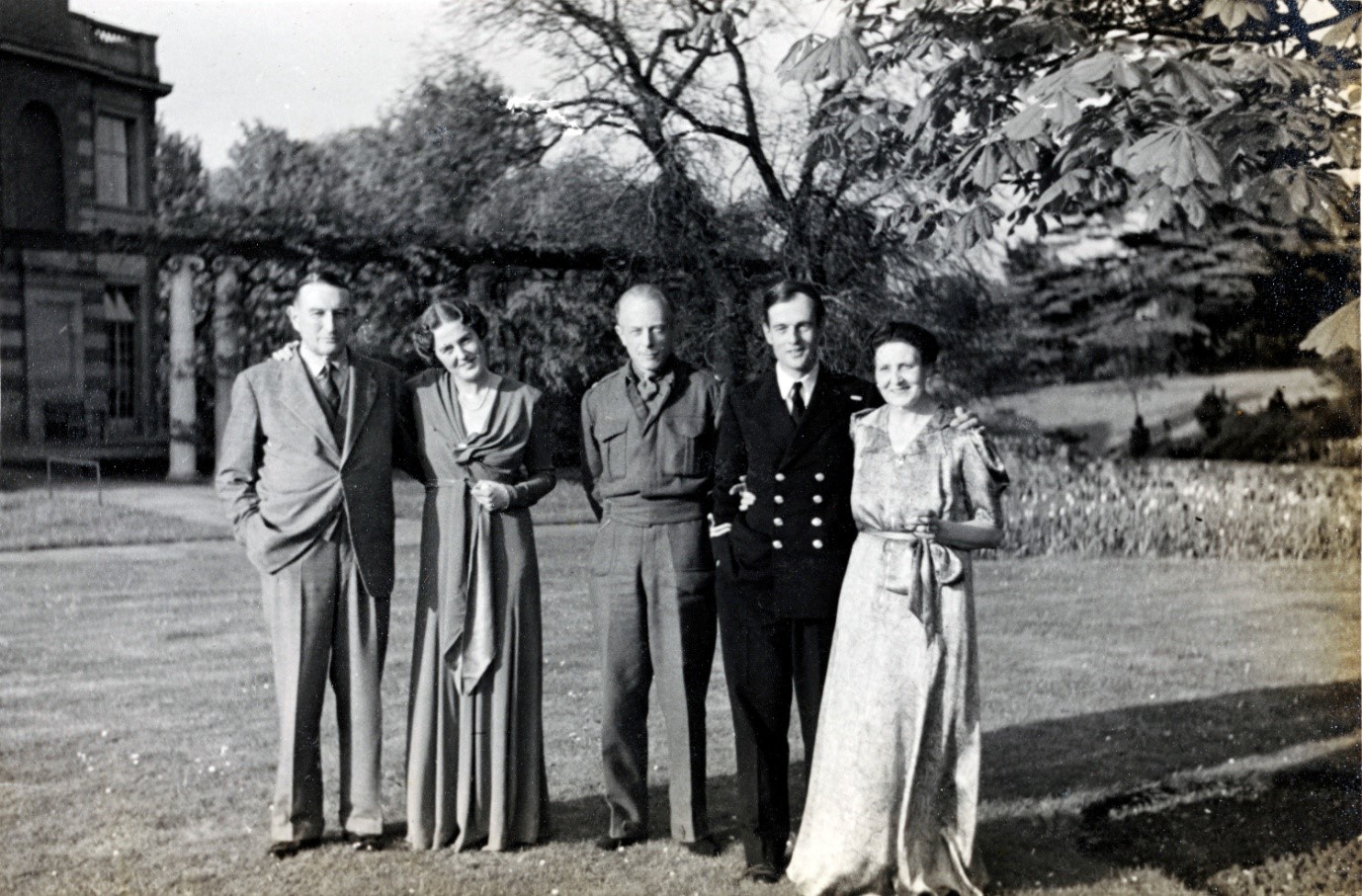
Sir Stephen, Mollie, George, August and Lady Virginia Courtauld in the grounds of Eltham Palace in World War II. George and August were Stephen’s cousins


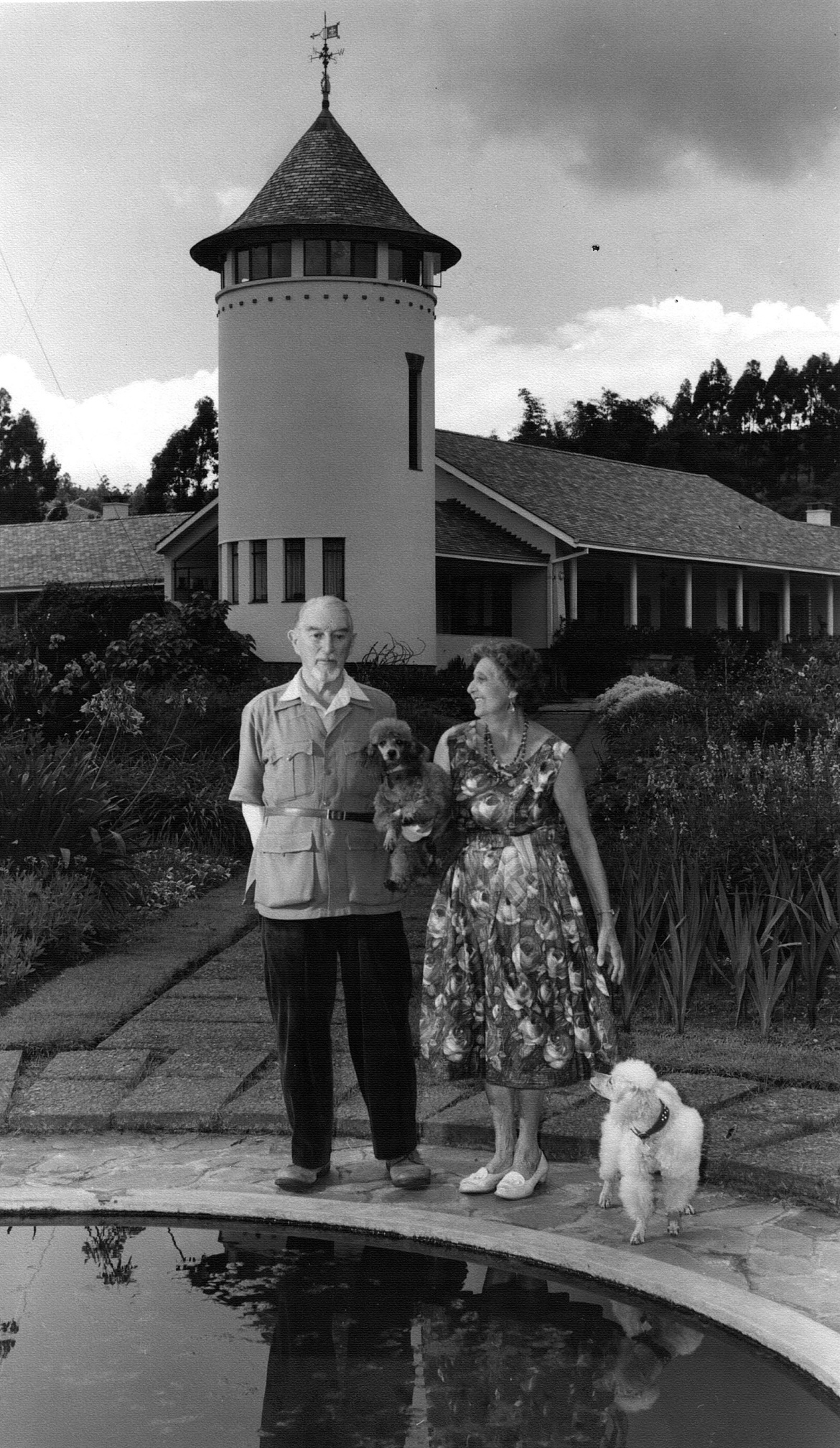
                                          Sir Stephen and Lady Virginia by the fish pond at La Rochelle circa 1963  

Sir Stephen passed away in Salisbury (Harare) Zimbabwe in 1967 at the age of 83 following the amputation of his second leg.  Lady Virginia stayed at LAR until 1970 when after a period of ill health, she moved to Jersey where she passed away in 1972. Her ashes were flown out and reunited with Sir Stephens at the base of the tower of their beloved home.

A tale of two homes: the Courtaulds’, great philanthropists who bequeathed their homes with all their treasures onto English Heritage and NTZ and in doing so they have inspired so many people and left their amazing legacy and history for future generations to enjoy.

I would like to express my sincere gratitude to Dr Hann, Aron Clay, Hannah Pearson and Sabrini Villani for extending a very warm welcome to me, for their professionalism, sharing their expertise with me and for their incredible passion for Eltham Palace. It is a real privilege to work with you all and I sincerely look forward to hosting you at La Rochelle once day soon.

References

Mr B Mennell, The National Trust of Zimbabwe and Acumen (2015): Visitors guidebook: Last home of Sir Stephen and Lady Courtauld

Photographs courtesy of Eltham Palace and National Trust of Zimbabwe

https://www.english-heritage.org.uk/visit/places/eltham-palace-and-gardens/


Rare Exotic Orchid blooms at La Rochelle Country House

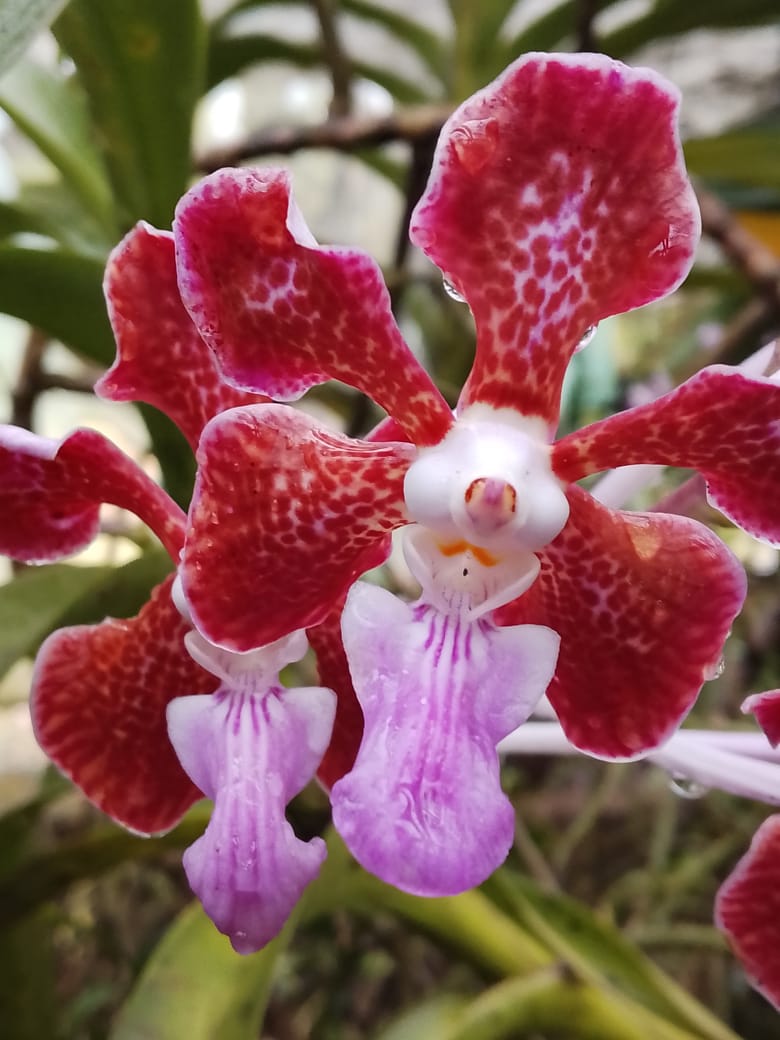
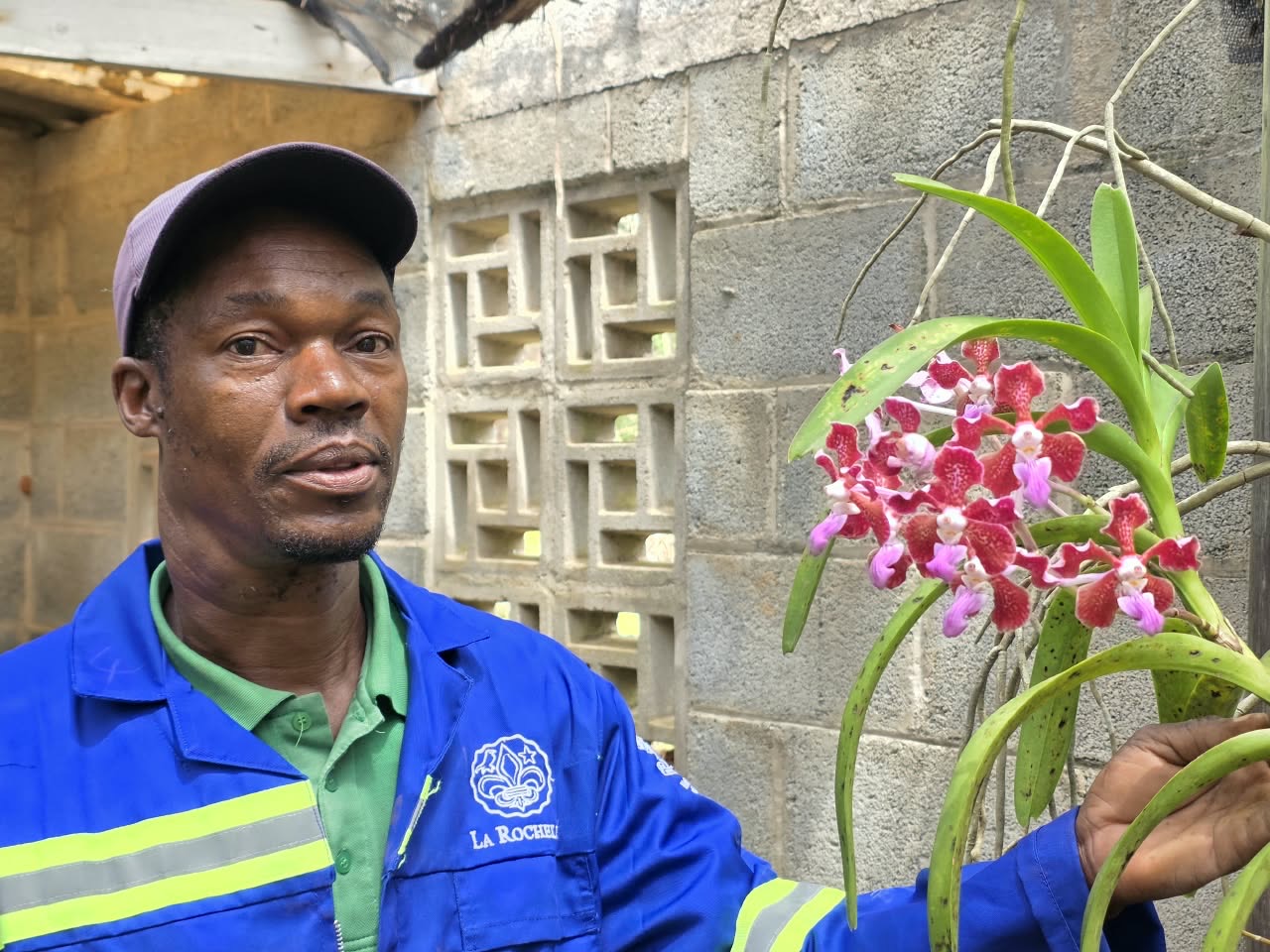
We have some very exciting news to share with you:  the rare, natural hybrid Lady Virginia orchid (Vanda lombokensis Virginia Courtauld) an orchid named by Sir Stephen Courtauld for his wife, Lady Virginia Courtauld, has just flowered in the orchid house at La Rochelle Country House!


Nhau Tinga proudly revealing the Lady Virginia Orchid

The orchid is exceptionally rare and has only flowered a handful of times in recorded history, famously making headlines when it bloomed in October 2016 for the first time since 1973. It has since bloomed more regularly annually including 2023, 2024 and 2025.

The orchid has a rare beauty, is unapologetically elegant and stunningly beautiful!

The NTZ would like to express its sincere gratitude to the orchid team including Peter and Nhau at La Rochelle for their total dedication in nurturing this rare exotic orchid and for their expert care and respect it has required over all the years.

 “A thing of beauty is a joy forever.”  John Keats 

Here are some fun orchid facts for you that you will enjoy:

Orchids are special because they form one of the largest, oldest, and most diverse plant families on Earth, featuring extraordinary evolutionary survival skills and unique growth habits.

Extreme Diversity and Evolution

  • Ancient lineage: Orchids have existed for over 100 million years, meaning they shared the planet with dinosaurs

Massive family 

  • They are the second-largest flowering plant family, with more than 30,000 wild species and occur the world over, except in the two Arctic zones

Size extremes

  • They range from the world’s smallest orchid at just 2.1 millimeters to the Asian giant tiger orchid, which can weigh over a ton

Unique Survival Habits

 Air-dwelling nature

  • Many orchids are epiphytes (plants that grow on other plants, like trees, instead of soil), absorbing moisture and nutrients directly from the air and rain through exposed roots

Masters of deception

  • Some species mimic the look, feel, or scent of female insects to trick male bugs into pollinating them

Dust-like seeds

  • An individual orchid pod can release millions of microscopic seeds that rely on specific fungi to germinate

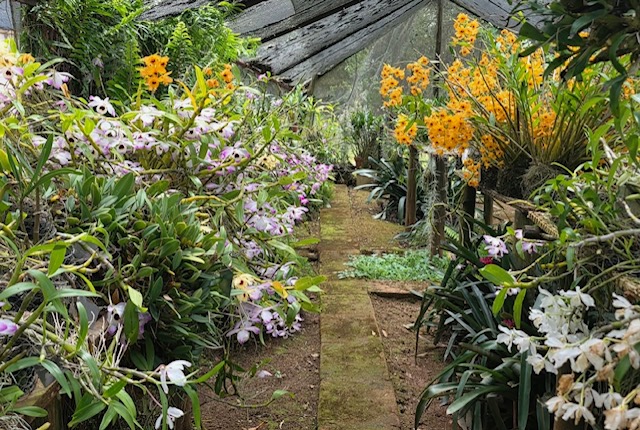
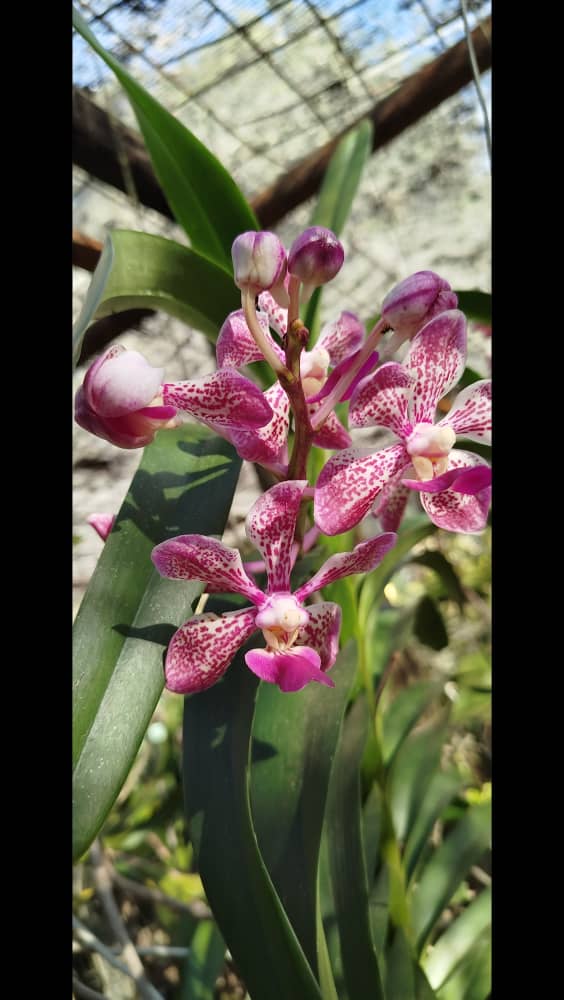
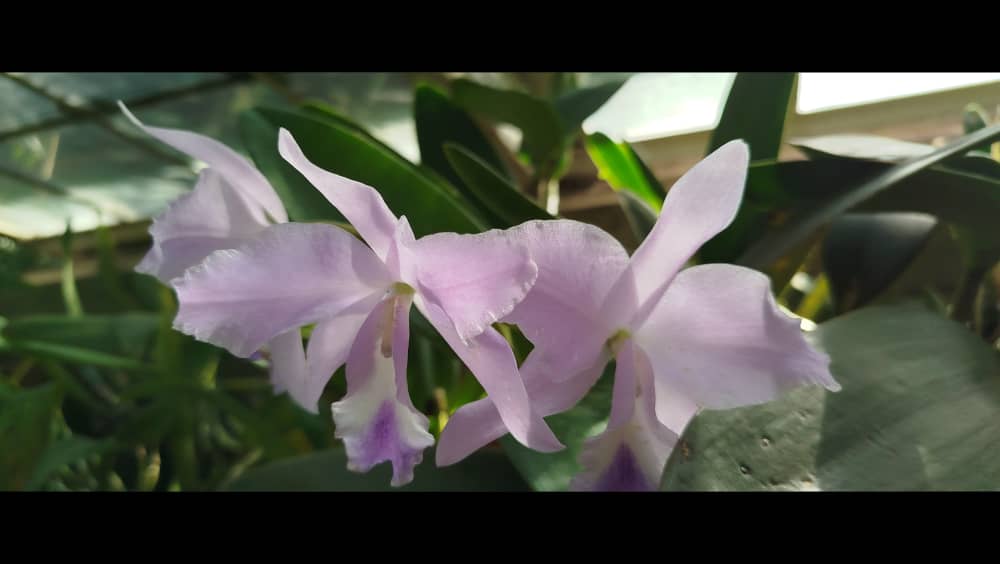
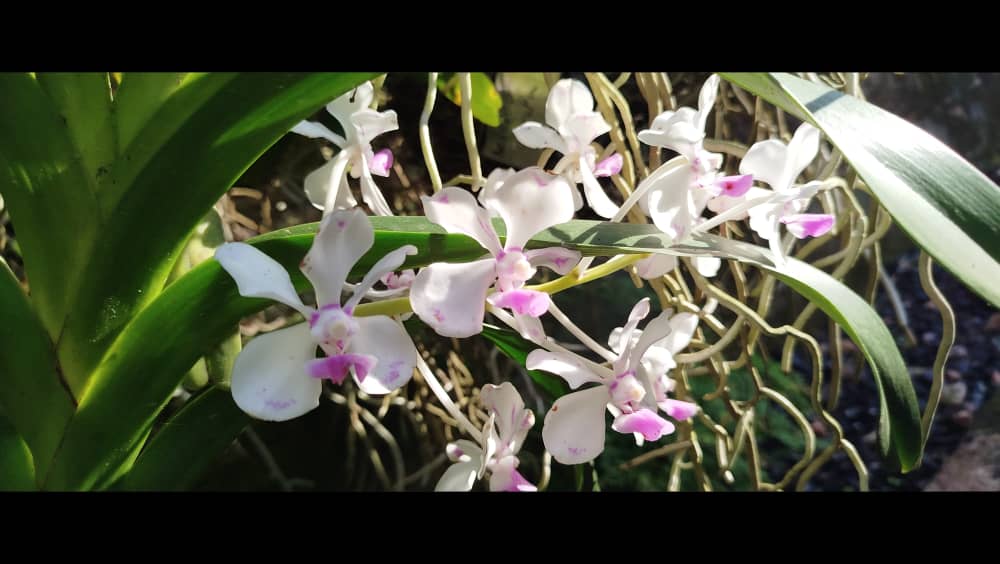
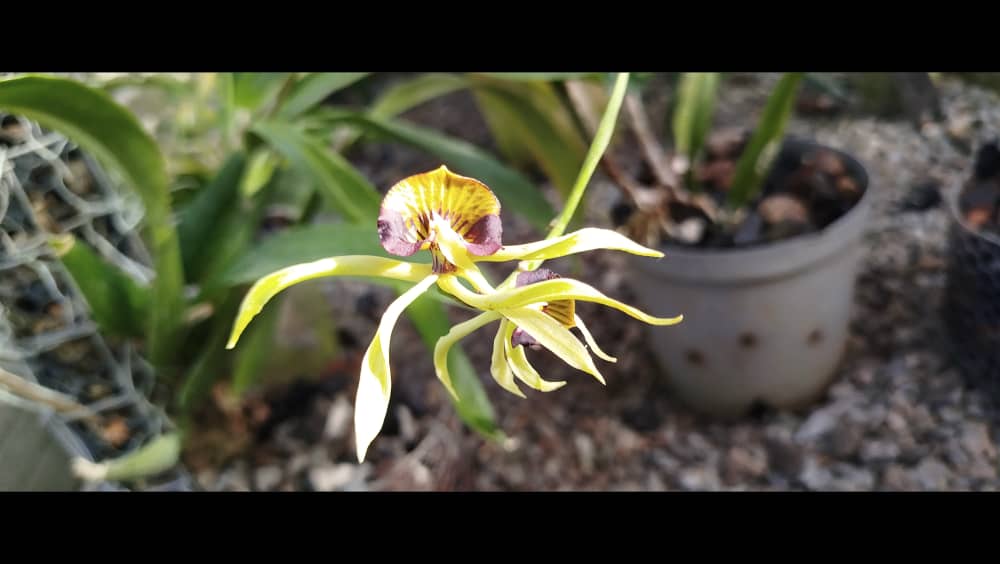
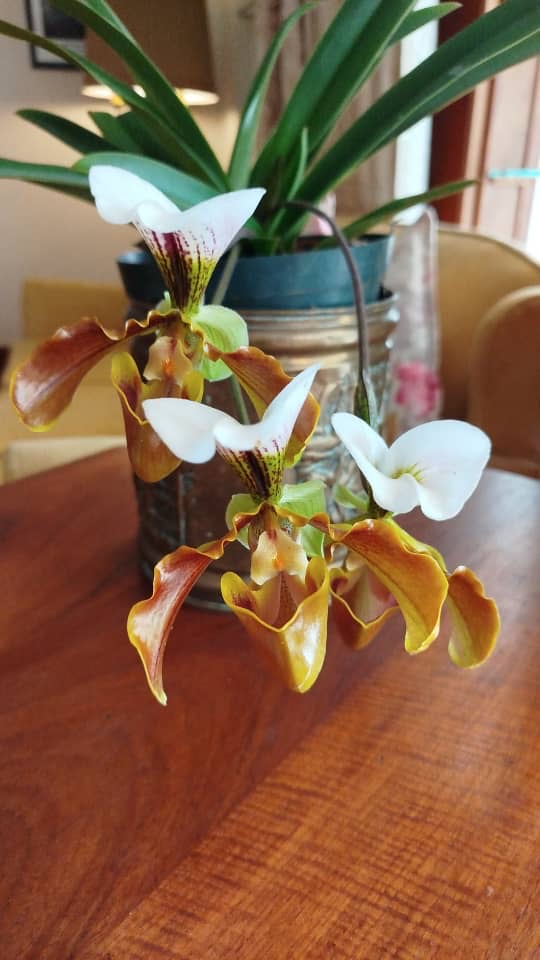
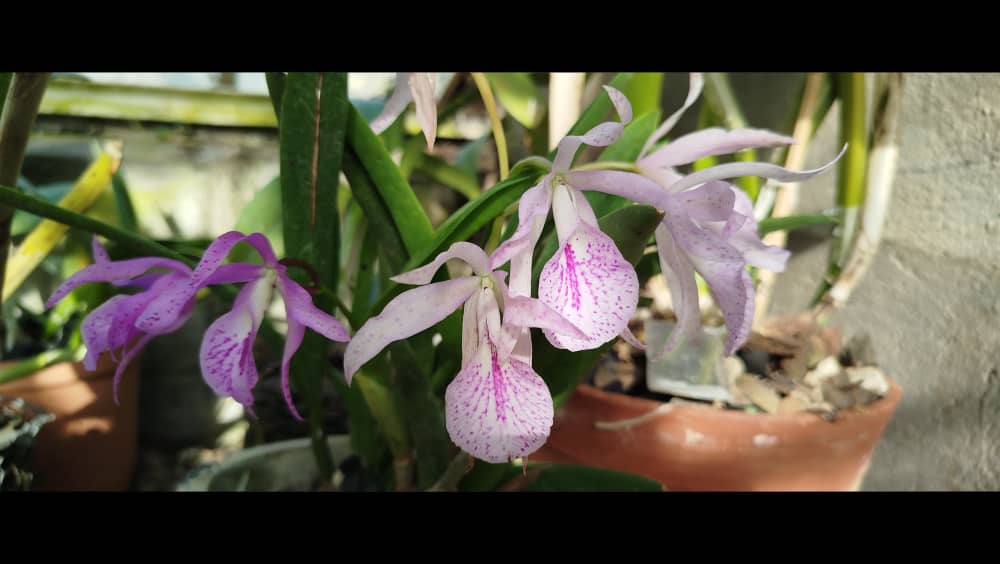
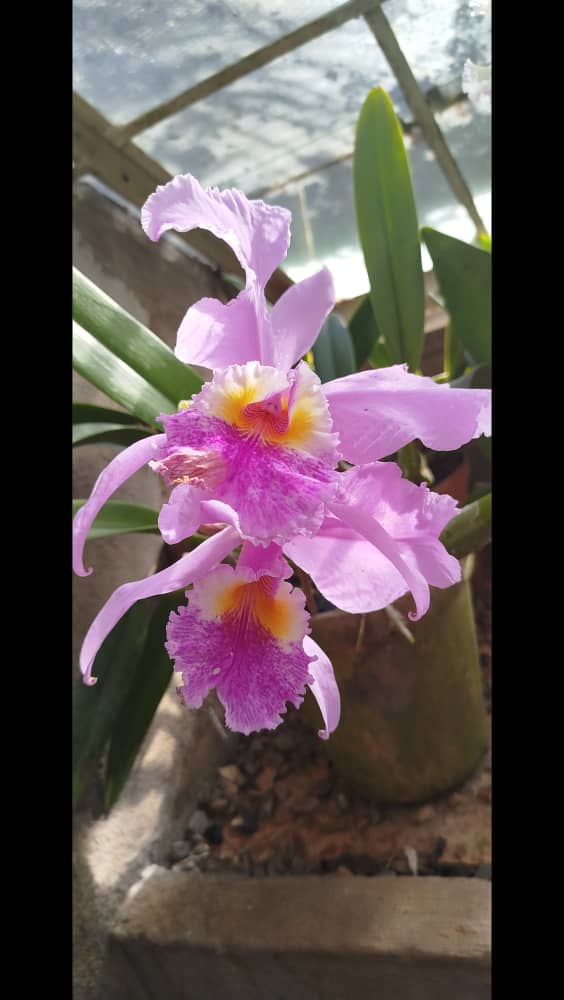
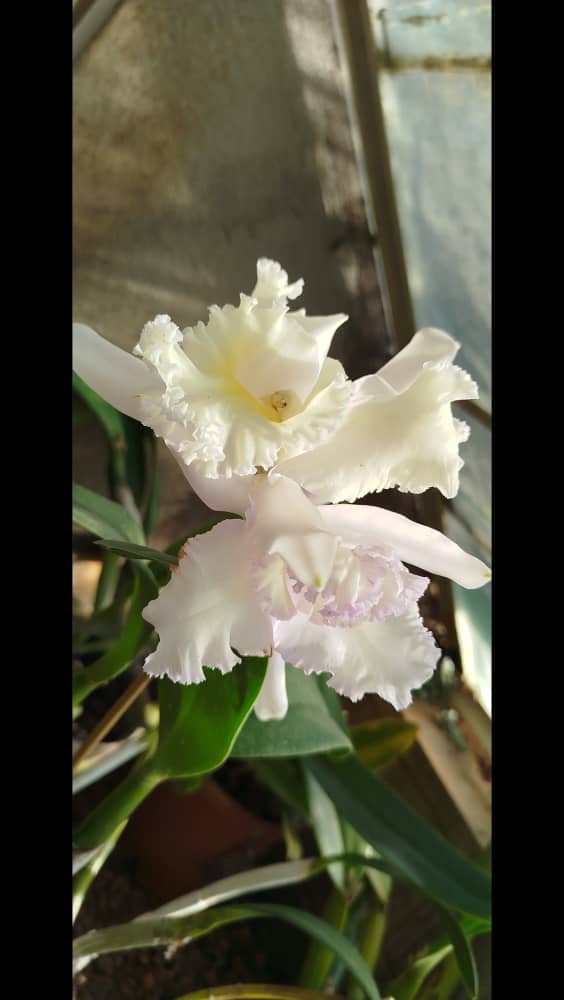
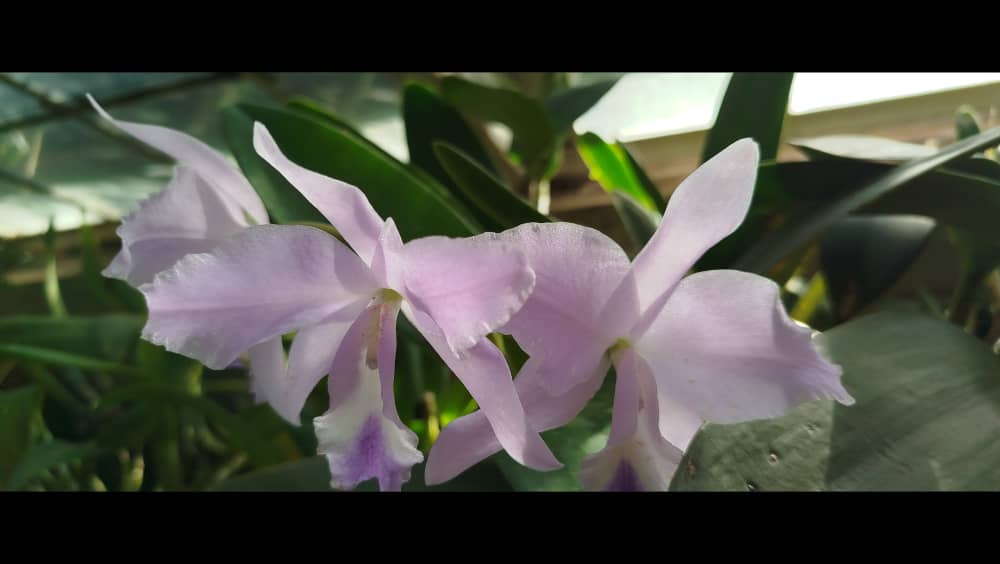
The orchid shade house is looking much better post the renovations, here are some of the other beautiful orchids that are thriving there.

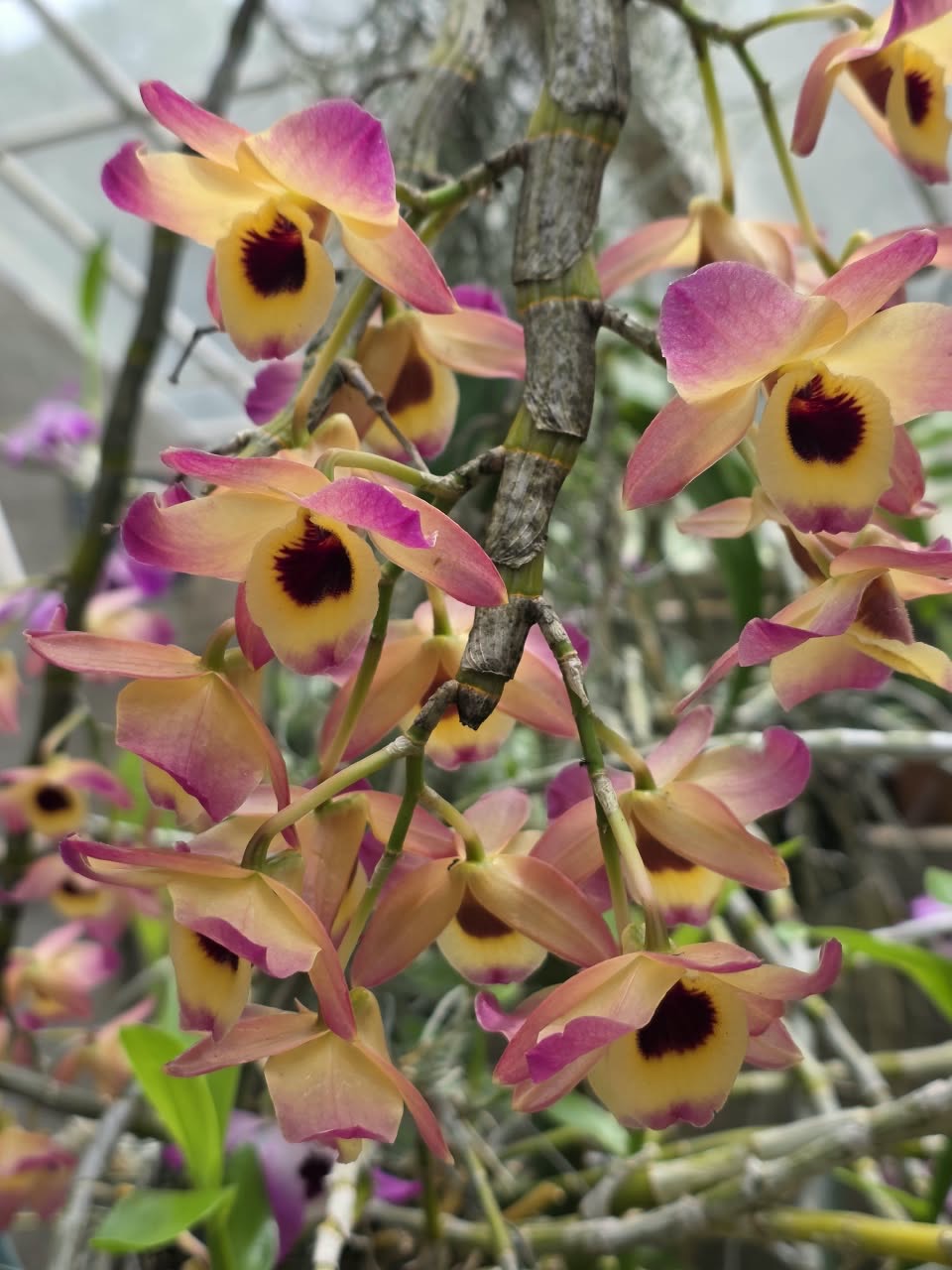
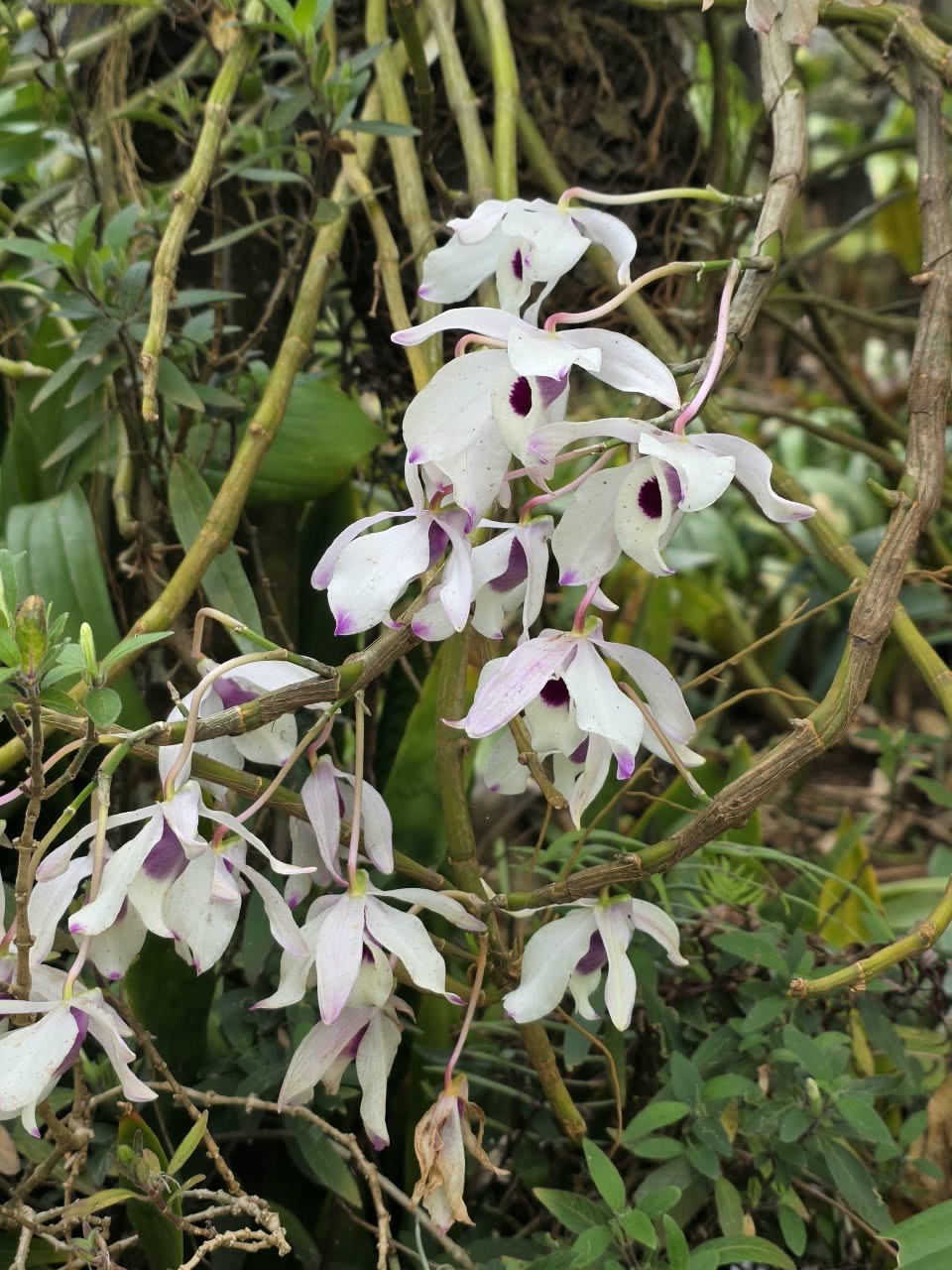
 The pinky lilac orchids on the left and the white on the right are Dendrobium nobile and the yellow orchid is Dendrobium fimbriatum var. oculata

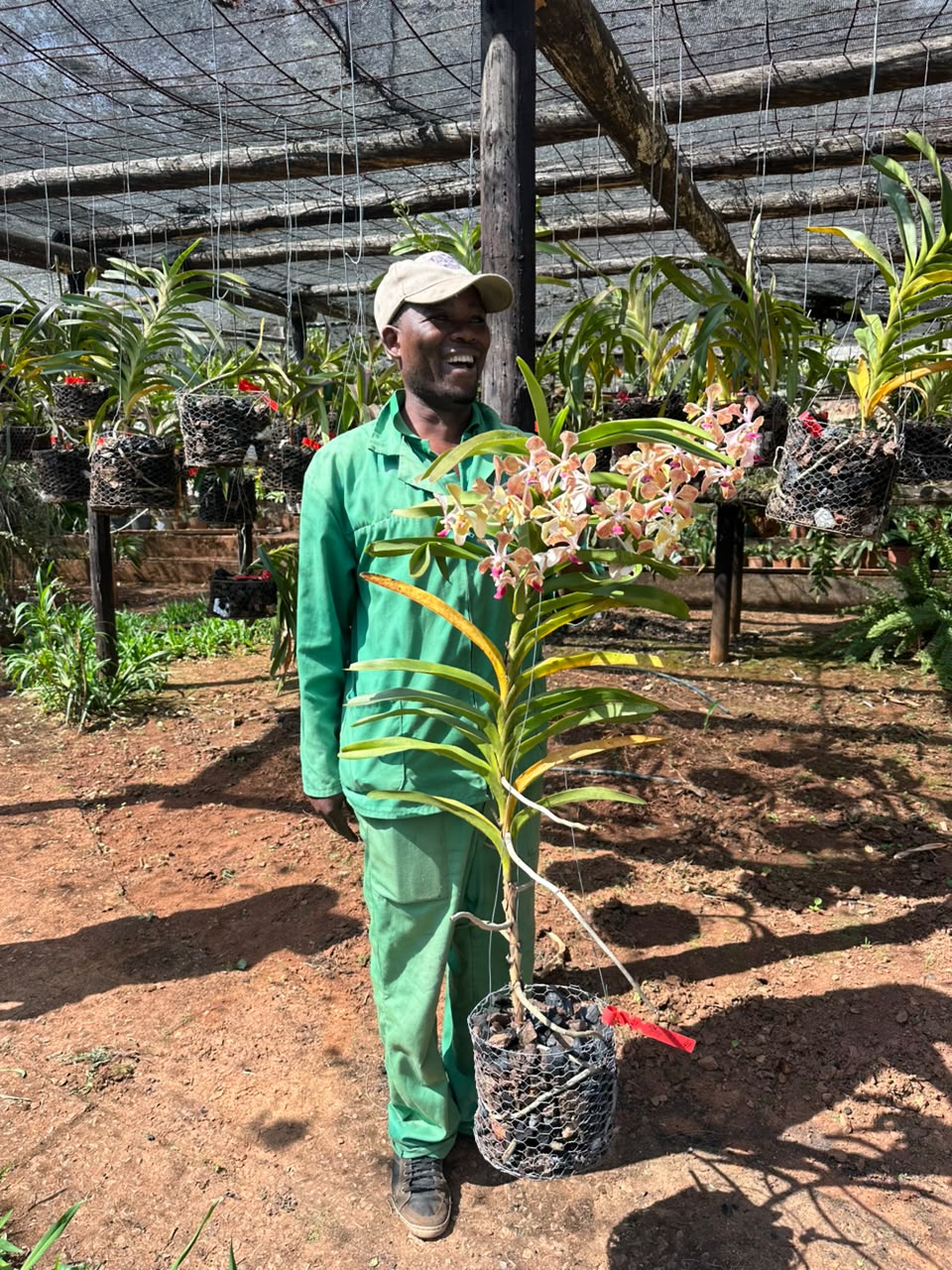
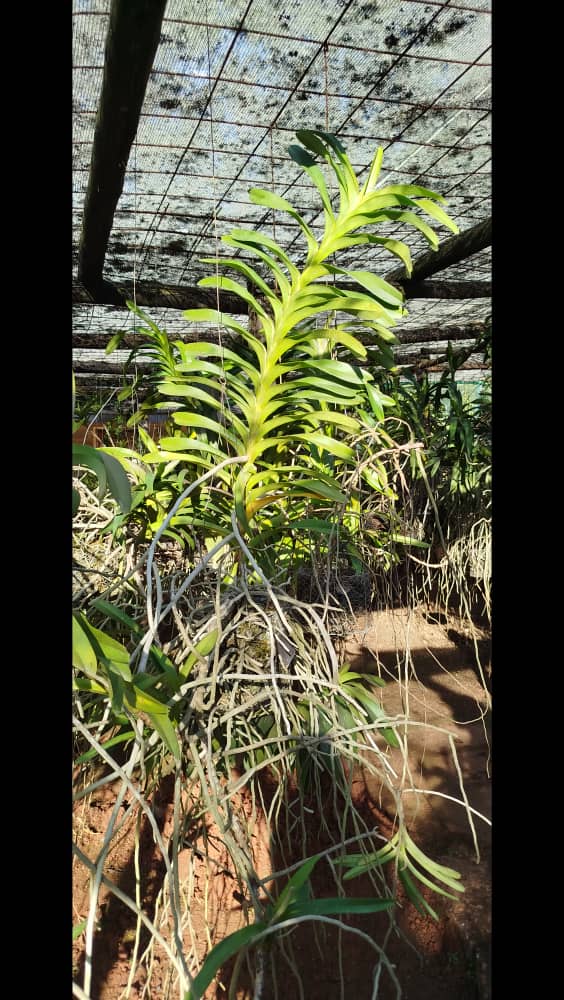
                                                                             Peter Masamvu in the Vanda house


 One of the very pretty Dendrobium nobile varieties, a prolific bloomer!

 Another eye-catching Dendrobium nobile variety

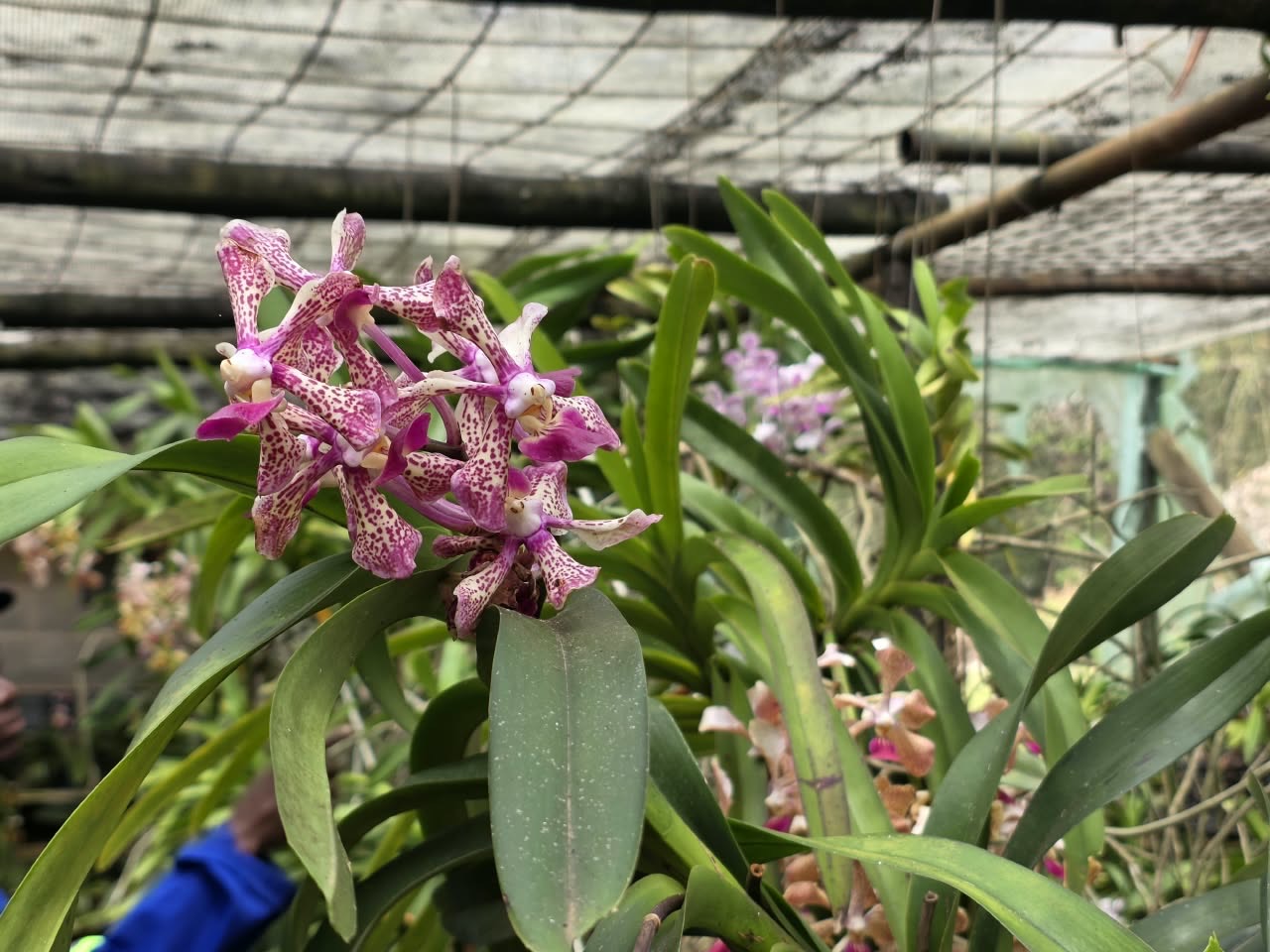
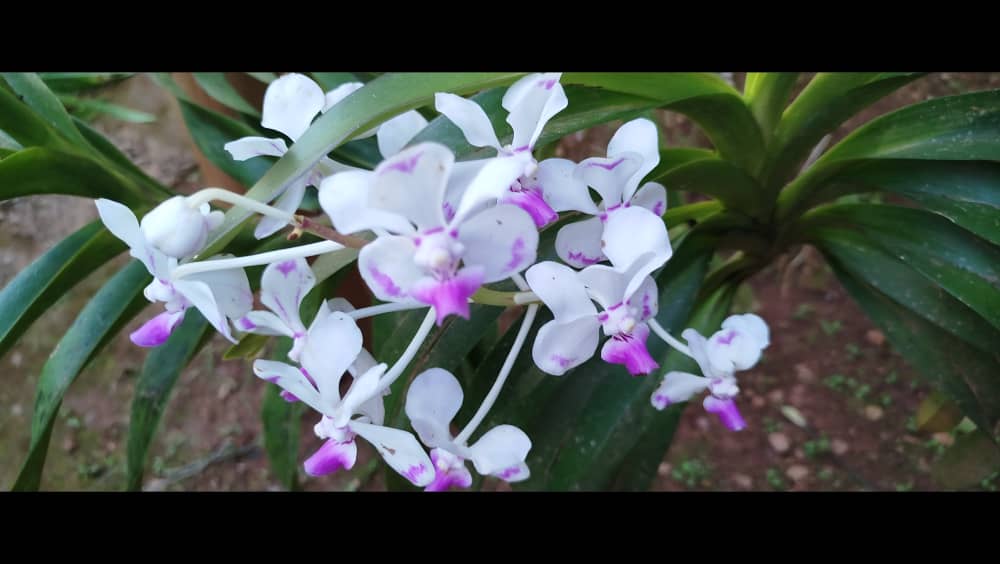
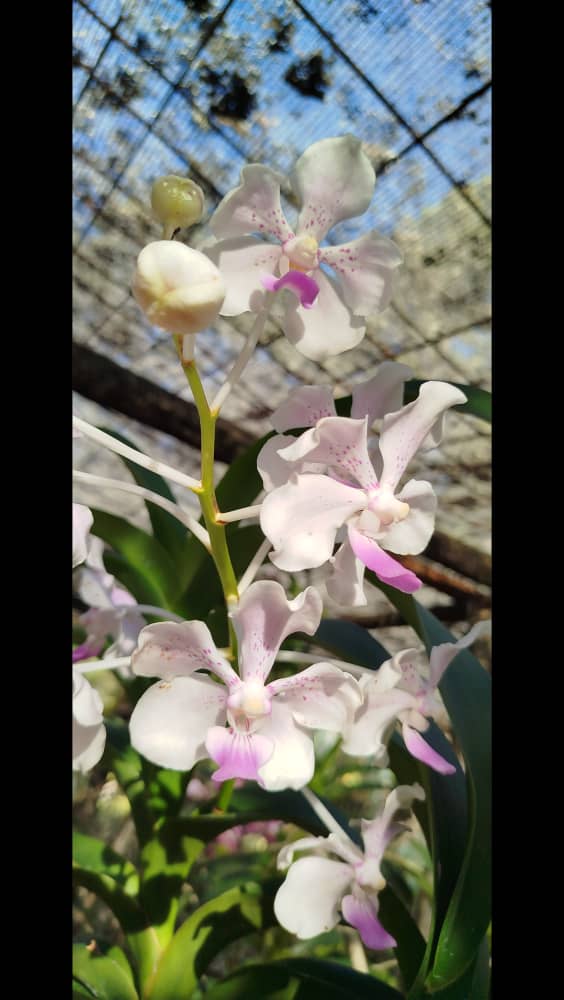
 One of the tri-colour Vanda’s in bloom – many actual names now lost in history – we will attempt to name them as we can with the help of overseas collectors

 One of the lovely yellow Dendrobiums


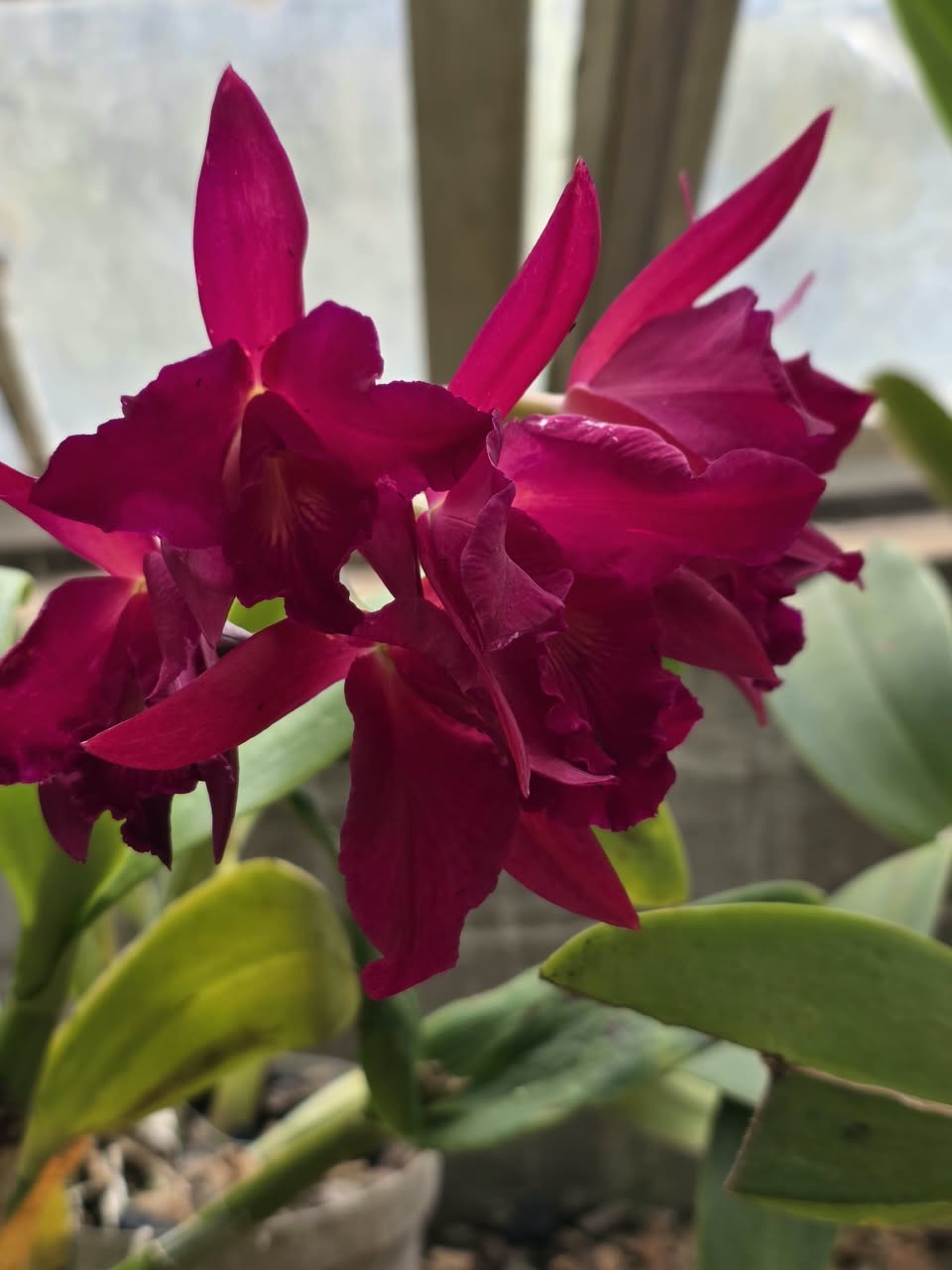
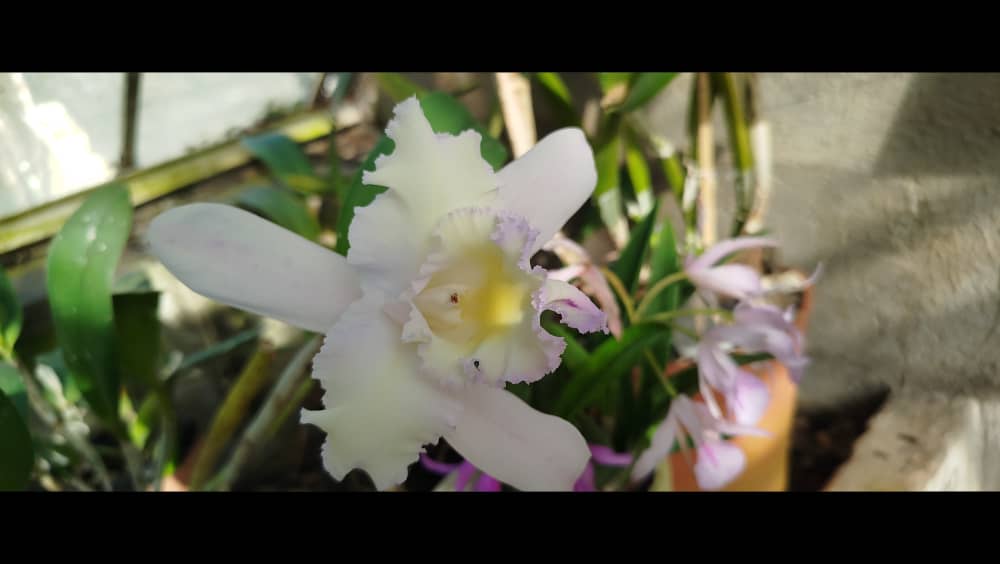
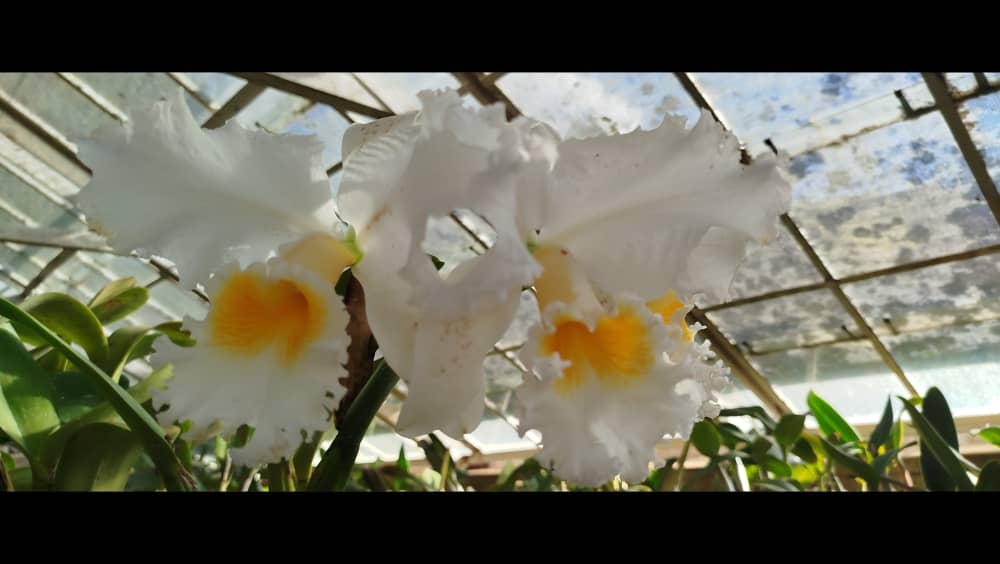
                                                                         A spectacular Cattleya hybrid

Cattleyas blooming beautifully in their newly covered greenhouse – shade cloth donated by WebTex


We very much look forward to seeing you at La Rochelle soon and

showing you our amazing collection of orchids.


July 2026 Newsletter

We are super pleased to say that the July edition is packed full of very good news: funders generously giving funds, three new exciting projects commencing, new committee members joining the Executive Council, INTO colleagues visiting on an exchange progamme from St Helena and interns that we have supported over the years.

Thank You 

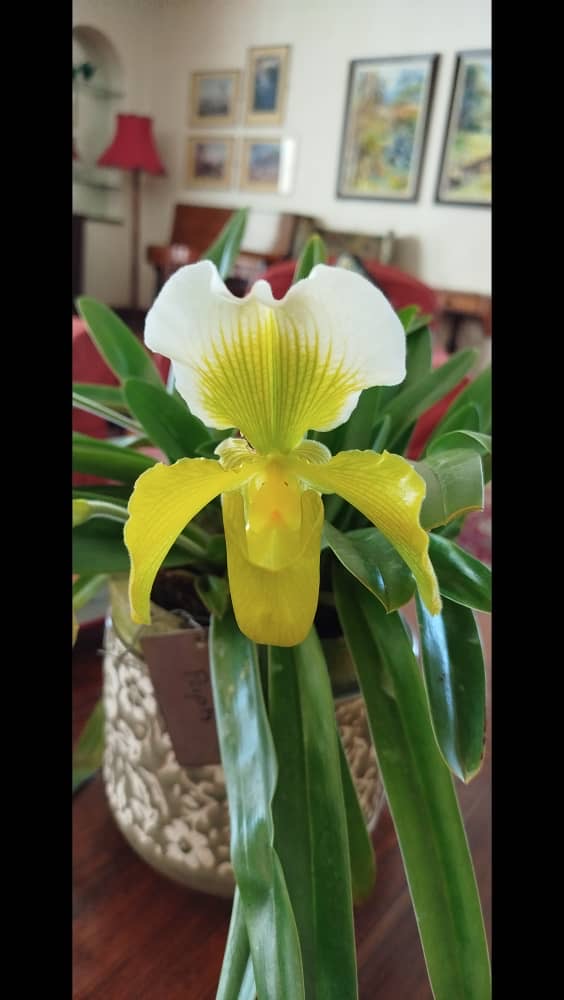
Firstly, we would like to extend an enormous thank you to Kate Van Deventer for her kind and generous assistance with the La Rochelle Orchid Collection. For her knowledge and passion on all matters orchid. Kate is currently the Zimbabwe Orchid Society Secretary and has been a great go-to lady when we need help.

Secondly, our huge thanks go to Nerys Gray for giving her invaluable expertise and time in designing the logo for the Helen Hyslop Trust, it captures the very essence of the late Helen perfectly.

NEW COMMITTE MEMBERS

The Executive Council were delighted to invite two highly motivated and competent new members onto the Council:

Caitlyn Snyman holds a BSc (Hons) Biology, Diploma in Mental Health Psychology, Diploma in Mental Health Psychology, Diploma in Human anatomy. Her skill set includes: education, mental health, computer science, cardiac physiology and genome engineering. She speaks 3 languages, is an author and a string musician and has a special interest in La Rochelle County Estate.

Jenna Hutchings becomes the new Treasurer following the late Mr J Hylsop. She holds a MSc in Cities, MSc Physiotherapy (Paediatric Neurology) and an BSc (Hons) Physiotherapy. She is a civic leader and has experience in financial oversight and governance, political science and economics, environmental stewardship, community development, green transportation and early child development.

Between them the two ladies bring a wealth of experience and compliment the Council with a broad range of interests and new great ideas. We are very much looking forward to working with you.

PASSIONATE ABOUT TROPICAL GARDENS

The Tropical Gardens network is INTO’s vibrant, cross-continental initiative which brings together INTO members from Sri Lanka, Thailand, India, Malaysia, the Maldives, St Helena and Zimbabwe in order to share their stories of their landscapes, challenges and aspirations. From desert parks to rainforest sanctuaries, each site is unique – but all are united by a shared commitment to sustainability, cultural heritage, community engagement and the preservation of tropical biodiversity.

The idea was sparked by Soham Kacker, plant ecologist and horticulturist who is the Curator of Living Collections at the Lunuganga Trust, at the gardens of Geoffrey Bawa Trust in Sri Lanka https://geoffreybawa.com. Members expressed a strong desire to learn from one another, share best practices and explore how gardens can be tools for education, healing and cultural revival.

The NTZ was very excited to receive the good news from Mr Alexander Bishop that a INTO TAP Award had been granted on behalf of the newly formed network. The award was an opportunity for a bilateral exchange between members prioritising those that live relatively close together in the first instance to facilitate knowledge exchange. The award allowed travel funds for Mrs Helena Bennett, Director and Mrs Matrina Peters, Environmental Scientist of the St Helena National Trust.

St Helena is a small, remote volcanic island consisting of 47-square-miles, situated in the South Atlantic Ocean, roughly 1,950 km west of Angola. It is famous as the place of Napoleon Bonaparte’s exile and death. The capital is called Jamestown and it has a population of approx. 520,000 people. The climate of Saint Helena is tropical, marine and mild, tempered by the Benguela Current and trade winds that blow almost continuously.

On the 11th June 2026 members of the NTZ Executive Council were very excited to welcome Helena and Martina to Zimbabwe and were fascinated to hear about the island and all the work that they undertake there. St Helena’s isolation and its rugged terrain have been the saviour of a few fragments of the original natural habitats and a wealth of their constituent species. The Trust carries out a range of conservation projects looking after the islands unique terrestrial, marine, built and cultural heritage. The Trust plays a large role in raising the education and awareness of the island’s heritage in local and international communities.

Saint Helena’s biodiversity includes marine vertebrates, invertebrates (freshwater, terrestrial and marine), fungi, non-vascular plants, seaweeds and other biological groups. The island has long been known for its high proportion of endemic birds and vascular plants. The highland areas contain most of the 400 endemic species recognised to date. Much of the island has been identified by Bird Life International as being important for bird conservation, especially the endemic Saint Helena plover, and for seabirds breeding on the offshore islets and stacks, in the north-east and the south-west Important Bird Areas.

During their 5-day stay in Zimbabwe our lovely colleagues visited the following 3 NTZ properties in the Eastern Highlands area:

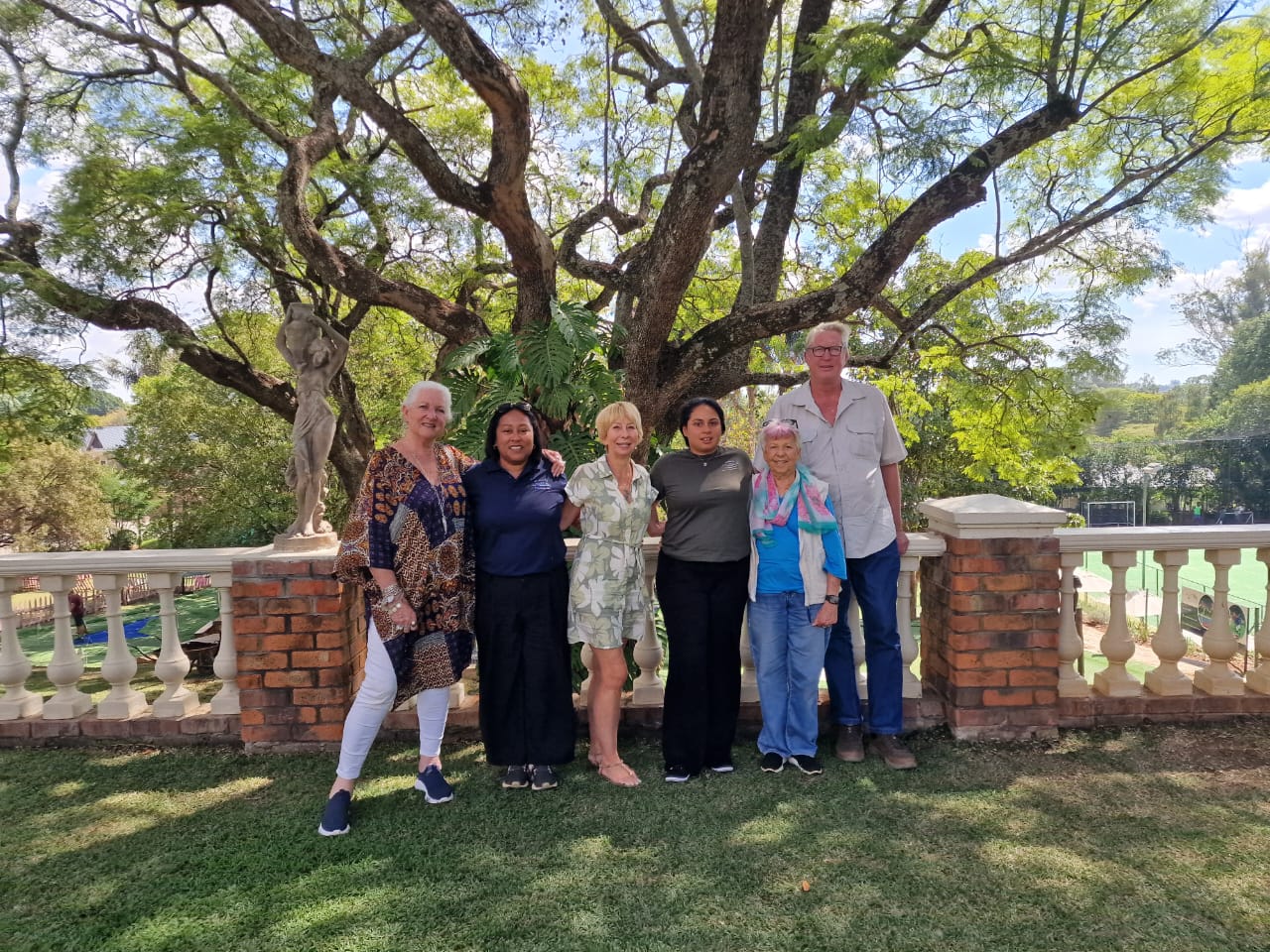
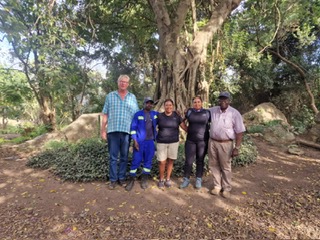
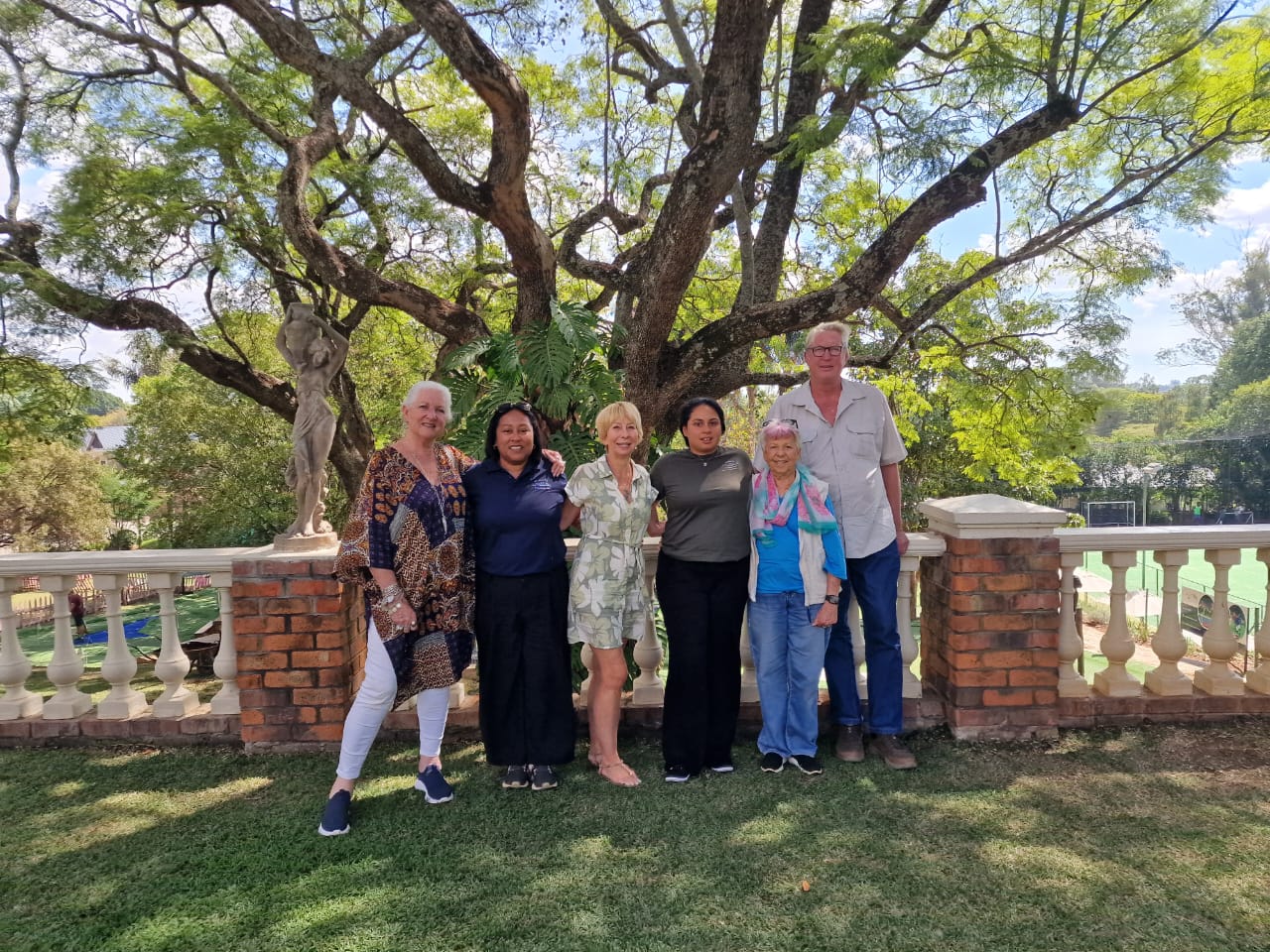
  L to R: Lin Goncalves (NTZ), Helena Bennett (St Helena), Sharon Waterworth (NTZ), Martina Peters (St Helena),  Fira Bache (NTZ) and Dot Cozens (NTZ)

La Rochelle Country House

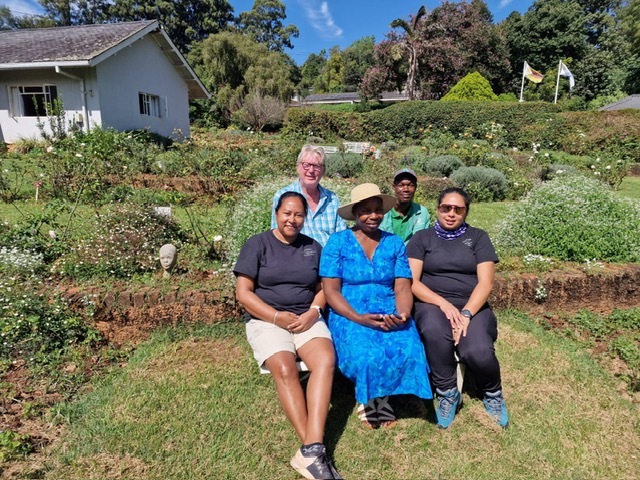
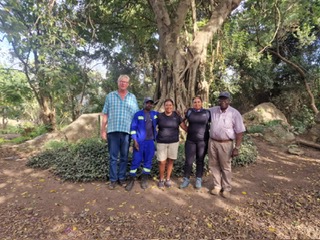
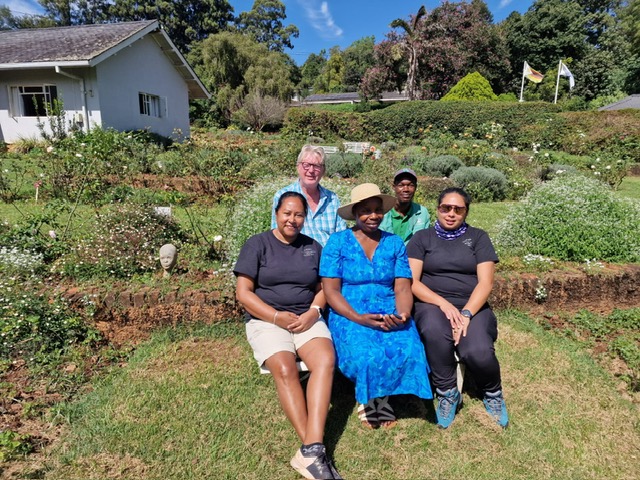
Back row L to R:  Dot Cozens and Nhau Tinga. Front row: Martina, Diana Chasauku and Helena

Helena and Martina spent time walking and working around the estate with Diana and Nhau, the husband and wife team who have been caring for the La Rochelle heritage orchid collection and the gardens for 32 years. La Rochelle Country House estate comprises of 226 acres and has a large unique botanical garden covering 20 acres of land, established with the professional help of the UK Horticulturist John Henry Mitchell, with exotic plants and trees gathered from all over the world. There are exotic trees in the arboretum as well as palms, cycads, azaleas and other flowering shrubs. Their particular interest was the orchid house filled with exotic, rare and indigenous heritage orchids.

Murawha’s Hill

L to R: David, Lloyd Chidondo, Helena and Martina and Eng. Jackson Njunga

Helen and Martina were warmly welcomed by Eng. Jackson Njunga, the property Manager and Executive Council member of Murawah’s Hill a large granite hill, 153 acres in extent. Together they toured around the site accompanied by Lloyd the caretaker who lives on the site. Murawha’s Hill forms the backdrop to the western side of the City of Mutare. Named after a local Headman Madekurahwa under Chief Mutasa who lived at the foot of the hill from around the second half of the 19th century. The Hill was used as a shelter and look-out point against Chief Gungunyana and his raiding parties. It is a place of cultural importance, a naturalist’s paradise and is of great archaeological value. Traditionally it was protected in the past as a place of spirits.

The Hill has a unique combination of cultural heritage and indigenous flora and fauna given its location visa-vis the prevailing moisture-bearing winds. Over the years an extraordinary number list of trees and birds have been recorded. These comprise Eastern Highlands and Middleveld species, as well as broad range of vines, fungi, mosses and ferns. The ancient indigenous rainforest and rocky outcrops bought special delight.

Worlds View

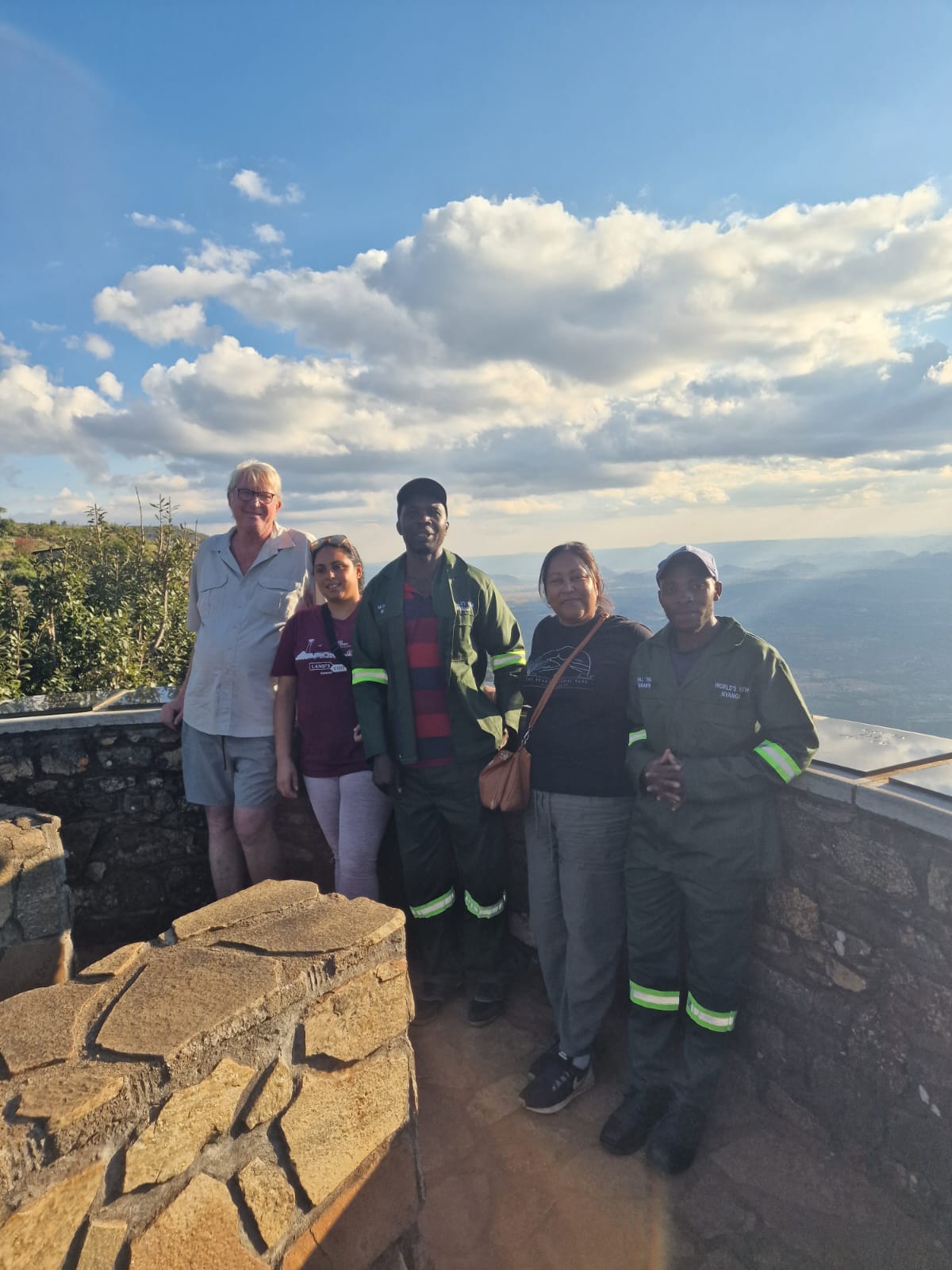
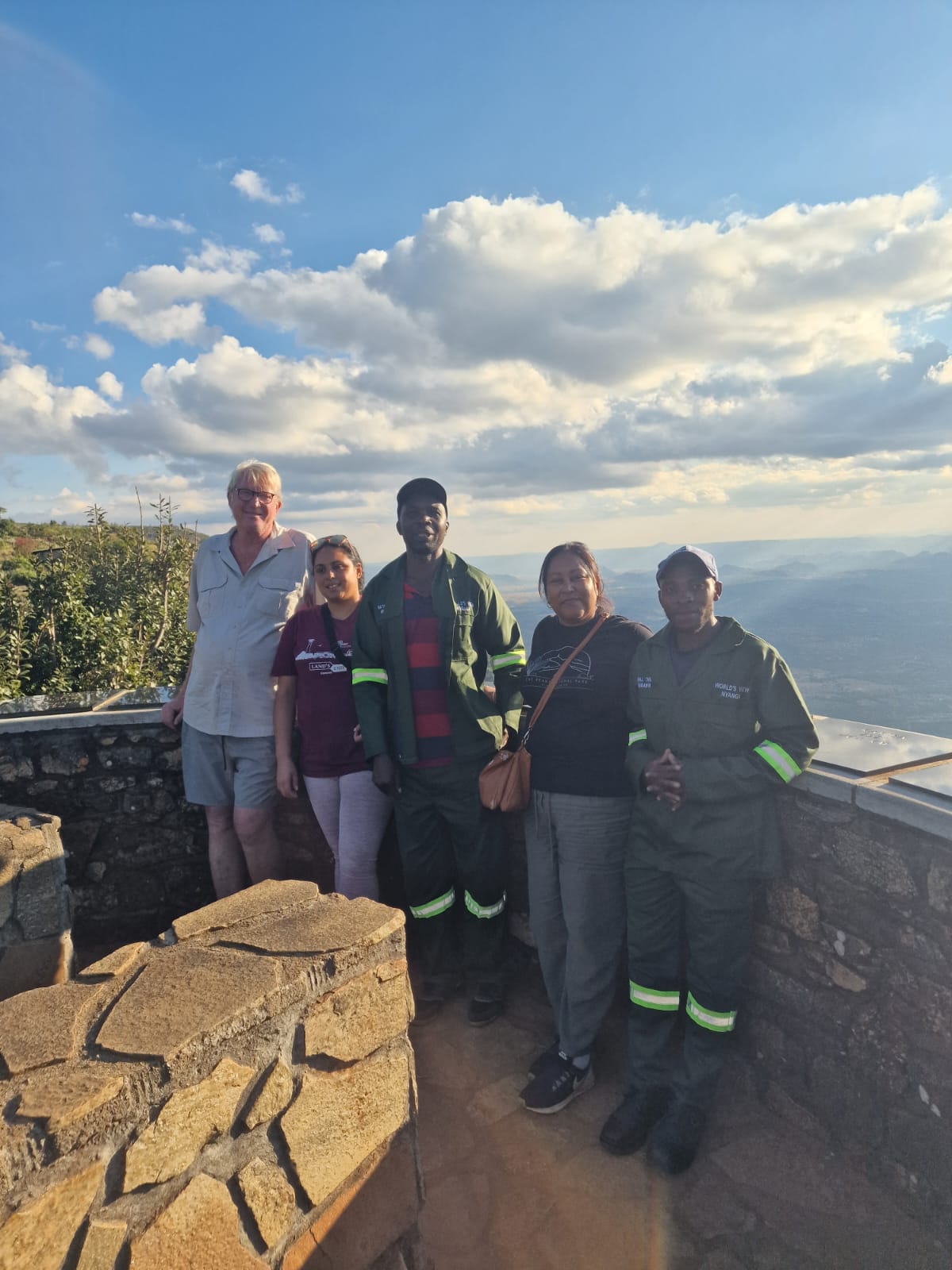
L to R: David, Martina, Matirina Andras, Helena and Noel Kanera

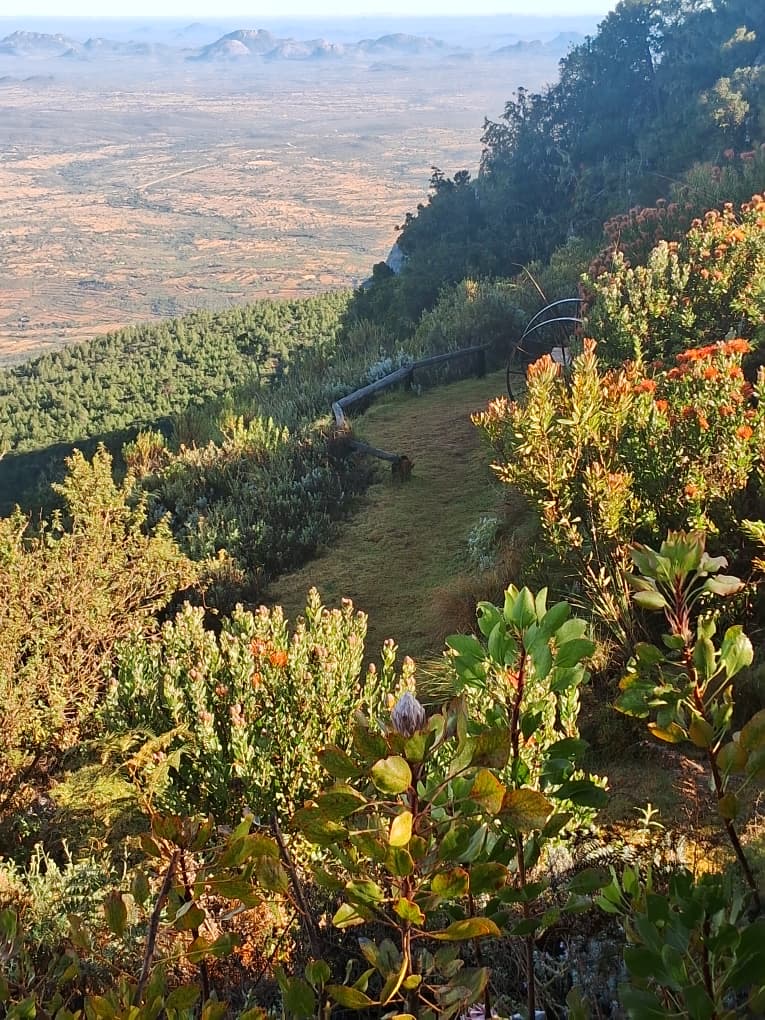
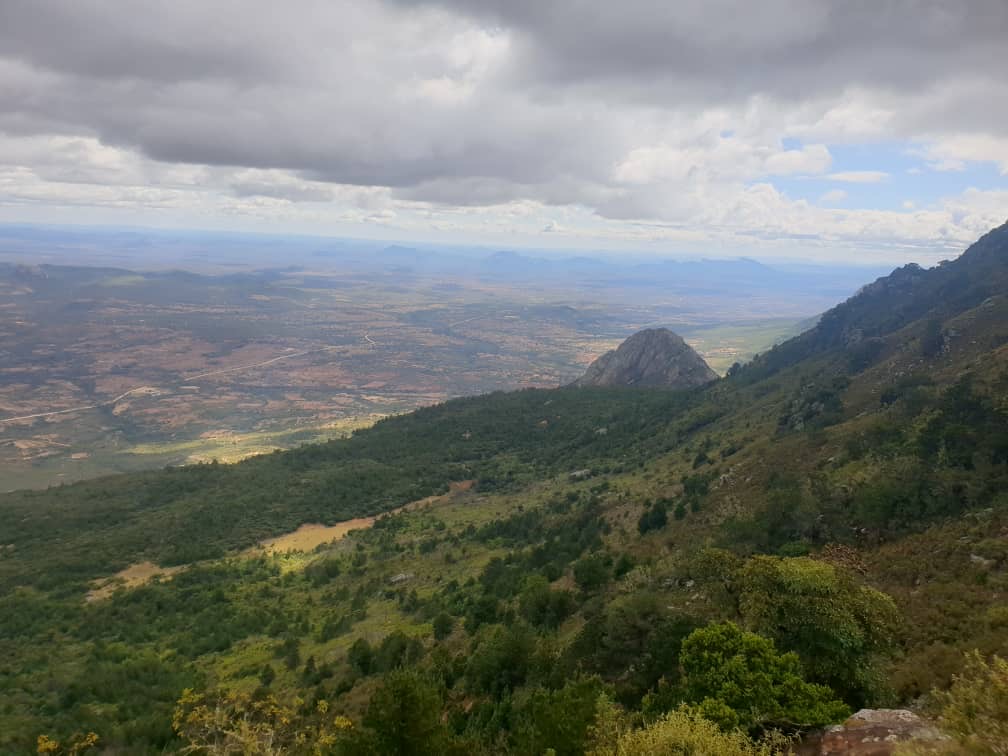
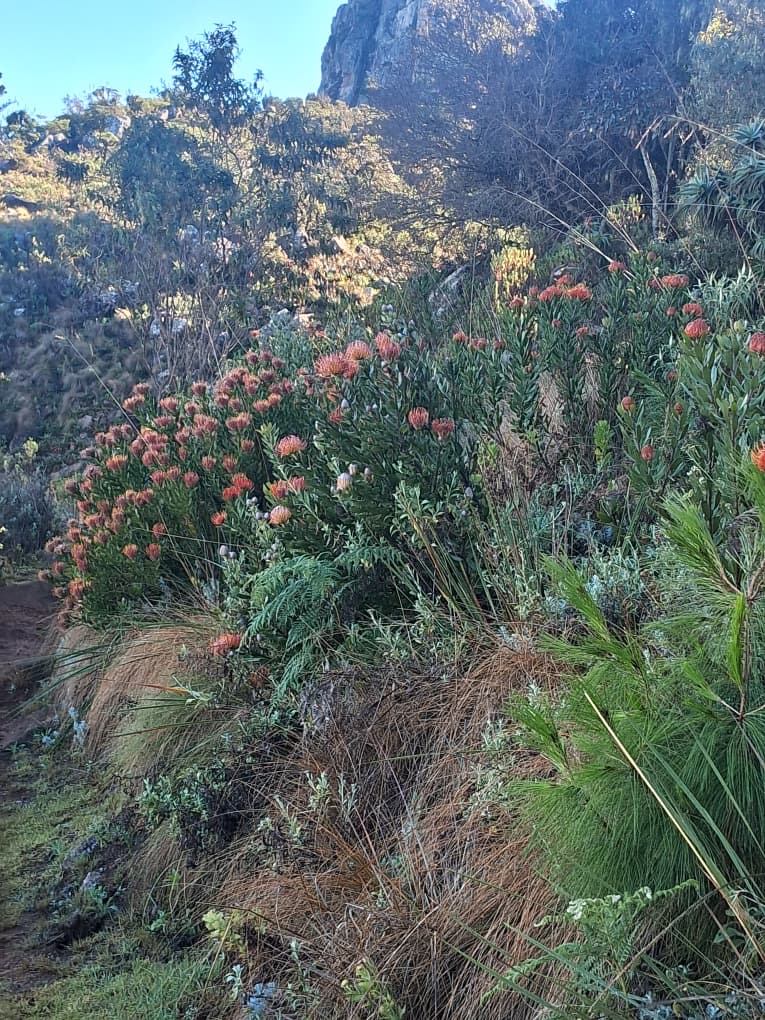
Helen and Matrina spent time enjoying and exploring the property accompanied by long serving ground staff Matirina and Noel. They commented on the stunning views of the surrounding landscape. From where they stood at an altitude of 2000m the escarpment drops 600m to the plain below. The area is particularly interesting for botanists and ornithologists, comprising of vegetation types associated with either the basal granite or the dolerite cap. Of special interest was the Protea and Wild Flower Conservancy established through a relationship with Kirstenbosch, the world famous botanical gardens in South Africa who generously donated the original seeds.

Helen and Matrina spent time enjoying and exploring the property accompanied by long serving ground staff Matirina and Noel. They commented on the stunning views of the surrounding landscape. From where they stood at an altitude of 2000m the escarpment drops 600m to the plain below. The area is particularly interesting for botanists and ornithologists, comprising of vegetation types associated with either the basal granite or the dolerite cap. Of special interest was the Protea and Wild Flower Conservancy established through a relationship with Kirstenbosch, the world famous botanical gardens in South Africa who generously donated the original seeds.

Once back in Harare the Executive met again with Helena and Matrina on 15th May for a post tour de-briefing over a hearty lunch during which Helena and Matrina were happy to share their eexperience and knowledge. They gave the NTZ many inspiring ideas and highlighted that it isn’t just capability that gets things done, it is with passion, love, energy and sense of sharing that get projects completed and over the line. They are an example to us all, fabulous professional passionate people who are making the world a better place.

This was a fantastic opportunity for both National Trusts and our enormous thanks go to INTO for providing the funding to make the highly interesting and informative exchange trip possible. The Tropical Gardens group is so useful, and provides greater insight to how Trust gardens are set up and sustainably managed.

The NTZ would like to acknowledge all the hard work and time feely given by Mr David Cozens, the site manager of Worlds View and an Executive Council member who very kindly accompanied the ladies on their trip around the 3 properties, provided a vehicle, a driver, fuel and accommodation. Passionate about tropical gardens.

Intern Programme

As part of its educational aims and objectives the NTZ has, so far, trained young 7 interns from different universities, with most of them coming from Bindura University. The NTZ provides mentors and an opportunity for young people to gain practical experience, improve employability chances, explore career paths, expand their minds, earn academic credit, develop professional skills and build a professional network

The NTZ is pleased to be able to offer internships and will continue to do so. I naddition to heritage we plan to expand the range of subjects to include: ecology, history and social studies.

Here is a list of the interns and their years of attachment to the Nyanga museum in the Eastern Highands:

Meshullam    Mudzedze    -2018-2019 – Great Zimbabwe university

Cathrine Chinoitezvi – 2019-2020 – Bindura University

Bridget    Chidhakwa    –  2020-2021   – Bindura University

Panashe Zaba – 2022 -2023 Bindura University

Patricia – University of Zimbabwe – 2023-2024

Nathan Machara- Bindura University-2024-2025

Nokutenda        Tokora       –      Bindura University – 2025-2026

Thank you everyone, your input was invaluable.

Nyanga Historical Museum

Museum ceiling

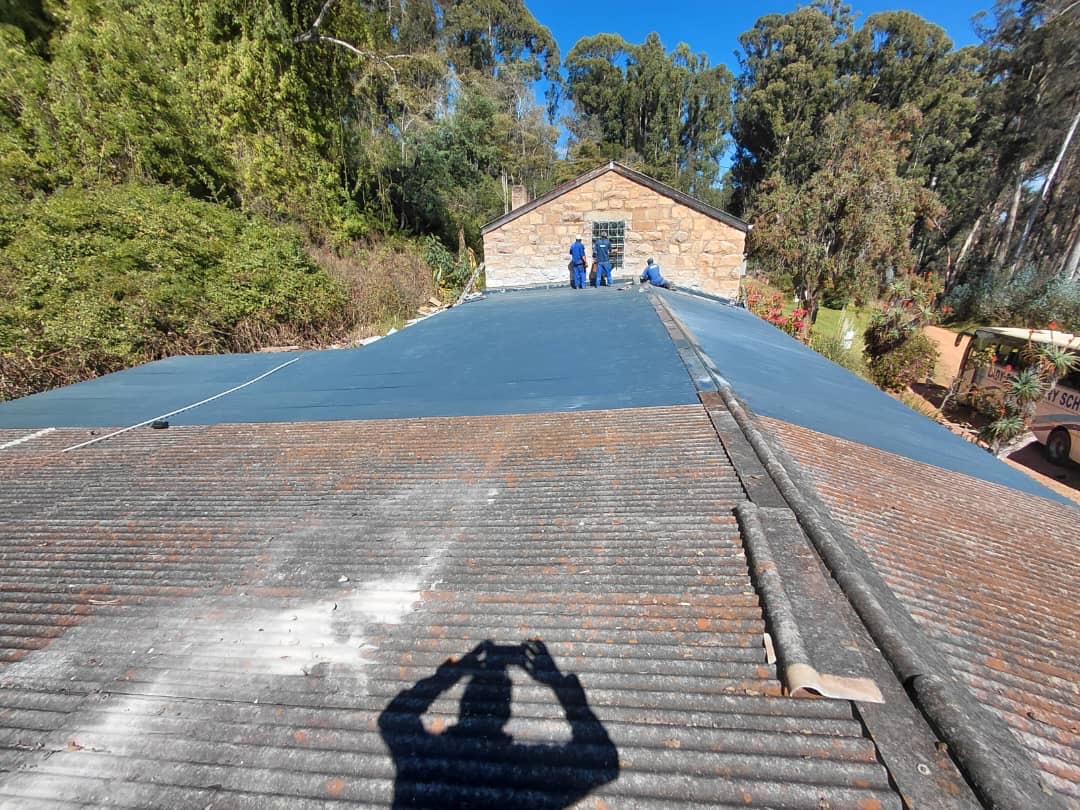
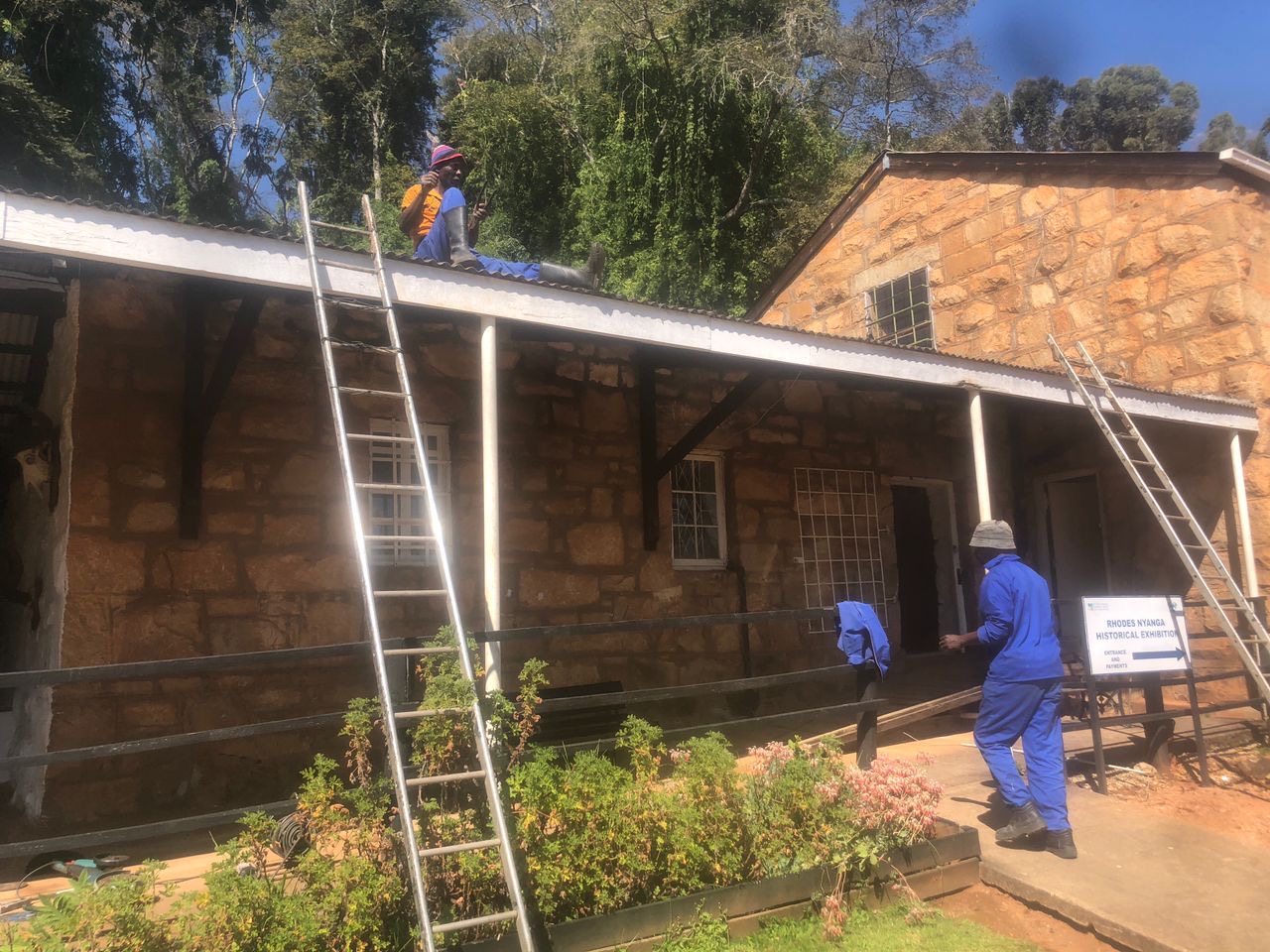
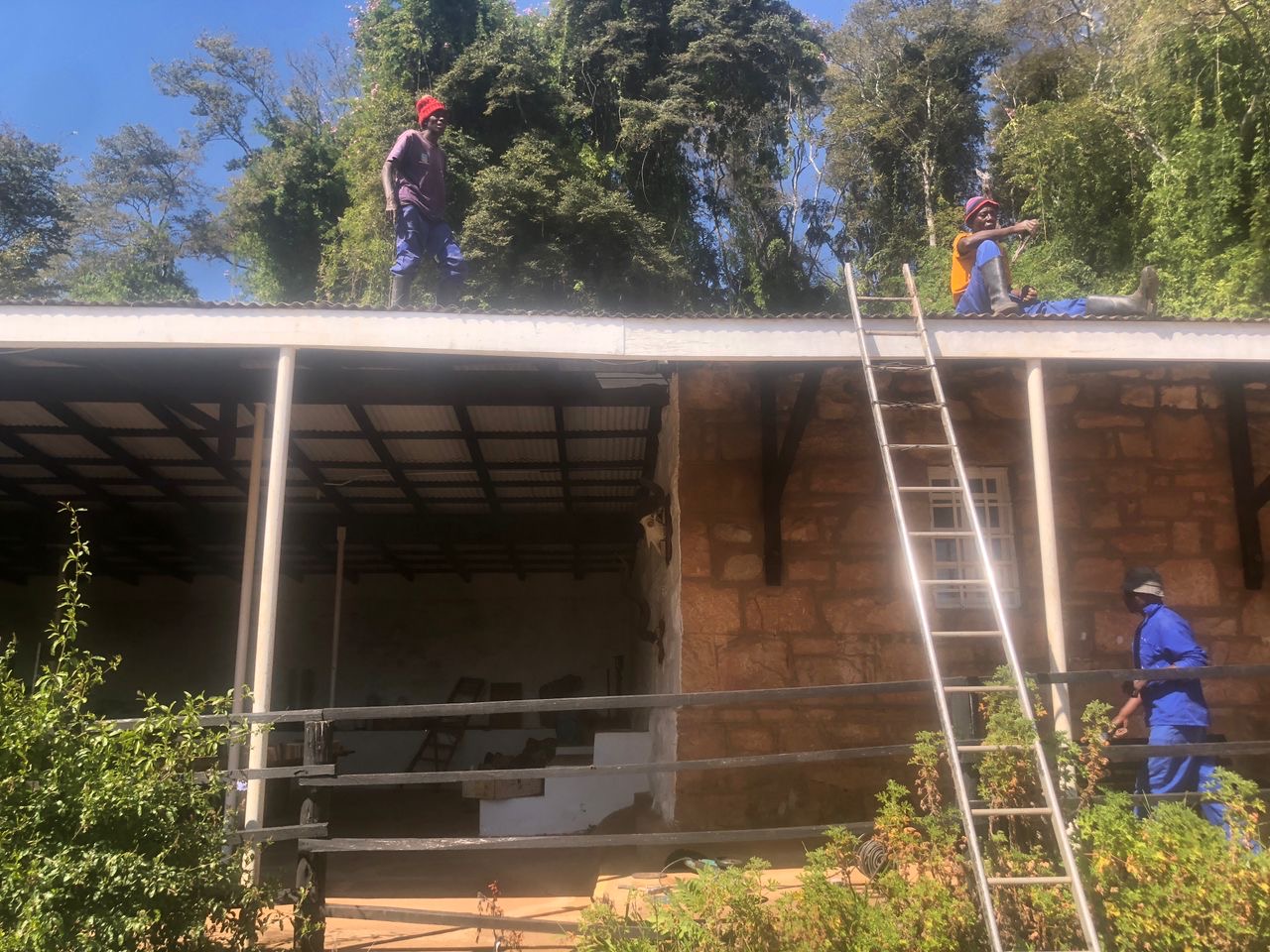
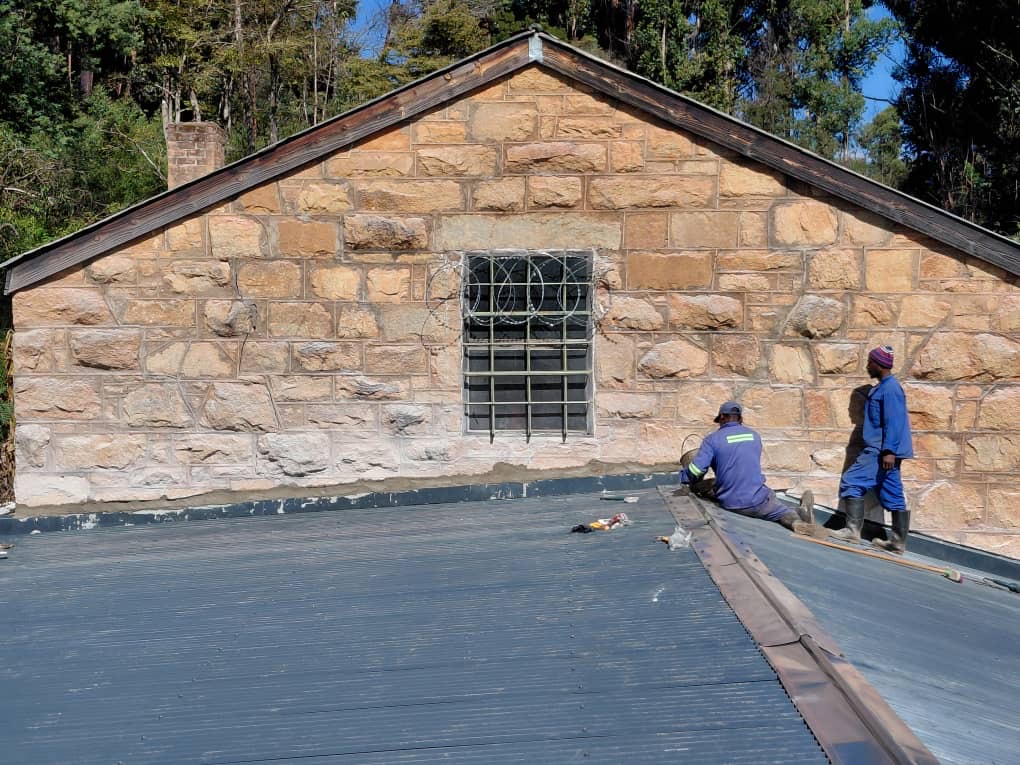
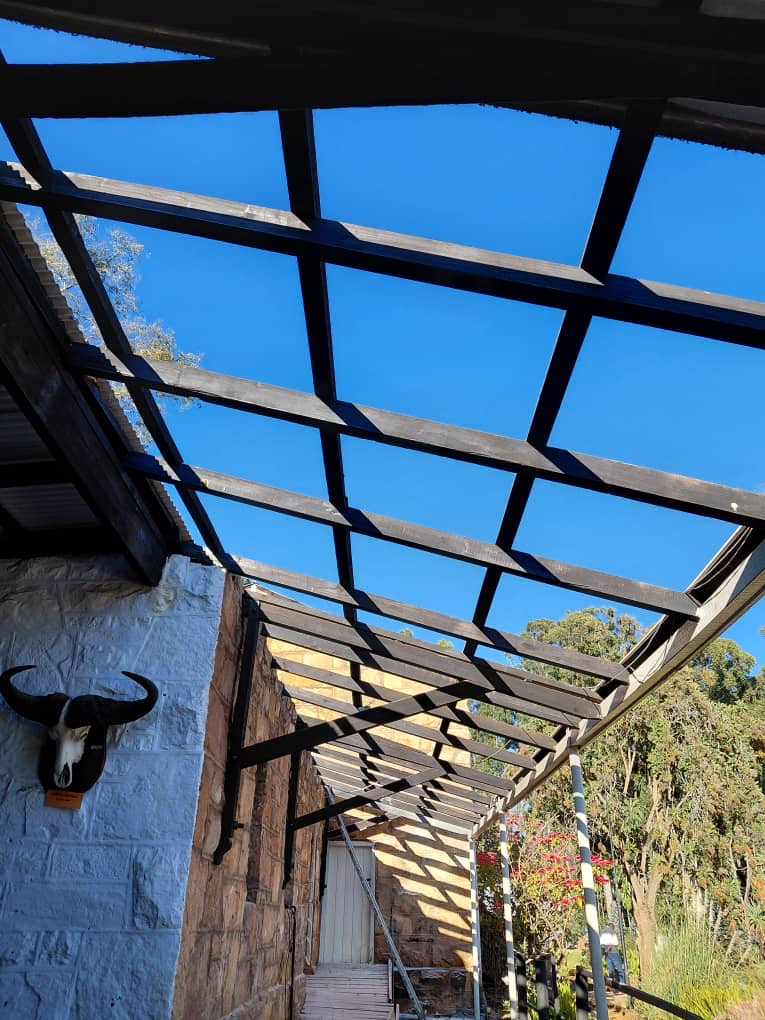
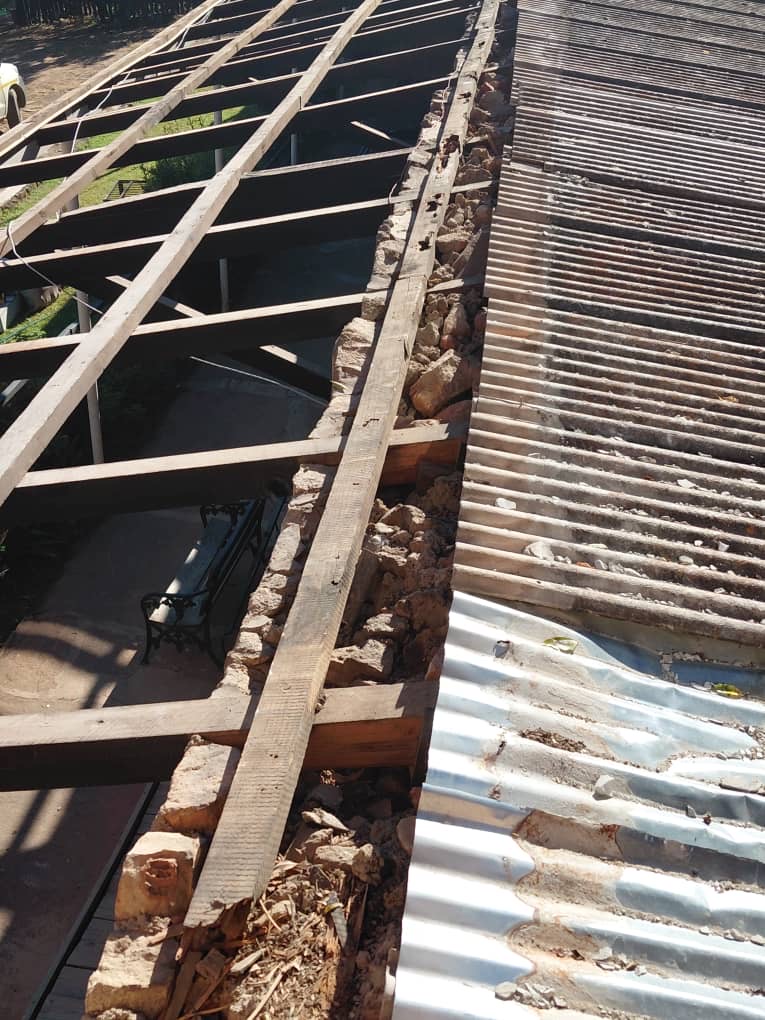
We are super happy to report that on the 21st May 2026 an anonymous donor was delighted to inform the NTZ that they had received unanimous support in response to our assistance request and full approval for awarding a grant for roof refurbishment and guttering for the Rhodes Nyanga Museum! Work has already commenced.

The application for funding was submitted following a ‘Building Infrastructure Condition Assessment Report’ compiled 31st March 2026. The assessment was undertaken in order to evaluate the integrity of its infrastructure and heritage features. As a site of historical significance, the museum requires periodic evaluations to ensure both structural stability and functional usability.

The assessment focused on key components, including the roof, walls, doors and windows, drainage systems, and ancillary elements such as fascia boards and eaves, with particular attention to degradation from water ingress, corrosion, timber decay, and masonry or plaster deterioration.

The report stated: that the museum has a gabled roof supported by mature gum timber beams and purlins. While much of the timber remains in good condition, several purlins require replacement. The roof covering consists of corrugated asbestos sheets, which show significant aging, wear, and weathering. Visual inspection revealed leaks in multiple areas, particularly along joints and edges, placing the museum’s historical artifacts and monuments at risk and raising serious conservation concerns. Some previously replaced iron ridges are broken, further compromising structural integrity.

The north-eastern roof elevation features eaves below 200 mm, allowing rainwater to seep into the walls and adversely affecting exterior and interior finishes, contributing to dampness, paint deterioration, and potential long-term structural damage. The ceiling boards throughout the museum have suffered rot and deformation due to persistent roof leaks, with some sections giving way, further highlighting the impact of water ingress on the building’s interior.

Additionally, the wall plate in the museum office has deteriorated and requires replacement to ensure proper roof support. Overall, the roof and ceiling are in a deteriorated condition.

The combined effects of aging materials, inadequate eaves, broken ridges, leaks, damaged wall plates, and rotting ceiling boards indicate an urgent need for maintenance and rehabilitation to preserve structural integrity and protect the building’s historical contents.

The NTZ is extremely pleased that this project can go ahead and truly grateful for the funding. A new ceiling will be extremely beneficial in a variety of ways including the protection of priceless exhibits in the museum, protection from rain and wind, reduce the risk of leaks, keep mould and moisture at bay and reduce maintenance costs. Significantly, the repairs will enhance visitor experience. The museum receives many visitors locally (especially school children) and also visitors regionally and internationally.

Pilot project

The Helen Hyslop Trust is passionate about education and learning and has funded a pilot project to digitalize some of the Museum’s pieces and displays. Marshall Nyanhanda, The Curator and Nathan Machara our 2024/25 intern, who has now graduated are working together on this initial work and if it is successful more funds may be available.


Construction of the Murawha’s Hill Education Centre

The NTZ is extremely happy to announce the construction of the Murawha’s Hill Education Centre, boundary wall and toilet block commenced on 15th June with Eng Jackson Njunga breaking ground with his team. The construction should be completed in a few months well before the rains arrive in Zimbabwe.

The project seeks to build an educational centre to preserve, explain and document both the cultural and natural history of the property and of the local area being the Eastern Highlands in Manicaland inorder to raise awrenss through community outreach and invovlement. The project was envisioned by the late Mrs Helen Hyslop some 15 years ago. Helen was a loyal, hard-working dedicated long term serving member of the Executive Council as was John (Treasurer) and Charles (Secretary) her two late sons. Helen, in particular, was very passionate about Murawha;s Hill and education.

The main roofing elements of a rondavel are wooden poles cut from local trees, harvested and cut to length. The roof covering is of thatch that is sewn to the poles with grass rope and made by a skilled artisan, as it must be sewn in one section at a time, starting from the bottom working towards the top. As each section is sewn, it may be weathered and aged to form a complete weatherproof seal.

A shaded amphitheatre is also planned, at a later stage, important for teaching and for entertainment. This would be built up against the side of the hill using local trees and relief.

Process of collecting further educational material so that once the building is completed the information will be ready to display which will include the following topics:

  • Geology of Mutare
  • Flora of the region
  • Specific plants
  • Birds
  • Animals
  • Early history – Stone Age
  • The Stone ruins and
  • The recent pre-colonial pas A separate area will focus on:
  • Deforestation
  • Erosion
  • Water pollution
  • Air pollution and
  • Urban challenges

Council Members are starting the process of collecting further educational material so that once the building is completed the information will be ready to display which will include the following topics:

  • Geology of Mutare
  • Flora of the region
  • Specific plants
  • Birds
  • Animals
  • Early history – Stone Age
  • The Stone ruins and
  • The recent pre-colonial pas A separate area will focus on:
  • Deforestation
  • Erosion
  • Water pollution
  • Air pollution and
  • Urban challenges

The NTZ is truly grateful to Dr. Mpira for sharing his thesis entitled: Storage Pits of Early Farming Communities: examples from Zimbabwe and sub-Saharan Africa’ compiled after excavations at Murahwa’s Hill unearthed two small pits associated with the Ziwa Early Farming Community period of occupation and believed to have been used for storage.

This is a very exciting project and we are looking forward to hosting school children and visitors from around Zimbabwe and the region. It is hoped that the centre will also promote cultural tourism for the Eastern highlands. The centre will be available for hire for like-minded organisations for training and educational conferences in a historical and beautiful treed setting.

Avifauna Photo Exhibition

Once opened the brand new education centre at Murahwa Hills will commence holding various interesting educational activities. Mr Bernard Chiketo, a local wildlife photographer based in Mutare has already expressed interest in holding an exhibition of avifauna. Mr Chiketo has been documenting avifauna in Mutare over the past several years and has photographed over 150 different species within the city’s municipal boundaries.

He is a feature writer for The Explorer, a Zimbabwean digital publication. His reporting focuses on Southern African business, environmental conservation, and human-interest stories, primarily covering the Eastern Highlands and greater Zimbabwe.

Mr Chiketo plans to quietly document the wider diversity as he photographs birds at Murahwas Hill, building a visual story of the whole web of life there to do wonderful justice to this special place. He will also spotlight Murahwa Hills in The Explorer.


The project was envisioned by the late Mrs Helen Hyslop some 15 years ago. Helen was a loyal, hard-working dedicated  long  term  serving member of the Executive Council as was John (Treasurer) and Charles (Secretary) her two late sons. Helen, in particular, was very passionate about Murawha;s Hill and education. The Helen Hyslop Trust was created in 2025 and the NTZ is very proud to honour Helen’s dream and wishes into becoming a reality.


The NTZ is extremely grateful to Mr Rob Burrett Archaeologist, a long-time supporter of the NTZ for sharing his professional advice and input, way back in 2011, for creating the centre. Mr Burrett designed the centre employing a traditional African method of building that would blend in perfectly with its surroundings: a large round rondavel made with materials that can be locally found in raw form, walls are often constructed from stones. The mortar may consist of sand, soil, or combinations of these materials.

La Rochelle Country House

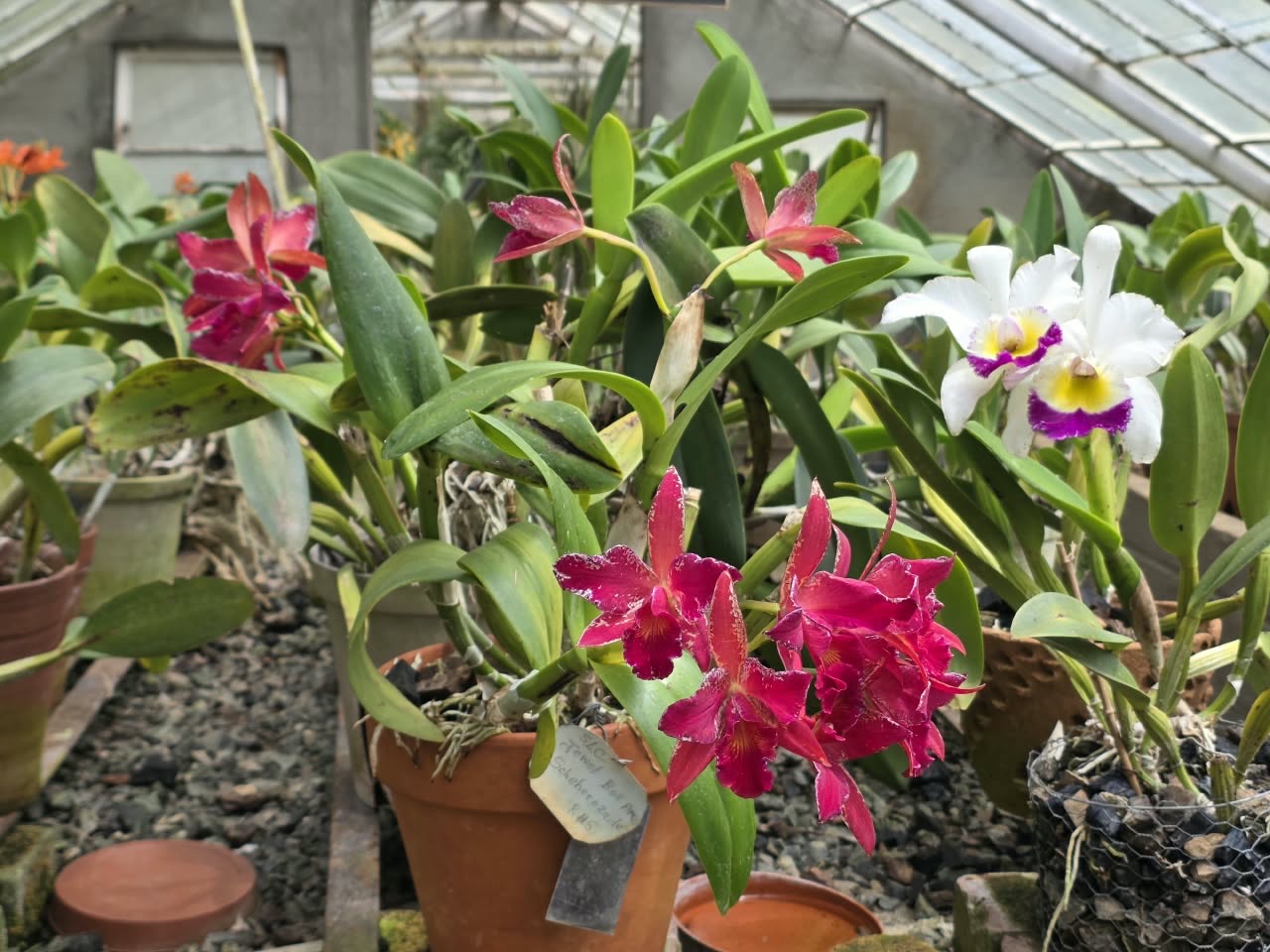
La Rochelle is looking fabuolous. The gardens are in great condition the estate is being maintained to a good standard. The hotel continues to receive some great reviews about the accommodation, the facilities and especially about the hospitality and food. Lin Goncalves, a Council member, visited the hotel over the last weekend of June to take much needed supplies up for the orchid shade houses. Kate Van Deventer had been up the week before. Both ladies met with Peter and Nhau and Joseph, the 3 gardners, who were very happy to see them and show them proudly around the shade houses.

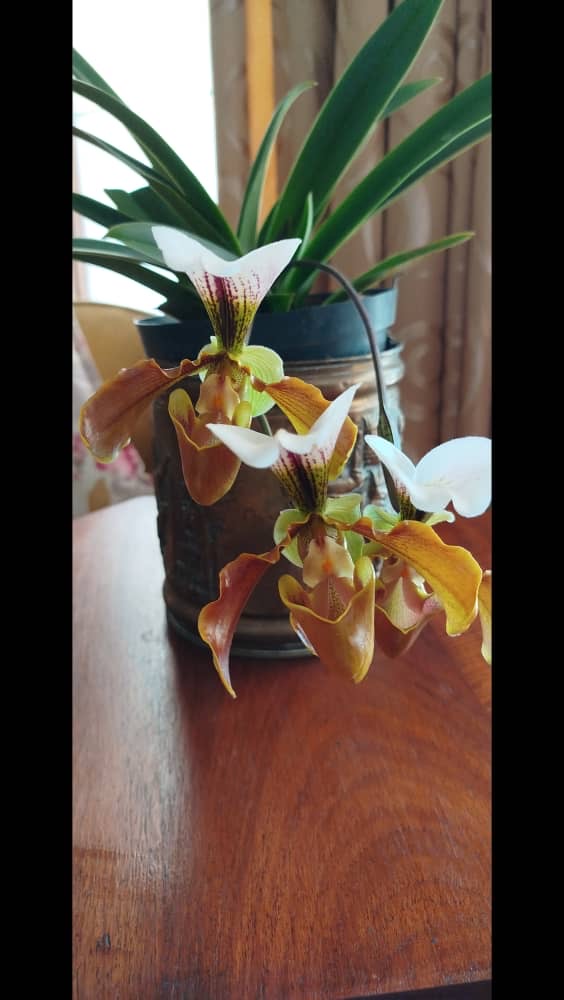
We are proud to share these stunning photographs taken from the orchid heritage collection that Lin took during her visit, some of the orchids are on display in the main hotel lounge whilst others are located in the shade house as you can see they are in superb condition:

Worlds View

You are invited to come, take a seat, relax and marvel at the views over-looking the peaceful and timeless plains of the eastern highlands from the bird hide, the views are to die for. A new bench has been built that actually has the best seat and view on the hill.

Work continues, as always, in the grounds. Martin and Luke the groundsmen have removed 3 invasive black wattle trees.

The aloes are looking magnificent and are native to the rocky, arid regions of southern Africa, including Zimbabwe and South Africa. They are highly prized for their architectural form and fiery, tubular flower spikes Blooms typically occur in late autumn and winter and the full sun brings out the most intense colors in the foliage and produces the best blooms.

We thank you for taking the time to read our newsletter, we hoped that you enjoyed it.

We welcome your contribution.

Please visit our website: ntoz.org Follow and like us on social media: Instagram: nationaltrustzimbabwe

Facebook: National-Trust-of-Zimbabwe

INTO’s community of Tropical Gardens knowledge

Thanks to support from the INTO, Helena Bennett and Martina Peters had the opportunity to travel to Zimbabwe in May 2026 to spend a week with colleagues at three National Trust properties.

As the closest National Trust in the group to St Helena geographically, it was a rare and exciting opportunity for in-person knowledge exchange.

The NTZ is very excited to share this blog from Helena Bennett, Director of St. Helena National Trust with you. We do hpe that you enjoy it!

https://www.into.org/inspiration-ideas-and-action-national-trust-of-zimbabwe/


Roof repairs to go ahead at the Rhodes Nyanga Museum

We are super happy to report that on the 21st May 2026 an anonymous donor was delighted to inform the NTZ that they had received unanimous support in response to our assistance request and full approval for awarding a grant for roof refurbishment and guttering for the Rhodes Nyanga Museum! Materils have been deliverd to site and work has already commenced.


The application for funding was submitted following a ‘Building Infrastructure Condition Assessment Report’ compiled 31st March 2026. The assessment was undertaken in order to evaluate the integrity of its infrastructure and heritage features. As a site of historical significance, the museum requires periodic evaluations to ensure both structural stability and functional usability. The assessment focused on key components, including the roof, walls, doors and windows, drainage systems, and ancillary elements such as fascia boards and eaves, with particular attention to degradation from water ingress, corrosion, timber decay, and masonry or plaster deterioration.

The report stated: that the museum has a gabled roof supported by mature gum timber beams and purlins. While much of the timber remains in good condition, several purlins require replacement. The roof covering consists of corrugated asbestos sheets, which show significant aging, wear, and weathering. Visual inspection revealed leaks in multiple areas, particularly along joints and edges, placing the museum’s historical artifacts and monuments at risk and raising serious conservation concerns. Some previously replaced iron ridges are broken, further compromising structural integrity.

The north-eastern roof elevation features eaves below 200 mm, allowing rainwater to seep into the walls and adversely affecting exterior and interior finishes, contributing to dampness, paint deterioration, and potential long-term structural damage. The ceiling boards throughout the museum have suffered rot and deformation due to persistent roof leaks, with some sections giving way, further highlighting the impact of water ingress on the building’s interior. Additionally, the wall plate in the museum office has deteriorated and requires replacement to ensure proper roof support. Overall, the roof and ceiling are in a deteriorated condition. The combined effects of aging materials, inadequate eaves, broken ridges, leaks, damaged wall plates, and rotting ceiling boards indicate an urgent need for maintenance and rehabilitation to preserve structural integrity and protect the building’s historical contents.


The NTZ is super pleased that this project can go ahead and truly grateful for the funding. A new ceiling will be extremely beneficial in a variety of ways including the protection of priceless exhibits in the museum, protection from rain and wind, reduce the risk of leaks, keep mould and moisture at bay and reduce maintenance costs. Significantly, the repairs will enhance visitor experience. The museum receives many visitors locally (especially school children) and also visitors regionally and internationally.


Passionate about tropical gardens

Passionate about tropical gardens

The Tropical Gardens network is INTO’s vibrant, cross-continental initiative which brings together INTO members from Sri Lanka, Thailand, India, Malaysia, the Maldives, St Helena and Zimbabwe in order to share their stories of their landscapes, challenges and aspirations. From desert parks to rainforest sanctuaries, each site is unique – but all are united by a shared commitment to sustainability, cultural heritage, community engagement and the preservation of tropical biodiversity.  The idea was sparked by Soham Kacker, plant ecologist and horticulturist who is the Curator of Living Collections at the Lunuganga Trust, at the gardens of Geoffrey Bawa Trust in Sri Lanka https://geoffreybawa.com.  Members expressed a strong desire to learn from one another, share best practices and explore how gardens can be tools for education, healing and cultural revival.

The NTZ was very excited to receive the good news from Mr Alexander Bishop that a INTO TAP Award had been granted on behalf of the newly formed network. The award was an opportunity for a bilateral exchange between members prioritising those that live relatively close together in the first instance to facilitate knowledge exchange.  The award allowed travel funds for Mrs Helena Bennett, Director and Mrs Matrina Peters, Environmental Scientist of the St Helena National Trust.

St Helena is a small, remote volcanic island consisting of 47-square-miles, situated in the South Atlantic Ocean, roughly 1,950 km west of Angola. It is famous as the place of Napoleon Bonaparte’s exile and death. The capital is called Jamestown and it has a population of approx. 520,000 people. The climate of Saint Helena is tropical, marine and mild, tempered by the Benguela Current and trade winds that blow almost continuously.

On the 11th June 2026 members of the NTZ Executive Council were very excited to welcome Helena and Martina to Zimbabwe and were fascinated to hear about the island and all the work that they undertake there. St Helena’s isolation and its rugged terrain have been the saviour of a few fragments of the original natural habitats and a wealth of their constituent species. The Trust carries out a range of conservation projects looking after the islands unique terrestrial, marine, built and cultural heritage. The Trust plays a large role in raising the education and awareness of the island’s heritage in local and international communities.

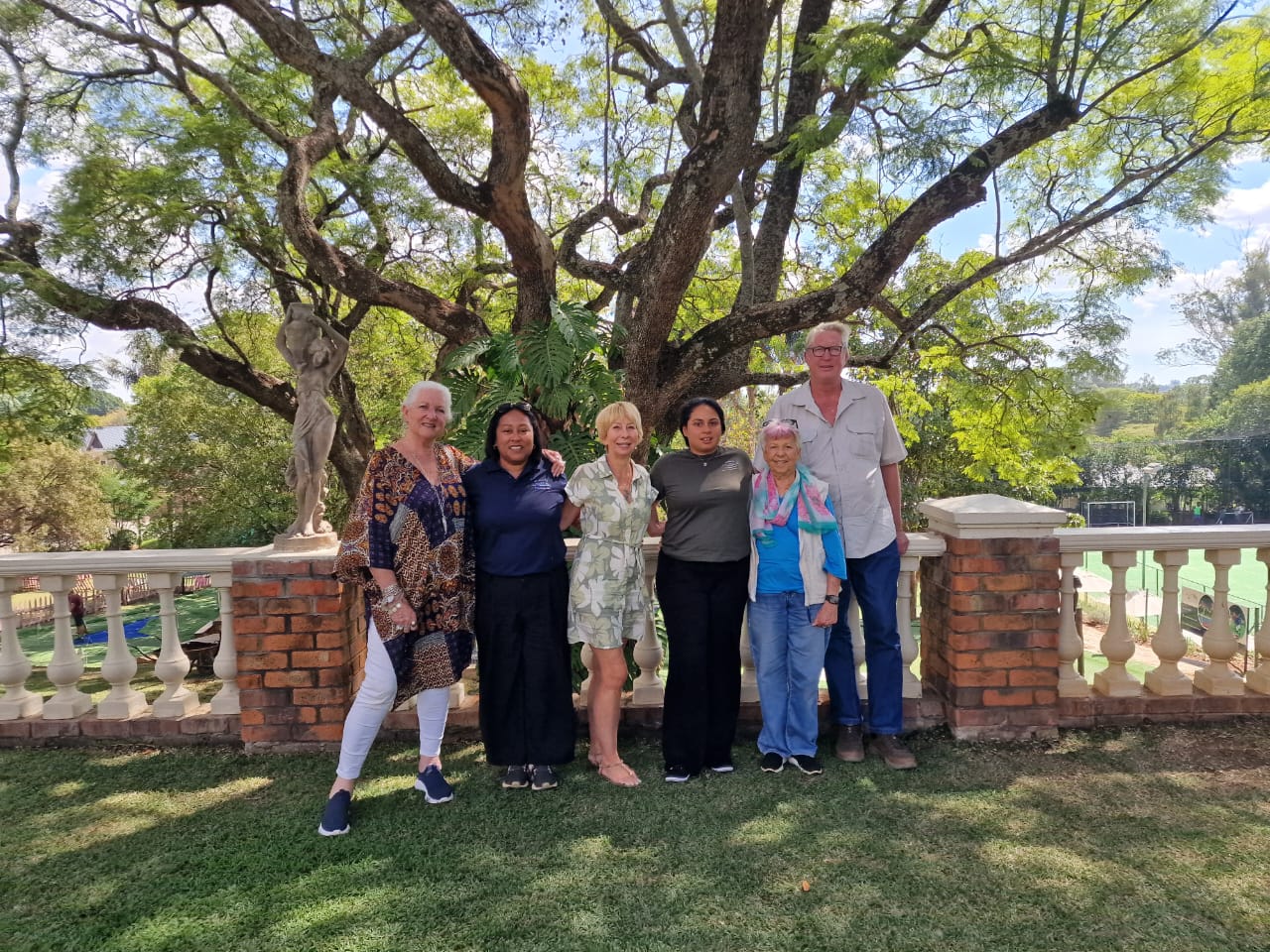
Left to right: Lin Goncalves, Helena Bennett, Sharon Waterworth, Martina Peters, Fira Bache and David Cozens

Saint Helena’s biodiversity includes marine vertebrates, invertebrates (freshwater and terrestrial and marine) fungi,  non-vascular plants, seaweeds and other biological groups. The island has long been known for its high proportion of endemic birds and vasualr plants.  The highland areas contain most of the 400 endemic species recognised to date. Much of the island has been identified by Bird Life International (BLI) as being important for bird conservation especially the endemic Saint Helena Plover and for sea birds breeding on the offshore islets and stacks in the north-east and the south west.

During their 5-day stay in Zimbabwe our lovely colleagues visited the following 3 NTZ properties in the Eastern Highlands area:

La Rochelle Country House

L to R: Back row: David and Nhau Tinga Front row: Helena, Diana Chasauka and Martina

Helena and Martina spent time walking and working around the estate with Diana and Nhau, the husband and wife team who have been caring for the La Rochelle heritage orchid collection and the gardens for 32 years. La Rochelle Country House estate comprises of 226 acres and has a large unique botanical garden covering 20 acres of land, established with the professional help of the UK Horticulturist John Henry Mitchell, with exotic plants and trees gathered from all over the world.  There are exotic trees in the arboretum as well as palms, cycads, azaleas and other flowering shrubs. Their particular interest was the orchid house filled with exotic, rare and indigenous heritage orchids.

Murawha’s Hill

L to R: David, Lloyd Chidondo, Helena and Martina and Eng. Jackson Njunga

Helen and Martina were warmly welcomed by Eng. Jackson Njunga, the property Manager and Executive Council member of Murawah’s Hill a large granite hill, 153 acres in extent.  Together they toured around the site accompanied by Lloyd the caretaker who lives on the site. Murawha’s Hill forms the backdrop to the western side of the City of Mutare.  Named after a local Headman Madekurahwa under Chief Mutasa who lived at the foot of the hill from around the second half of the 19th century. The Hill was used as a shelter and look-out point against Chief Gungunyana and his raiding parties. It is a place of cultural importance, a naturalist’s paradise and is of great archaeological value. Traditionally it was protected in the past as a place of spirits.

The Hill has a unique combination of cultural heritage and indigenous flora and fauna given its location visa-vis the prevailing moisture-bearing winds.  Over the years an extraordinary number list of trees and birds have been recorded. These comprise Eastern Highlands and Middleveld species, as well as broad range of vines, fungi, mosses and ferns. The ancient indigenous rainforest and rocky outcrops bought special delight.

Worlds View

L to R: David, Martina, Matirina Andras, Helena and Noel Kanera

Helen and Matrina spent time enjoying and exploring the property accompanied by long serving ground staff Matirina and Noel. They commented on the stunning views of the surrounding landscape. From where they stood at an altitude of 2000m the escarpment drops 600m to the plain below. The area is particularly interesting for botanists and ornithologists, comprising of vegetation types associated with either the basal granite or the dolerite cap. Of special interest was the Protea and Wild Flower Conservancy established through a relationship with Kirstenbosch, the world famous botanical gardens in South Africa who generously donated the original seeds.

Once back in Harare the Executive met again with Helena and Matrina on 15th May for a post tour de-briefing over a hearty lunch during which Helena and Matrina were happy to share their eexperience and knowledge. They gave the NTZ many inspiring ideas such as highlighting some of our magnificent trees and plants as key interest areas, using QR codes as educational tools and explain rare or significant a species really is, shared details of organizations to approach for funding, suggested using a collaborative approach with local and international universities and creating a new species of orchid or hybrid from the heritage collection for people to purchase and raise funds.

Above all they highlighted that it isn’t just capability that gets things done, it is with passion, love, energy and sense of sharing that get projects completed and over the line. They are an example to us all, fabulous professional passionate people who are making the world a better place.

This was a fantastic opportunity for both National Trusts and our enormous thanks go to INTO for providing the funding to make the highly interesting and informative exchange trip possible.  The Tropical Gardens group is so useful, and provides greater insight to how Trust gardens are set up and sustainably managed.

The NTZ would like to acknowledge all the hard work and time feely given by Mr David Cozens, the site manager of Worlds View and an Executive Council member who very kindly accompanied the ladies on their trip around the 3 properties, provided a vehicle, a driver, fuel and accommodation. Passionate about tropical gardens.

Exciting news: Construction of the Murawha’s Hill Education Centre commences

The NTZ is extremely happy to announce the construction of the Murawha’s Hill Education Centre, boundary wall and toilet block commenced on 15th June with Eng Jackson Njunga breaking ground with his team.  The construction should be completed in a few months well before the rains arrive in Zimbabwe.

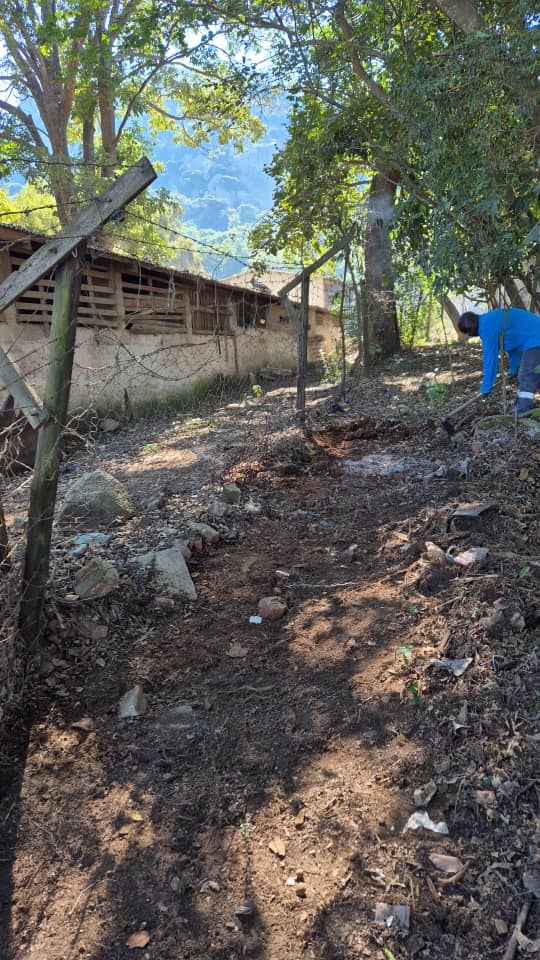
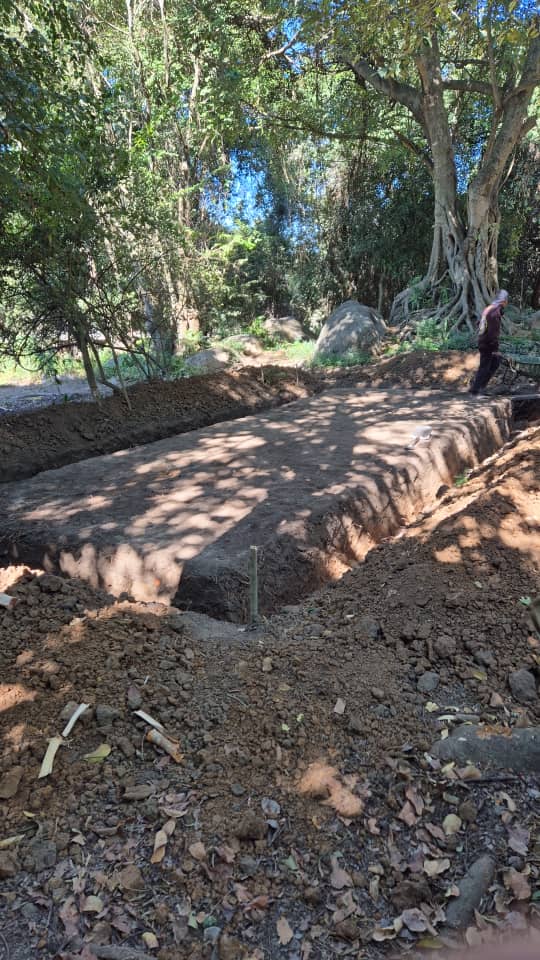
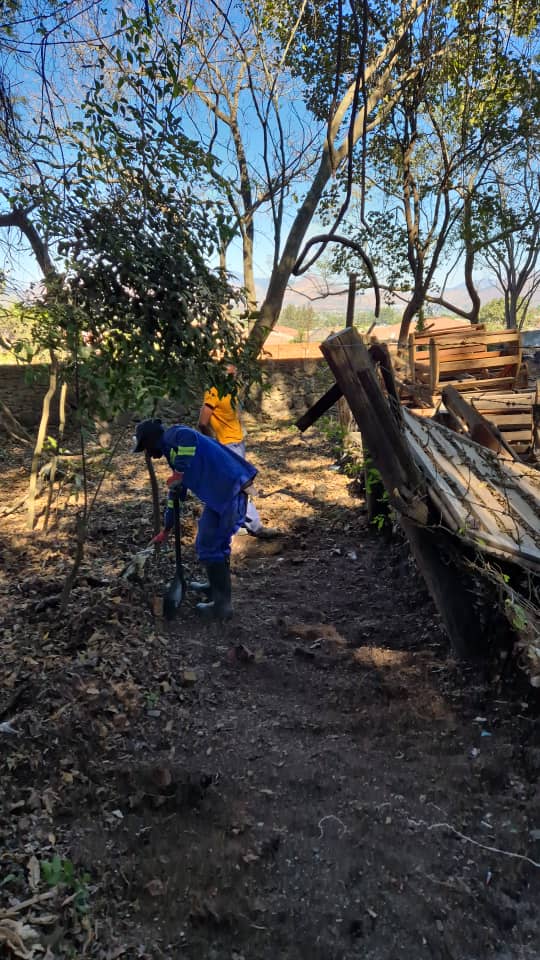
The ground work prep for the new brick wall along the boundary wall with the Mutare showgrounds

  The start of the foundations for the toilet block

The project aim is to build an educational centre to preserve, explain and document both the cultural and natural history of the property and of the local area being the Eastern Highlands in Manicaland inorder to raise awareness through community outreach and invovlement.

The project was envisioned by the late Mrs Helen Hyslop some 15 years ago. Helen was a loyal, hard-working dedicated long term serving member of the Executive Council as was John (Treasurer) and Charles (Secretary) her two late sons. Helen, in particular, was very passionate about Murawha’s Hill and education. The Helen Hyslop Trust was created in 2025 and the NTZ is very proud to honour Helen’s dream and wishes into becoming a reality.

The NTZ would like to extend its deepest appreciation to Mr John Legat of the Roy Turner Trust who very generously donated to the education centre some years ago. The funding was ring fenced for the Education centre for a long time until there was enough funding from the HHT to build the centre.

The NTZ is extremely grateful to Mr Rob Burrett, Archaeologist who is a long-time supporter of the NTZ for sharing his professional advice and input, way back in 2011, for creating the centre. Mr Burrett designed the centre employing a traditional African method of building that would blend in perfectly with its surroundings: a large round rondavel made with materials that can be locally found in raw form, walls are often constructed from stones. The mortar may consist of sand, soil, or combinations of these materials.

The main roofing elements of a rondavel are wooden poles cut from local trees, harvested and cut to length. The roof covering is of thatch that is sewn to the poles with grass rope and made by a skilled artisan, as it must be sewn in one section at a time, starting from the bottom working towards the top. As each section is sewn, it may be weathered and aged to form a complete weatherproof seal.

A shaded amphitheatre is also planned, at a later stage, important for teaching and for entertainment. This would be built up against the side of the hill using local trees and relief.

Council Members are starting the process of collecting further educational material so that once the building is completed the information will be ready to display which will include the following topics:

  • Geology of Mutare
  • Flora of the region
  • Specific plants
  • Birds
  • Animals
  • Early history – Stone Age
  • The Stone ruins and
  • The recent pre-colonial past

A separate area will focus on:

  • Deforestation
  • Erosion
  • Water pollution
  • Air pollution and
  • Urban challenges

The NTZ is truly grateful to Dr. Mpira for sharing his thesis entitled: Storage Pits of Early Farming Communities: examples from Zimbabwe and sub-Saharan Africa’ compiled after excavations at Murahwa’s Hill unearthed two small pits associated with the Ziwa Early Farming Community period of occupation and believed to have been used for storage.

This is a very exciting project and we are looking forward to hosting school children and visitors from around Zimbabwe and the region. It is hoped that the centre will also promote cultural tourism for the Eastern highlands. The centre will be available for hire for like-minded organisations for training and educational conferences in a historical and beautiful treed setting.


April 2026 News

EULOGY

Unfortunately, we have to start with sharing some sad news: Mr Geoff Hawskley very sadly passed away on 7th April 2026. Geoff joined the Rhodes Nygana Museum as a voluntary Treasurer in January 2013 and continued to support the museum until 2019. Our sincere condolences go to his family.

‘Geoff’, as he preferred to be called was born on 6th November 1935. He attended Ruzawi Prep School then followed in the footsteps of his two elder brothers’ to Plumtree School for Boys. He graduated from Gwebi Agricultural College where he was awarded Best Student of his year and later won a Nuffield Scholarship that gave him the opportunity to spend several months travelling and visiting farms overseas.

Geoff was a board member of the Seed Co-Op of Zimbabwe, his certificate as an Associate of the Royal Photographic Society, a photo with his fellow students and lecturers at Gwebi Agricultural College. He had a passion for history, wildlife, Dickens novels, law and wildlife photography. Later in life, while farming full time, he studied law in the evenings and at weekends: no small feat for a busy farmer

earning a Bachelor of Law degree. It was through his studies that he met Nanette his wife, who was one of his lecturers. It was while farming at Nyabira that he learned wildlife photography especially birds, a passion that stayed with him for the rest of his life. He went to Concession to continue farming next to his brother, John Hawskley, who tragically died. In memory of John, his brother, and the wider Hawksley family, Geoff commissioned a hide that still stands today overlooking Masuma Pan in Hwange National Park.

Geoff eventually retired, moved and settled into his weekend cottage in Juliasdale. Although he missed the farming life deeply, he quickly became a part of the community in Juliasdale, becoming known and loved by many over the years. He had a keen passion for local history and was actively involved with the Rhodes Memorial Museum in Nyanga. Geoff passed away peacefully in his sleep at 90 years of age.

Geoff was always a true gentleman who formed lifelong friendships across all generations.

Marshall Nyanhanda the curator at the museum worked with Geoff whom, he respected. He said that Mr Hawskley was a very kind man and would always bring him apples, plums, apricots and peaches to enjoy. The museum will remember him for all his great work that he did during his tenure as the Treasurer.

Rest well Mr Hawskley.

Donations

A big shout to Dawn Siemens, one of our Life members and Mr and Mrs Edgerten also life members for their recent donation.

It is thanks to special and generous people like this that assist the NTZ to continue its valuable work around Zimbabwe.

Very much appreciated!

Membership

We would very much like to thank Mr Thomas of Sustainable Afforestation Association for becoming our newest Corporate Member. Corporate membership allows for up to 6 individuals on the same subscription.

We look forward to welcoming and hosting you and you colleagues at one of beautiful sites soon.

Please do get in touch if your company would like to enjoy the many benefits of becoming a member including:

  • Receiving our quarterly E-Newsletter
  • Free entrance to NTZ properties in Zimbabwe
  • Free access to overseas National Trusts with whom we have reciprocity See INTO ‘Passport to Places’ scheme

www.into.org /places/

Tree Planting

We all need trees! As you are aware trees deliver so many different functions in the world including: combating climate change, providing a safe haven for biodiversity and wildlife habitats and food to a host of different species from mammals, birds to invertebrates. They improve human health for helping to purify the very air that we breath and provide us with food, medicine and shelter and are extremely good for our mental health and responsible for our landscapes. In short: trees are super heroes: our guardians. Trees are our health service and wildlife champions.

With this mind we are thrilled to announce that this year, for the very first time, the NTZ will be planting over 600 new trees at three key sites: At La Rochelle, Murahwa’s Hill and Worlds view. The tree species will be carefully selected for each of the different ecological conditions at the individual sites. Additionally, any invasive species will be removed before any new saplings are planted thus biodiversity will increase naturally. Mrs Clare Griffith’s who is much valued new Council Member, is managing the tree planting and she explained that each site will be visited beforehand and the exact location of planting will be agreed upon and mapped out. The field visit will take into consideration the abiotic factors will include: water, light, temperature, and soil, that interact with biotic factors in order influence the growth, survival, and reproduction of the trees and maintain ecosystem balance.

Even more important and significant Clare has managed to source ‘Heritage genetic seedlings’ for the NTZ. These are trees grown from seeds collected from trees that possess desirable, historical, or adapted traits such as superior growth, disease resistance, or resilience to local environmental stresses. Selected to ensure that new forests retain the genetic diversity and vigour of their ancestors and this is particularly critical when restoring local ecosystems.

The NTZ has a bold vision – to increase tree cover in Zimbabwe and we aim to make tree planting an annual event in the future. The seedlings are currently being propagated mainly in the Chimanimani and Chipinge districts.

INTO Tropical Gardens

The NTZ is a proud member of the new INTO Tropical Gardens network initiative and we have been selected to host our INTO colleagues and to showcase the work that is happening here. Two colleagues Mrs Helena Bennett and Mrs Martina Peters from St Helena arrive in May and we cannot wait to meet them. This is a fantastic opportunity that has arisen for the NTZ and our enormous thanks got to INTO for providing the funding to make this trip possible.

The focus of their visit is to talk about themes around Climate change adaptation and resilience, Shared colonial legacies and heritage. INTO Tropical gardens has a network theme that also includes community outreach and the revitalisation of native and ethnobotanical plant knowledge. Participants in the group expressed a strong desire to learn from one another, share best practices and explore how gardens can be tools for education, healing and cultural revival. During their five-day stay here our visitors will visit La Rochelle gardens and Worlds View properties.

INTO Conference 

This year’s INTO conference will be held in Bavaria with the theme: ‘Places with purpose Community, connection and the case for heritage’. The annual INTO conferences bring together the global family of National Trusts to explore how heritage can serve communities, foster connection and shape a sustainable future.

We are thrilled to announce that the NTZ has received part funding from the INTO for a member of the Executive Council to attend the four day gathering which offers a vibrant mix of discussion, discovery and hands on learning shaped by the priorities of our global movement.

Four keynote speakers will explore big, future facing questions: What does it mean to be a National Trust today? How can heritage organisations plan for the long term in an increasingly polarised world? How can we build deeper, more meaningful connections between people, heritage and nature – benefiting both communities and the planet? How can we better understand the needs of the communities we wish to welcome?

The conferences are a good way for members to navigate challenges by exchanging experiences, building new connections, having light bulb moments and finding inspiration to move forward. In a digital age it is so good to actually meet people in the flesh all sharing a common interest and to build up a valuable network

The NTZ is so delighted to be able to represent Zimbabwe and to be part of the African delegation to which we are affiliated to highlight the Challenges faced around the continent. The NTZ is ever grateful for the continuing support and funding that INTO has provided us with.

New: Website

We have added two new areas onto our website: the first page is to show case and publicly thank the funders that have and continue to support the NTZ financially. We know you have a lot of choices when it comes to donating, and we are so grateful that you chose to donate to our cause. We have a lot of work to do, and your generous donation helps us get that important work done.

The second new area has been created to enable the NTZ to upload videos of our beautiful sites, visitors, events and also share our challenges. Please bear with us whilst we start to make the content and upload it.

We are delighted to share news on each of our properties with you.

La Rochelle Country House

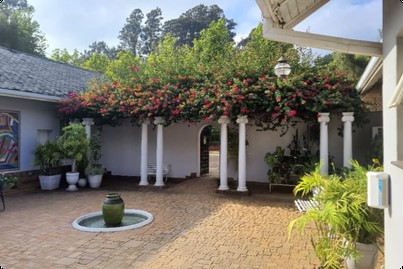
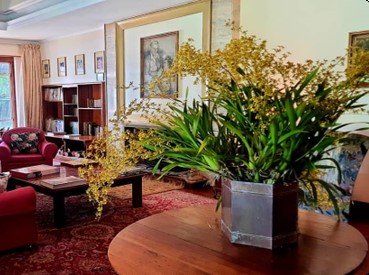
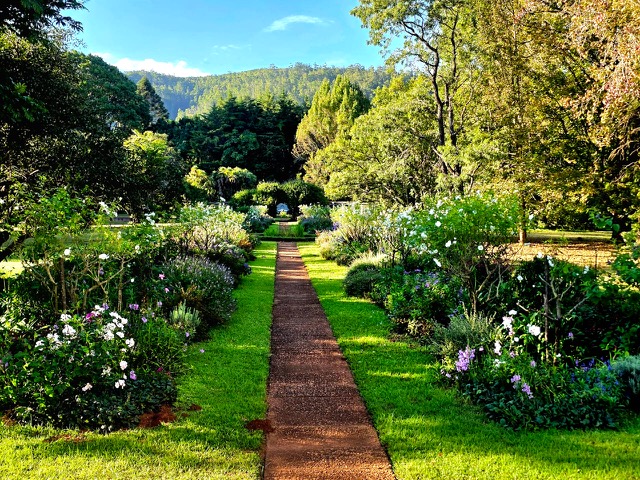
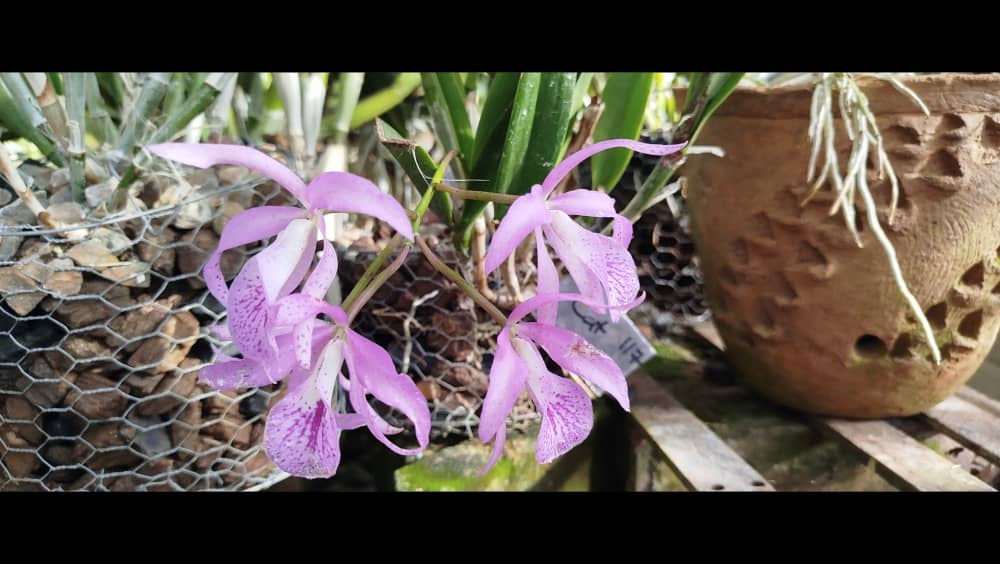
We are pleased to report that La Rochelle country house and gardens are looking magnificent and recent upgrades include: the Managers house which has under gone a total upgrade, the irrigation and watering systems have been improved, a new smaller Boardroom facility has been built, the kitchen exhaust facilities have been up graded, there have been air conditioning installations, new carpets and upholstery of furniture. Very exciting is that the camping site has been rejuvenation creating a new visitor choice for people wishing to camp in the stunning gardens. The swimming pool has been refurbished redone, lawns have been re-planted and the Rose Gardens have been renovated. We do hope that you will come and enjoy all these new upgrades to the property. The gardens, nursery, and orchid assets remain a significant part of La Rochelle’s identity and heritage value. Here are some photos of the fascinating and unique heritage orchids at La Rochelle.

It has to be said despite many challenges La Rochelle has remained operational throughout and has continued to invest significant effort into preserving estate standards, upgrading critical infrastructure, and sustaining the broader functionality of one of Zimbabwe’s most historically important heritage properties.

The challenges of running such a hotel commercially has been difficult due to a softer tourism demand, lower occupancy and continued pressure from infrastructure, maintenance, and security costs. A major driver of the occupancy decline has been the substantial reduction in USA and UK aid-funded NGO activity, which historically contributed meaningfully to La Rochelle’s conferencing, accommodation, and workshop business. The withdrawal or downsizing of this sector has materially impacted occupancy and conference revenues.

Alarmingly over the past four years, Zimbabwe has experienced an unprecedented increase in illegal artisanal mining around the country. La Rochelle is situated in Penhalonga which is no exception as it is located in the Mutare Greenstone Belt, which is one of the richest gold belts in Zimbabwe. The mountains of Penhalonga are the watershed of several rivers such as Mutare, Imbeza and Tsambe, that are currently swarmed with artisanal miners searching for alluvial gold. There have been several instances land grabbing and mineral exploitation in the whole Imbeza Valley.

The area is perilous where unregulated pits, collapsing shafts, and unsafe underground operations and many people have been seriously injured and lives have been lost as every descent into the pits is a gamble with death and carried out without safety gear, structural support, or emergency rescue systems on stand-by.

Illegal artisanal mines in the Penhalonga area

The environmental degradation is on a colossal scale and include: deforestation, over-stripping of overburden material, burning of bushes, use of harmful chemicals like mercury. This has led to the destruction of large tracts of land and river systems and ecosystem and polluted the Mutare River system.

Local residents have reported that the water in their streams has turned brown arising from mercury and cyanide deposits from artisanal gold mines detected in Lake Alexander, about 32 kilometres from the mines. Local communities are drinking highly contaminated water.

Gold panning processes on the river banks, beds and the surrounding areas discharge huge amounts of loose silt and heavy metals into the river system. Eventually these are washed into the dams, increasing the risk of siltation, flooding and drying up of water reservoirs

This situation continues to place increasing strain on both operations and the broader preservation of the NTZ flagship heritage asset. La Rochelle and the NTZ are actively working to prevent the encroachment on to the La Rochelle estate, we are talking to key government officials about the prevention of the environmental and health disaster that is happening on a daily basis very close to our flagship property. It is hoped that the law is followed and there is no breach of the legislation that states there is to be no mining on NTZ properties.

RHNE: A Tapestry of Zimbabwe’s Rich Heritage

Nestled in the scenic Nyanga district, the Rhodes Nyanga Museum stands as a testament to Zimbabwe’s multifaceted history and cultural richness. This hidden gem offers visitors a captivating journey through time, showcasing a diverse collection that weaves together the stories of legendary figures, colonial encounters, and the nation’s struggle for independence. At the heart of the museum’s collection is the history of Cecil John Rhodes, the British imperialist who played a pivotal role in shaping the region’s past. The museum’s displays include furniture and artefacts once owned by Rhodes, providing a tangible link to the era of colonial expansion.

Beyond the colonial era, the museum delves into Zimbabwe’s pre-colonial heritage, showcasing the traditions and achievements of the region’s indigenous peoples. Visitors can explore exhibits highlighting the country’s cultural heritage, including traditional crafts, music, and art.

The museum’s liberation heritage section pays tribute to Zimbabwe’s struggle for independence, featuring artefacts, photographs, and personal stories of those who fought for freedom. This poignant display serves as a reminder of the nation’s resilience and determination.

The natural heritage section, explores the unique ecosystems and wildlife of the Nyanga region. The museum’s commitment to preserving the environment and promoting conservation efforts is evident throughout this exhibit.

The Rhodes Nyanga Museum is more than just a repository of artefacts; it serves as a heritage hub for schools across the country. By providing interactive exhibits and educational programs, the museum is helping to shape the next generation’s understanding of their nation’s history and cultural identity.

In line with Zimbabwe’s heritage-based curriculum, the museum is working to enhance its displays and attract more visitors. The committee’s efforts aim to create a more immersive experience, allowing visitors to connect with the past and appreciate the complexities of Zimbabwe’s heritage.

As a treasure trove of history, culture, and natural beauty, the Rhodes Nyanga Museum is a must-visit destination for anyone seeking to understand the essence of Zimbabwe. Come and experience the rich tapestry of this remarkable nation, and discover the stories that make it truly unique.

Roof repairs

In March Mr Hallowes was invited to the museum to undertake a ‘Building Infrastructure Condition Assessment Report’. The assessment was undertaken in order to evaluate the integrity of its infrastructure and heritage features. As a site of historical significance, the museum requires periodic evaluations to ensure both structural stability and functional usability. The assessment focused on key components, including the roof, walls, doors and windows, drainage systems, and ancillary elements such as fascia boards and eaves, with particular attention to degradation from water ingress, corrosion, timber decay, and masonry or plaster deterioration.

The report stated: that the RHNE has a gabled roof supported by mature gum timber beams and purlins. While much of the timber remains in good condition the north-eastern roof elevation features eaves below 200 mm, are allowing rainwater to seep into the walls and adversely affecting exterior and interior finishes, contributing to the dampness, paint deterioration, and potential long-term structural damage.

Additionally, the wall plate in the museum office has deteriorated and requires replacement to ensure proper roof support. Overall, the roof and ceiling are in a deteriorated condition and there is an urgent need for maintenance and rehabilitation to preserve structural integrity and protect the building’s historical artifacts and monuments at risk and raising serious conservation concerns. The proposed roof repairs will enhance visitor experience. The RNHE museum receives many visitors locally (especially school children) and also visitors regionally and internationally. The NTZ has submitted a proposal requesting funding, so please keep your fingers crossed that the proposal is accepted and we can go ahead and make the necessary repairs.

Easter Fair

The museum held an Easter fair that was different from the usual crafts sales and a speaker on a subject of local interest. This year’s fair focused on plants, flowers and gardens. Stall holders sold gardening books and accessories, plants, shrubs and flowers. There were also fruit and vegetable stalls and home-made soaps.

We are pleased to report that the fair was a success. We had 250 visitors to the fair!

The Museum wish to change the displays and artefacts regularly, some after 6 months and other after year, to give our visitors a wider range of materials to see. The university students on yearly placements are a great resource to the Museum.

Mabukuwene

Mabukuwene is alive and inviting. The aloes are revealing their annual flowering, firm and full of juice, prickly pears shine in bright flowers and the green lantana camara is overshadowed by the thick tall grasses and wild flowers nourished by rains that have drenched Bulawayo over the past three months.

The clearing of the lantana camara is an ongoing task, teams of fit, young men have cut, slashed and poisoned this invasive weed throughout the property and some uprooting has been done, a labour of love which has been continual since mid 2016.

Our huge thanks to the sponsorship of the Meikles Trust (MT), which has facilitated the clearing of the highly invasive weed and the general upkeep of the property. The MT has funded salaries for two workers as well as casual workers that come in annually to help with the lantana camara clearing, the purchasing of brush cutters and spares, protective gear, herbicides to kill the weed and tools.

The team has been hard at work. Footpaths have been cleared around the entire property enabling easy access around Mabukuwene. A fire guard is in place and the fences have been mended where they were breached by people coming in to gather firewood and to poach the rock dassies and guinea fowl on the property. With 2 employees living on the property, there have been no incidents of unwanted visitors for quite some time.

The revamped ‘cottage’/hall/meeting place, ablutions, lookout, are in good order and the water situation for this area and the staff quarters is under control.

The Meikles family cemetery on the property is well maintained and recently two family members were interred on the property.

Consideration is to be made to attract school groups and environment societies for educational tours and meetings at Mabukuwene. In the past we have hosted the Birdlife of Zimbabwe, the Aloe Society and the Spider Club of Zimbabwe as well as the History Society. In addition, we could consider other light activities like limited lectures and small group meetings where people could use the ‘meeting place’.

Besides this there are opportunities to involve universities to do research on the biodiversity of the garden which is rich in bird life, small mammals, dassies, guinea fowl, snakes, bats, rodents, spiders and a range of trees, shrubs and plants.

Murahwa’s Hill: Education Centre

The good news keeps on going. The NTZ has received very generous funding form the Helen Hyslop Trust for development at Murahwa’s hill. The late Mrs. Hyslop, who served on the Executive Council for many many years,  was very passionate about Murahwa’s Hill and her substantial funding will assist not only with the protection of the site with new walling but, once open, the new education center, car park and toilet block will enable the site to be fully open and attract visitors, including school children and therefore, hopefully become financially self-sufficient. Construction will commence in June. We are very excited about this new and important project and look forward to the opening of the centre to which we will send you an invitation to join in the celebrations.


Granite outcrops 

Worlds View

We are pleased to report that the site is doing very well and received good rains and planted beds have regrown from last years’ dry season. The aloes planted along the contour ridges have filled out and will flower this year.

The view hosted a very important person: The Right Hon Evelyn Ndlovu Minister of Environment, Climate and Wildlife visited Worlds View and she told us that she loved her time exploring the hill and she remarked on the beautiful view across the valley. We thank you for coming to visit and hope to see you again.

In addition to the Right Hon Minister the hill has received a good number of visitors and here are some of the reviews that they very kindly posted on Google business review:

Google reviews

Over the past 5 years we announce with great pride, that Worlds View receives a 5 star rating on almost of all its business reviews on a consistent basis ranking it as one of the premier tourist attractions and visitor experience enjoyments in Nyanga!


We would like the share some of the review comments that we have received with you: 5 stars: 2 weeks ago – Breath taking

5 stars: 4 weeks ago – Spectacular and unforgettable, especially on a clear day when you can see far across the Eastern Highlands. The road to get there is rugged, you need a car with high clearance.

5 stars: 4 weeks ago – Always awesome

5 stars: 4 weeks ago – Good chilling cool space 5 stars: 4 weeks ago – Wonderful

5 stars 5 weeks ago – Beautiful scenery. 5 stars: 6 weeks ago – Great view

5 stars: 11 weeks ago – A beautiful experience. The hike took 45 minutes but it was worth it. The view from the top was breath taking.

5 stars: 16 weeks ago -Fantastic point of interest and the highest point in Zimbabwe you can reach with a car. We took the “Worlds View Drive” to get here.

5 stars: 17 weeks ago – Fee is: USD 3 per Person. more than fair. Such a nice place with great views

New Plans for Worlds view:

The update of a visitor centre will begin in April after Independence weekend. This will include:

  • Update of picture gallery with adequate lighting and displays
  • Geological and ecological information of the site
  • New flower selling display
  • More and better equipped dustbins.
  • Pathway to ruins to be made
  • Ruins to be totally cleared
  • Signage around the property and on the roads leading to the site
  • Combine with Sculptors team to enable them to do walking tours of the area and Educate in terms of Cultural Heritage.

The view has also experienced land tenure issues with people trying to stake one section of land adjacent to NTZ property in Little Connemara (approx. 15ha) has been fenced off and appropriated. Little Connemara Ltd (LCL) has placed an injunction with the High Court. The NTZ will support the local community in Little Connemara with the process.

We thank you for taking the time to read our newsletter

Please follow and like us on social media:

Instagram: nationaltrustzimbabwe

Facebook: National-Trust-of-Zimbabwe

Welcome to the St Helena National Trust
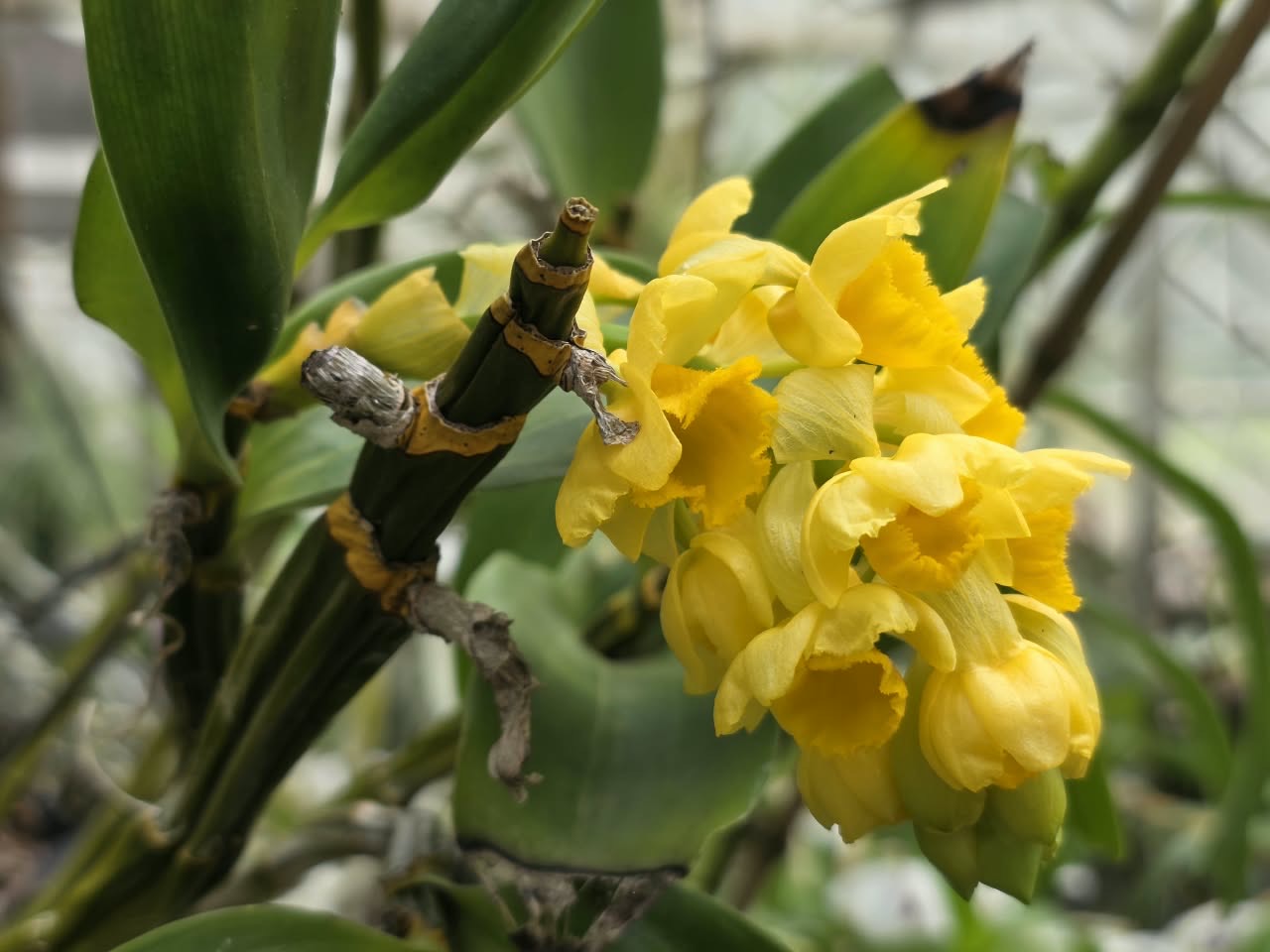
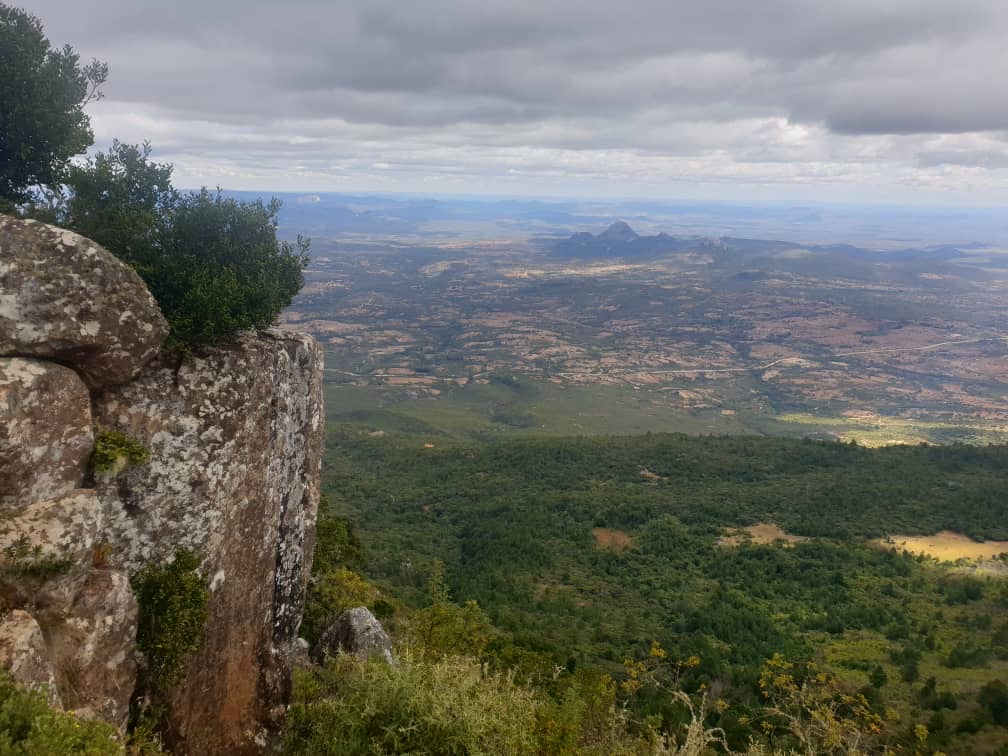
Left to right: Lin Goncalves, Helena Bennett, Sharon Waterworth, Martina Peters, Fira Bache and Dot Cozens
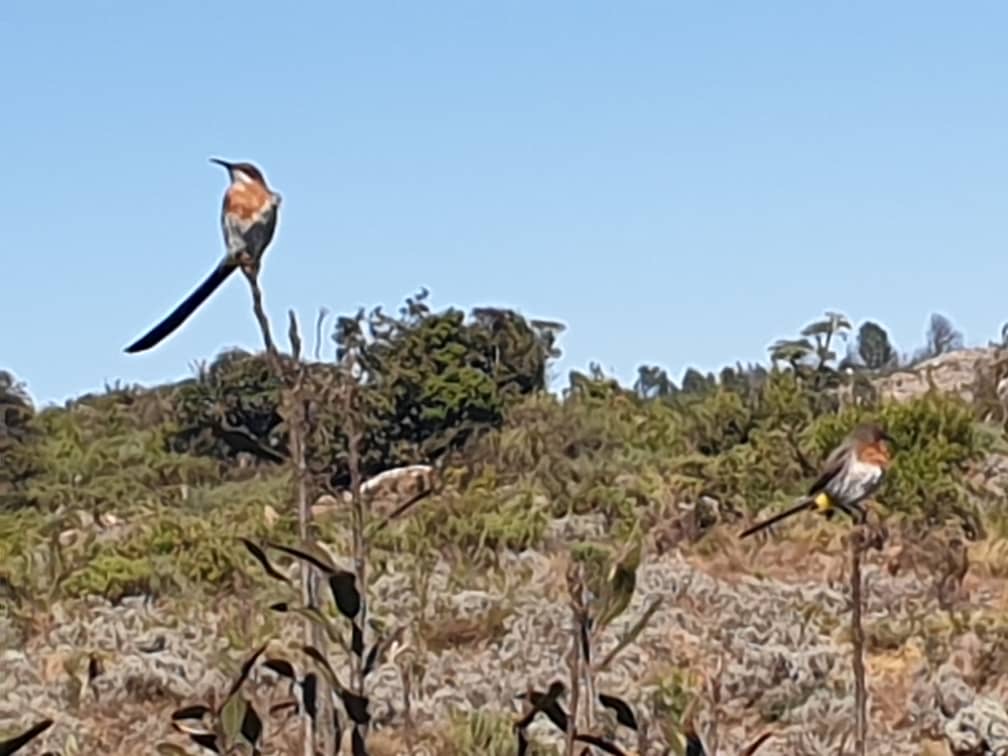


Members of the NTZ Executive Council were very excited to welcome Helena Bennett, Director, and Martina Peters, Environmental Scientist from the St Helena National Trust to Zimbabwe.
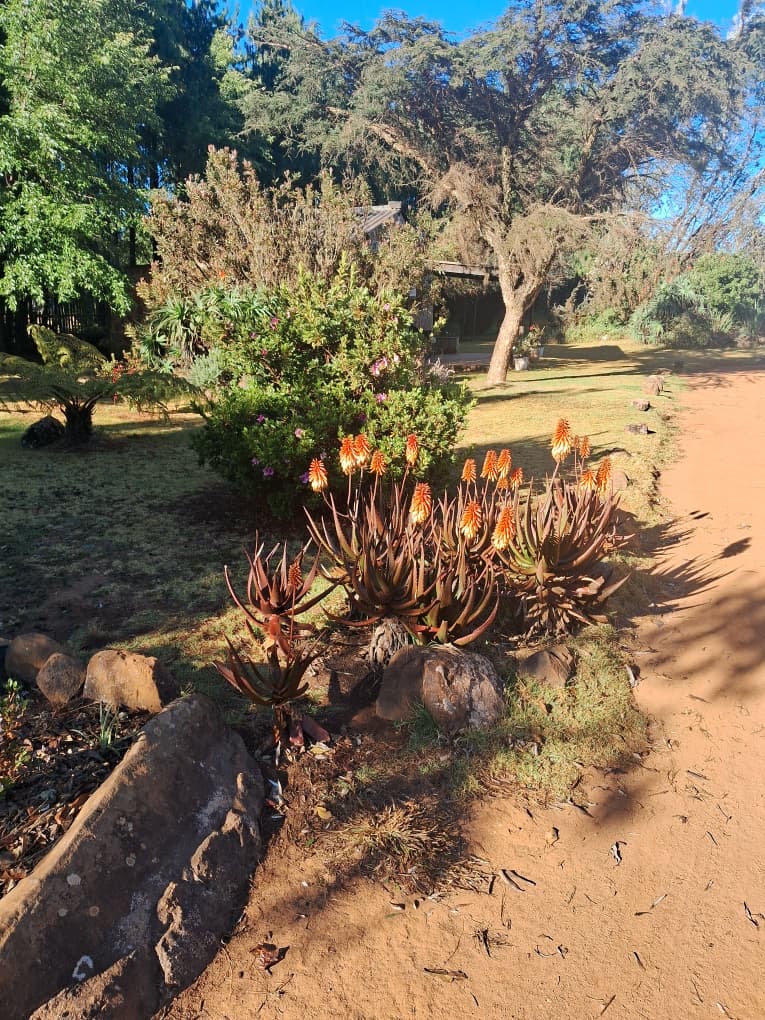
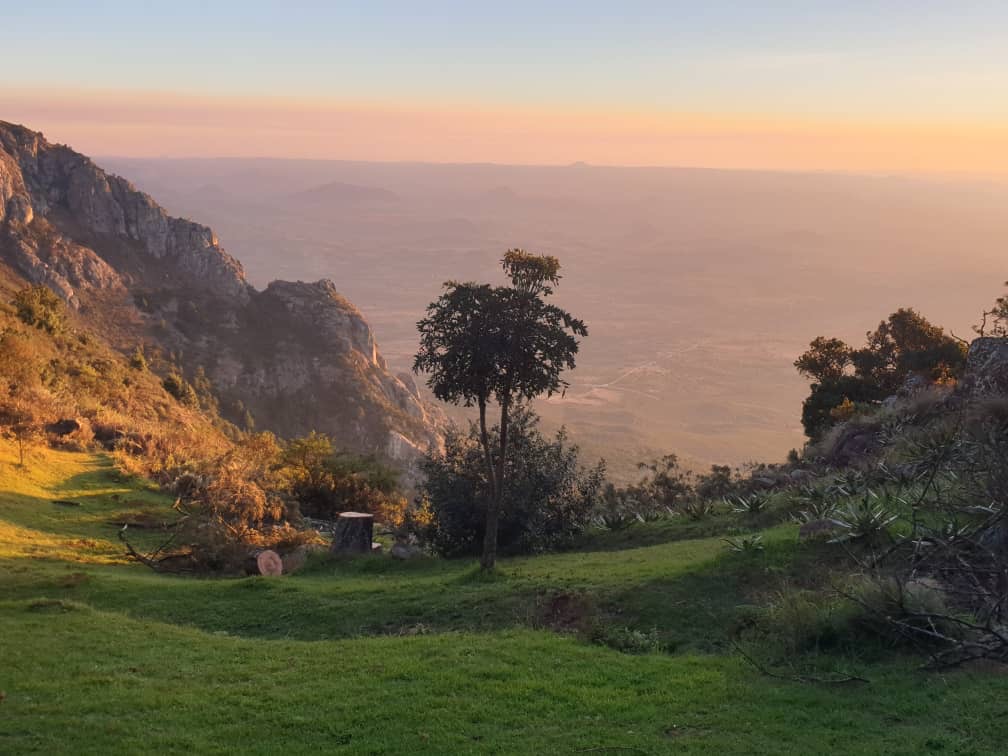
The St Helena National Trust and NTZ are proud members of the INTO Tropical Gardens network initiative and the NTZ was selected to host Helena and Martina, our INTO colleagues,  to showcase the work that is happening here.
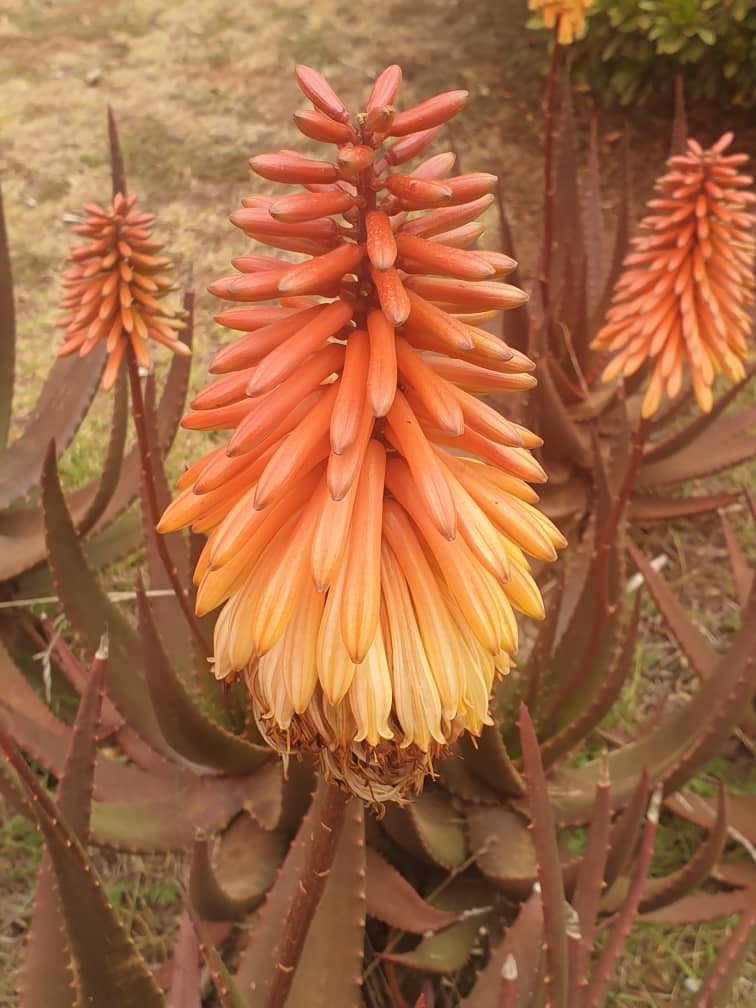
The focus of their visit is to talk about themes around Climate change adaptation and resilience, Shared colonial legacies and heritage. INTO Tropical gardens has a network theme that also includes community outreach and the revitalisation of native and ethnobotanical plant knowledge. Participants in the group expressed a strong desire to learn from one another, share best practices and explore how gardens can be tools for education, healing and cultural revival.

During their five-day stay here our visitors will visit La Rochelle gardens, Murawha’s Hill and Worlds View properties. This is a fantastic opportunity that has arisen for both National Trusts and our enormous thanks go to INTO for providing the funding to make this exchange trip possible. We rae verymuch loking foward to a fruitful exchange of knowledge and ideas.